 how-to
Key Duplication: How to Copy a Key the Right Way
Last Updated: November 14, 2026
Quick Summary
Key duplication is the process of cutting a new key to match the cuts of an existing one, and the method you choose determines how accurate that copy will be. Kiosks, hardware counters, and professional locksmiths all handle key duplication, but a locksmith tests the cut in a lock cylinder before you leave. Worn originals, restricted keyways, and transponder keys deserve a technician rather than a self-service machine.
- Kiosks copy the wear on a worn original, so the duplicate inherits every flaw.
- Transponder and smart keys require a programming step that a kiosk cannot perform.
- A Do Not Duplicate stamp is a request, not a legal restriction on copying.
- Standard single-cut and double-cut keys average $5 to $8, while high-security keys average $48.
- Forcing a stiff duplicate can snap the key inside the cylinder, so stop and bring it back.
Table of Contents
- Key Duplication Methods: Kiosks, Hardware Counters, and Locksmiths
- House Key Copy Options for Homeowners and Renters
- Automotive Keys: When Duplication Turns Into Programming
- Restricted Key Duplication and Keys That Resist Copying
- What Drives Key Duplication Cost
- What Professional Key Cutting Services Check Before You Leave
- Troubleshooting a Duplicate Key That Will Not Turn
- Get Your Keys Copied by a Local Locksmith
- Frequently Asked Questions
Key Duplication Methods: Kiosks, Hardware Counters, and Locksmiths
Key duplication is the process of cutting a new key to match the cuts of an existing one, and the method you choose determines how accurate that copy will be. According to Angi's 2026 key-copying cost data, the national average cost to copy a key is $20, though homeowner spending ranges from $5 to $175 depending on key type and material. A poorly cut copy can jam, turn only halfway, or work in one lock but not another.
Three channels handle most key duplication today, and they are not equal.
- Self-service kiosks: Automated machines in retail stores. Fast and unattended, but limited to common key profiles.
- Hardware store counters: A staff member runs your key on a key-cutting machine. Quality varies by store and operator training.
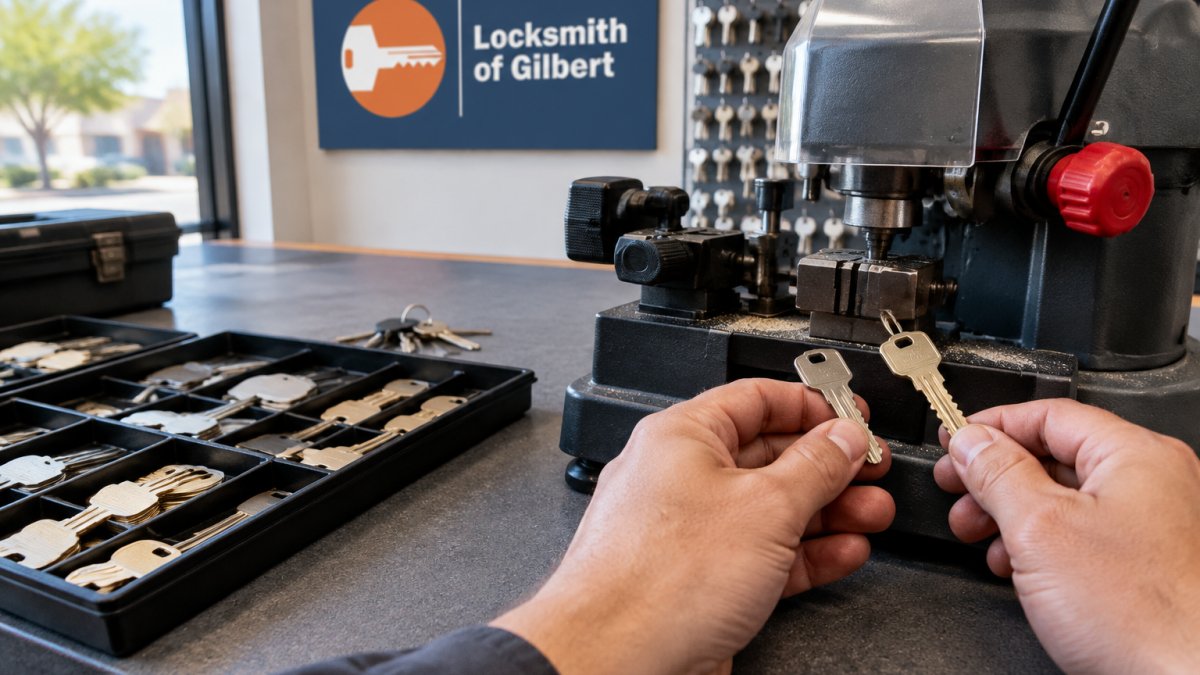
- Professional locksmiths: A licensed technician cuts the key, then tests it in a lock cylinder before you leave.
The difference matters most when your key is worn, unusually sized, or belongs to a restricted system. A kiosk measures what it sees. A locksmith interprets what the key should be.
If you want a deeper breakdown of what separates a professional cut from a retail copy, our guide to professional key duplication services covers credentials to check and what to expect at the counter.
House Key Copy Options for Homeowners and Renters
A house key copy is the most common duplication request we handle, and it is also where cheap copies fail most often. Standard brass house keys are simple to cut, which is exactly why a worn original produces a copy that never quite works.
Kiosks handle standard house keys well when the original is in good condition. The machine clamps the blank, traces the original, and cuts a matching profile in minutes. The catch: if your original key has worn down over years of use, the machine copies the wear along with the cuts. The duplicate inherits every flaw.
Hardware counters do the same job with a human running the machine, which helps when the operator notices an abnormal size or a bent blade.
Renters should know one thing before duplicating anything: a lease often restricts who may hold keys to the unit. Copying a key for a friend or subletter without landlord permission can breach the lease even though the duplication itself is legal. Ask first.
Automotive Keys: When Duplication Turns Into Programming
Car keys stopped being simple metal years ago, and that changes what "duplication" means. A transponder key carries a chip that must be programmed to your vehicle's immobilizer. A smart key or remote fob adds radio frequency pairing on top of that. Cutting the blade is the easy half; programming is where dealerships charge the most.
Standard metal automotive keys still duplicate like house keys. Transponder and smart keys require a programming step, and not every key-cutting machine can do it. This is the point where a kiosk cannot help you at all.
A common mistake is buying a blank fob online and assuming any locksmith can pair it. Some vehicles require specific programming equipment and a security credential check. Call ahead with your year, make, and model before you buy a blank. Our comparison of local locksmith versus dealership key replacement breaks down turnaround, programming, and warranty differences so you can decide before you call either one.
Restricted Key Duplication and Keys That Resist Copying
Restricted key duplication involves keys cut on a patented keyway that only an authorized provider can copy, and it is the one category where "just get it copied anywhere" genuinely fails. The blank itself is controlled. A standard key-cutting machine does not have the profile to cut it.
A "Do Not Duplicate" stamp is different. According to U.S. Locksmith's 2026 guide to keys that cannot be copied, that marking is a request rather than a legal restriction, and standard key-cutting equipment can still copy such a key. If you want real control over who holds copies, a restricted keyway or a rekey is the stronger move.
For commercial properties, restricted keyways solve a specific problem: they let you decide who can get copies and keep a record of every key issued. A landlord with a restricted system can order copies only through the authorized provider, which means a tenant cannot quietly duplicate a key for a subletter.
Security researchers have also demonstrated that a key can be duplicated from a photograph taken at a distance, which is why Dark Reading's coverage of remote key duplication treats key photography as a physical security risk. Do not leave keys visible in photos you post publicly. For a business, that means keeping keys out of social media posts and off desks visible through windows.
If you are weighing a rekey against chasing a restricted copy, our rekeying versus replacing cost comparison lays out the trade-offs.
What Drives Key Duplication Cost
Key duplication cost comes down to five factors: key type, blank availability, machine calibration, who does the work, and volume. Locksmith Ledger's 2026 National Average Price Survey found that standard single-cut and double-cut keys average $5 to $8, while high-security keys average $48. That spread is not arbitrary. High-security blanks cost more, and the cutting requires a calibrated machine and a trained operator.
Restricted keys carry dealer-controlled blank costs. Convenience also has a price: a kiosk in a grocery store at 9 PM charges for the lack of a human.
For commercial properties, pricing depends on quantity, key type, and the system involved. Contact Locksmith Of Gilbert through our website for a quote. Master key systems and restricted keyways add a planning step, each key must be assigned to the right level in the hierarchy, so the per-key cost includes administrative work, not just cutting.
A miscut key that fails at your door can mean paying for the copy and a second service call. Ask what happens if the key does not work before you pay, and for commercial accounts, ask whether key codes are recorded so future copies match the original system.
The article breaks key duplication cost down into a handful of stated figures and factors.
| Item | Value | Note |
|---|---|---|
| National average cost to copy a key | $20 | Homeowner spending ranges $5 to $175 |
| Standard single-cut and double-cut keys | $5 to $8 average | From 2026 National Average Price Survey |
| High-security keys | $48 average | Pricier blanks and calibrated cutting |
| Cost factors | Key type, blank availability, machine calibration, who does the work, volume | Five factors named in the article |
| Restricted keys | Dealer-controlled blank costs | Copies only through authorized provider |
What Professional Key Cutting Services Check Before You Leave
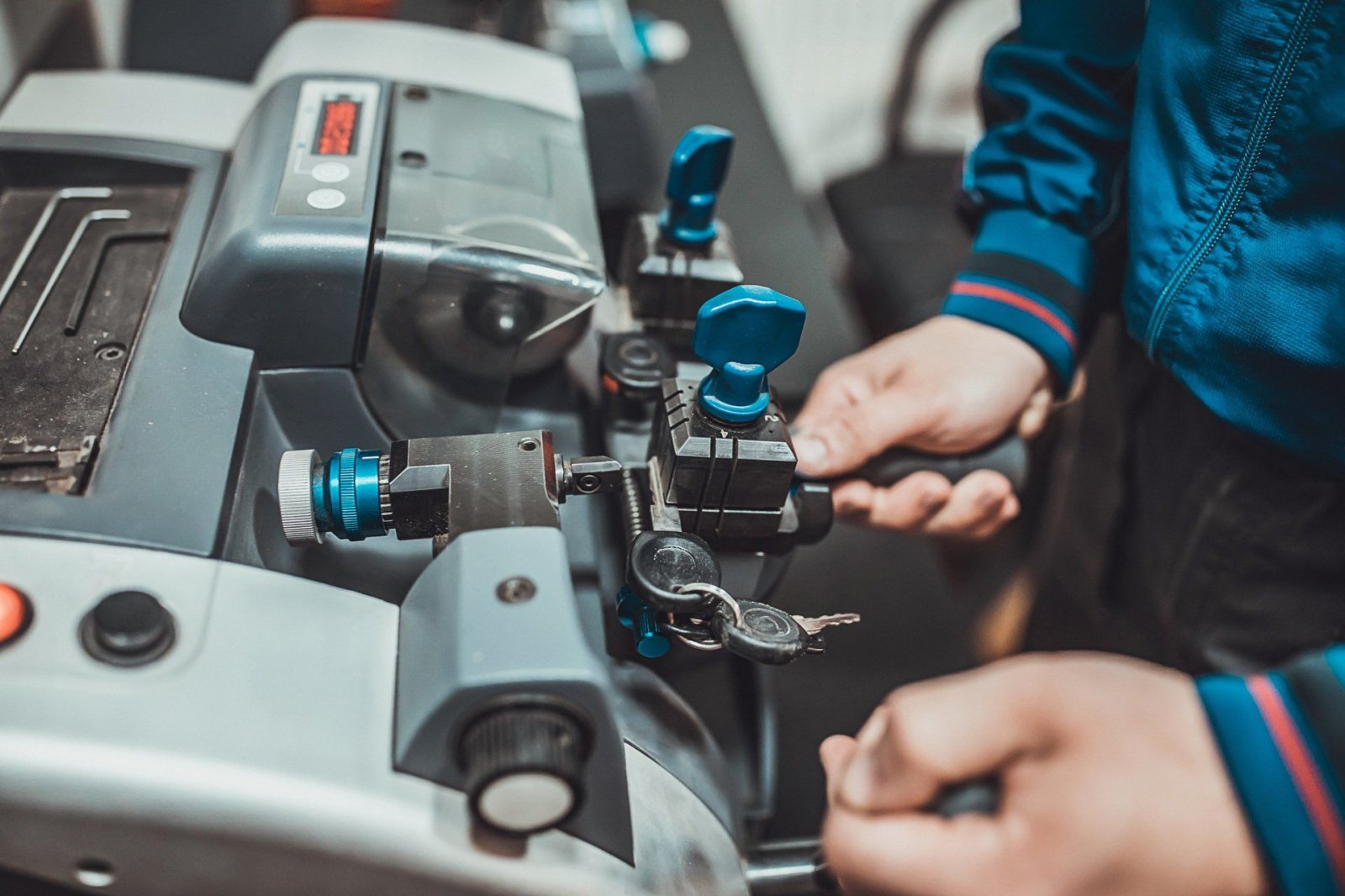
- Compare the new cut pattern to the original under light
- Insert the key into a matching lock cylinder and turn it fully both directions
- Check for binding, catch points, or a key that needs jiggling
- Confirm the key seats to the shoulder without over-insertion
- Test every lock the key is meant to open, not just one
If a shop hands you a key without testing it, ask them to test it in front of you. Our page on the locksmith guarantee for cut keys explains what coverage typically includes if a key fails after you get home.
Troubleshooting a Duplicate Key That Will Not Turn
A duplicate key that will not turn usually has one of four causes: a worn original that transferred its wear to the copy, a misaligned blank, a burr left on the new cuts, or a lock cylinder that was already failing. Diagnose before you blame the key.
Try the new key in a different lock that the original opens. If it works there, the problem is the cylinder, not the cut. If it fails everywhere, the copy is wrong. Look at the cut pattern under bright light: a shallow cut or a rounded shoulder shows up quickly.
Watch out: forcing a stiff duplicate can snap the key inside the cylinder, turning a cheap fix into an extraction job. If the key catches, stop and bring it back to whoever cut it. A reputable shop recuts at no charge rather than argue.
Get Your Keys Copied by a Local Locksmith
The right key duplication choice depends on the key in your hand, not on convenience. Standard house keys can go to a kiosk or a hardware counter. Worn originals, restricted keyways, transponder keys, and anything you rely on daily deserve a technician who tests the cut before you leave.
Locksmith Of Gilbert offers residential, commercial, and automotive locksmith services across the eastern valley of the greater Phoenix area. Our team is available 24/7 for lockouts and urgent key replacement, and we accept a wide range of payment methods, including digital wallets.
Call us for convenient mobile service, or get your keys duplicated by a local locksmith.
A miscut key is a small problem until it strands you outside your own door. Locksmith Of Gilbert cuts and tests every key on site, offers 24/7 availability for lockouts and key replacement, and handles residential, commercial, and automotive work across the eastern valley. Get started with Locksmith Of Gilbert and carry a key you know will turn.
Frequently Asked Questions
How much does key duplication cost?
Key duplication cost depends on key type, material, and whether programming is involved. For an exact quote on your key, contact Locksmith Of Gilbert with the key type and vehicle or lock details.
Can every house key be duplicated?
No. Standard house keys can usually be copied at a kiosk, hardware store, or locksmith. Restricted keyways and high-security keys are a different matter: the blank is controlled, so only an authorized provider can cut a working copy. A Do Not Duplicate stamp is a request, not a legal restriction, and standard equipment can still copy such a key, which is why restricted systems are the stronger control. If a kiosk rejects your key, a locksmith can confirm whether it is restricted.
What should I do if a copied key does not work?
First, try the copy in the original lock several times and compare its cut pattern to the original under good light. A burr on the edge or a shallow cut is common. If it still sticks, take both keys back to the provider and ask them to test the copy in a lock cylinder and recut it on a calibrated machine. A reputable key cutting service will recheck the key profile and keyway before recutting.
Can I get a restricted key duplicated at a kiosk?
Usually not. Restricted key duplication requires the correct controlled key blank and authorization, which self-service kiosks and most hardware counters do not carry. Attempting it on standard equipment can damage the key or produce a copy that jams. Take restricted keys to the locksmith or authorized provider named on the key or the original paperwork. If you have lost that record, a locksmith can identify the keyway and explain your options, including rekeying.