 blog
blog
Local Locksmith vs Dealership Key Replacement: 2026 Guide
Table of Contents
- Local Locksmith vs Dealership Key Replacement: The Quick Comparison
- The Lost Car Key Replacement Process, Step by Step
- Automotive Locksmith vs Dealership Programming: How Each One Works
- Mobile Car Key Replacement Service: What On-Site Programming Actually Involves
- When a Dealership Is the Right Call (and When It Isn't)
- Insurance, Warranty, and Security Checks Most Drivers Skip
- Conclusion
- Frequently Asked Questions
Last Updated: September 21, 2026
Local Locksmith vs Dealership Key Replacement: The Quick Comparison
Car key replacement is the process of cutting, programming, and pairing a new key or fob to your vehicle's immobilizer system so it starts and unlocks the car. At Locksmith Of Gilbert, we handle these jobs across the eastern valley every day, and the first question drivers ask is almost always the same: should I call a local locksmith vs dealership key replacement service?
Here is the honest answer. A local locksmith usually wins on turnaround time, convenience, and mobile service, while a dealership wins on brand-new models, warranty-sensitive work, and all-keys-lost situations that require security-code access.
| Factor | Local Locksmith | Dealership |
|---|---|---|
| Turnaround time | Often same day, on-site | Usually a scheduled appointment |
| Mobile service | Yes, at your location | No, vehicle must be brought in |
| Towing needed | Rarely | Often, if no working key exists |
| OEM parts | Available on request | Standard |
| Aftermarket keys | Yes, lower cost option | No |
| Warranty impact | Depends on part source | Manufacturer-backed |
The right choice depends on your vehicle, your timeline, and how the work affects your warranty. Below, we break down each path so you can pick with confidence.
The Lost Car Key Replacement Process, Step by Step
The lost car key replacement process follows five stages: verify ownership, identify the key type, cut or order the blank, program the chip, and test every function. Skipping the verification stage is where cheap providers cut corners, and it is also where your security is most exposed.
- Proof of ownership. You provide your registration, title, or ID. Any legitimate provider should ask for this.
- Key identification. The technician reads your VIN and checks whether you have a transponder key, smart key, or laser-cut key.
- Key cutting. A laser-cut or mechanical blank is cut to match your lock cylinder.
- Programming. The key chip is paired to the immobilizer system using diagnostic tools.
- Testing. Doors, trunk, remote entry, and push-button start all get checked before the technician leaves.
Automotive Locksmith vs Dealership Programming: How Each One Works
Automotive locksmith vs dealership programming comes down to who can reach the vehicle's security layer. Every modern key job touches three things: the transponder chip inside the key, the immobilizer module that reads it, and the body control module (BCM) or gateway that authorizes a new key to be added. Whoever can write to that authorization layer wins the job.
How a dealership does it. Dealerships connect to the manufacturer's server through a factory diagnostic platform, GM's GDS2, Ford's FDRS, Toyota's Techstream, Honda's i-HDS, and so on. The server issues a security credential tied to your VIN, and the technician uses it to add the key. Because the credential comes from the manufacturer, the dealer can program keys on virtually any model the brand sells, including brand-new ones that independent tools cannot yet touch.
How an independent locksmith does it. A locksmith uses aftermarket programming platforms, Autel, Autopropad, Xhorse, Smart Pro, and similar, paired with a J2534 pass-thru device or an OEM-specific cable. On many vehicles, the tool can add a key directly through the OBD-II port by reading the existing key's authorization. On others, the locksmith buys a short-term subscription to the manufacturer's server (the same credential a dealer uses) and pays per-VIN for access. That subscription is why some jobs cost more than others even at the same shop.
Where the two paths diverge. Programming difficulty is vehicle-specific, and this is the part most guides skip:
- Open-platform vehicles, many Ford, Chevrolet, Toyota, Honda, Nissan, and Hyundai models from the last 15 years, allow on-site key addition in minutes with an aftermarket tool. No server access needed if at least one working key exists.
- Server-locked vehicles, most late-model European brands (BMW, Mercedes-Benz, Audi, Volkswagen), plus certain Stellantis and luxury trims, require a manufacturer credential for all-keys-lost jobs. A locksmith can still do it, but only with a paid subscription, and some very recent models are dealer-only for the first year or two after launch.
- All-keys-lost on any vehicle is a different job than adding a spare. With no working key, the locksmith has to extract the immobilizer PIN or pull it from the BCM, which takes longer and sometimes requires removing interior panels.
What most guides miss: DIY programming risk. Cheap fobs sold online are usually aftermarket blanks with a cloneable chip. On older vehicles they sometimes work. On anything with rolling-code encryption or a gateway module, an unprogrammed or improperly cloned fob can trigger the immobilizer, lock the BCM, and leave the car in a no-start state that costs more to recover than the original job would have. The tools that can safely program these systems cost four figures and require a subscription most DIY buyers do not have. A locksmith carries that overhead so you do not have to.
A good provider will tell you upfront which category your vehicle falls into, open-platform, server-locked, or dealer-only, rather than waste your afternoon.
Mobile Car Key Replacement Service: What On-Site Programming Actually Involves
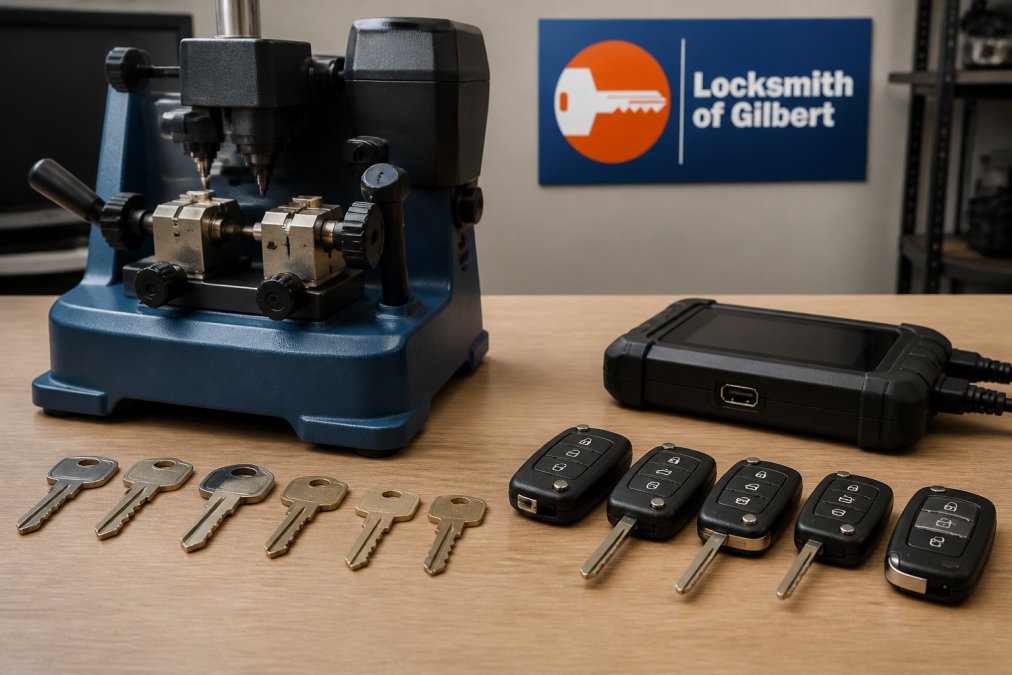
A mobile car key replacement service brings the cutting and programming equipment to your driveway, office, or roadside. The technician arrives with a diagnostic tool, blank keys, and a cutting machine, then completes the job on the spot.
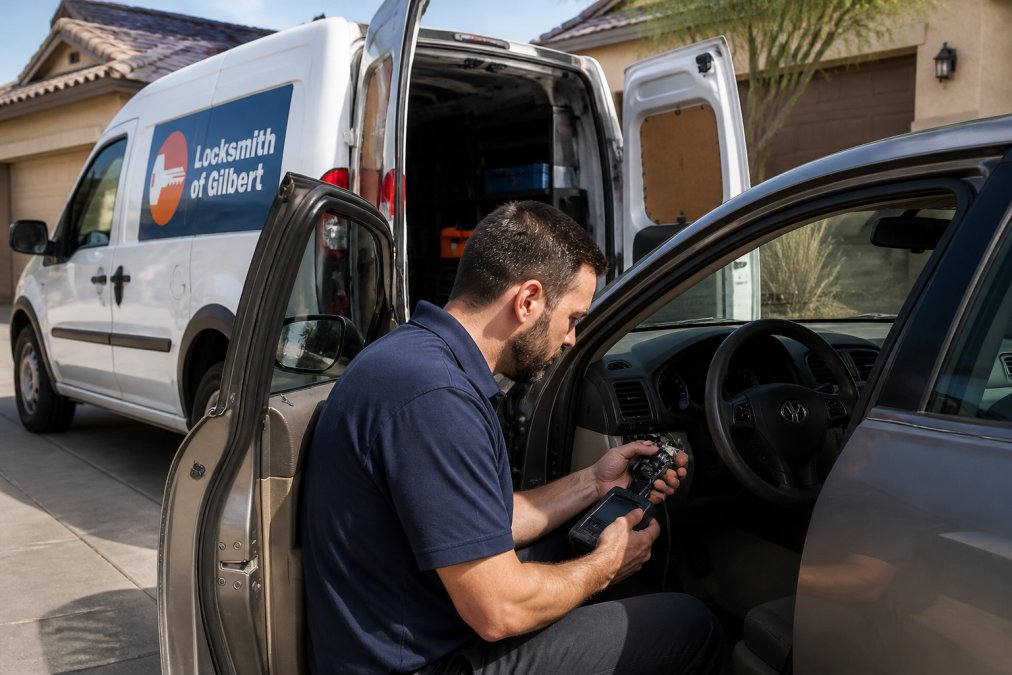
On-site service removes the biggest hidden cost of the dealership route: towing.
When a Dealership Is the Right Call (and When It Isn't)
A dealership is the right call in a narrower set of situations than most drivers assume. Here is the honest breakdown.
Choose the dealership when:
- Your vehicle is brand new or first-model-year. Manufacturers often restrict programming to dealer tools for the first 12-24 months after a new generation launches. Independent platforms catch up, but not on day one.
- All keys are lost on a server-locked model. On many late-model European and luxury vehicles, the immobilizer credential is only issued through the manufacturer's server. A locksmith can sometimes buy access, but the dealer is the guaranteed path.
- A recall or software update is involved. If the immobilizer or BCM needs a firmware update, that work is dealer-only and should be bundled with the key job.
- Your factory warranty explicitly requires OEM parts and dealer service for key-related claims. Read the warranty language; do not assume.
Choose a local locksmith when:
- You have at least one working key. Adding a spare is the easiest job in the trade and rarely requires dealer tools.
- You need mobile service. A dealership cannot come to your driveway. If the car will not start, that means a tow.
- You want aftermarket key options. OEM fobs are the most expensive part of the job. A quality aftermarket fob from a reputable locksmith can cut the parts cost significantly while still programming correctly.
- You need the job today. Dealer service departments book appointments, and factory-ordered keys can take days.
- You are locked out, not keyless. A lockout is a locksmith job by definition, no dealer will send a tech to a parking lot.
Insurance, Warranty, and Security Checks Most Drivers Skip
Insurance coverage for key replacement is more common than drivers realize. Many auto policies and roadside assistance plans include a key replacement benefit, and some cover the tow if the vehicle is immobilized. Check your policy before you pay out of pocket.
Conclusion
Choosing between a local locksmith and a dealership is really a question of timing, vehicle type, and risk tolerance. When you need fast, mobile, cost-effective key replacement and you have at least one working key, a local provider is usually the smarter call.
Frequently Asked Questions
Is it cheaper to go to a locksmith or a dealer for key replacement?
A local locksmith usually costs less than a dealership because you skip dealership labor rates and often the tow. An automotive locksmith can cut and program most transponder and smart keys at your location, while a dealer typically charges for the key, programming time, and sometimes a diagnostic fee. Your exact total depends on the vehicle and key type, so ask each option for a quote before deciding.
Can a mobile locksmith program transponder keys on-site?
Yes, most mobile locksmiths carry diagnostic tools that read your vehicle's immobilizer system and program a new transponder or smart key on the spot. The locksmith needs your VIN and proof of ownership, then pairs the new key to the car's ECU. Some newer models with tight security codes still require a dealership visit, so confirm your make and model when you call.
Are aftermarket keys from a locksmith as reliable as dealership keys?
Quality aftermarket keys from a reputable locksmith work reliably for daily use, though OEM parts match factory tolerances most closely. The bigger factor is the programming, not the blank. A locksmith using proper diagnostic tools and correct key chips will produce a key that starts the car and operates remote entry just like the original. Ask about the service warranty before the work begins.
Does my insurance cover locksmith services for lost car keys?
Some auto policies include roadside assistance that covers lockout service or key replacement, and many credit cards and auto clubs offer it as a benefit. Check your policy's roadside assistance section and any membership perks before paying out of pocket. Coverage varies widely, so confirm the dollar limit and whether mobile service is included. Home and renters insurance sometimes covers keys lost during a break-in.