 how-to
How to Upgrade Business Door Locks Step by Step
Last Updated: November 4, 2026
Quick Summary
To upgrade business door locks, first assess your existing door and lock type, then choose between rekeying, replacing, or upgrading based on whether the lock body is sound and what problem you need solved. Rekeying suits lost keys and staff turnover, replacement suits worn hardware, and upgrading suits changed requirements.
- Check door type, lock type, and hardware condition before buying any replacement parts.
- Rekey when the bolt throws fully and the issue is key control, not hardware failure.
- Replace the cylinder if it binds or the key sticks, since rekeying a worn cylinder only delays failure.
- Rekey all exterior doors together so old keys stop working across the property.
- Confirm egress, fire-rating, and accessibility requirements before choosing storefront hardware.
Table of Contents
- Why Businesses Upgrade Their Door Locks
- Assessing Your Existing Door and Lock Type
- Choosing Between Rekeying, Replacing, or Upgrading
- How to Change Lock Cylinder on Commercial Door
- How to Install a Commercial Mortise Lock
- Storefront Door Lock Replacement Basics
- Scheduling Your Business Door Lock Upgrade With Locksmith Of Gilbert
- Frequently Asked Questions
Why Businesses Upgrade Their Door Locks
Most business owners only think about their locks after something goes wrong: a worn-out lock fails, a former employee still has a key, or a storefront gets broken into. To see how high-security lock installation protects commercial premises from break-ins, unauthorized access, and theft, review that guide before you decide.
Commercial doors take heavy daily use from staff, customers, and deliveries. An older lock may still turn, but it often sticks, rattles, or lets the latch slip out of alignment.
Common reasons businesses upgrade include:
- Lost or missing keys with unknown copies in circulation
- Staff turnover and the need to control who can enter
- Worn hardware that jams or fails to latch
A simple upgrade can close the gap between what your locks promise and what they deliver.
Assessing Your Existing Door and Lock Type
Before you buy anything, find out what you already have. The door type and lock style tell you which replacement parts will fit.
Start with a quick inspection:
- Door type: Check whether it is wood, metal, or glass. Storefront doors often use aluminum frames with glass panels.
- Lock type: Identify whether you have a deadbolt, a lever lock, a mortise lock, or a combination of these.
- Hardware condition: Look for play in the handle, a loose strike plate, or visible wear on the latch.
Watch out: Buying a lock before confirming the backset and door thickness is a common mistake. A part that looks right can still fail to fit once installed.
Choosing Between Rekeying, Replacing, or Upgrading
Most commercial lock projects fail at the decision stage, not installation. Picking the wrong path means paying twice: once for the wrong fix, then again for the right one. Use the criteria below to choose the least disruptive option that still meets your security and compliance needs.
Start with three questions
- Is the lock body sound? If the bolt throws fully, the latch engages the strike cleanly, and the cylinder turns without binding, the hardware is a candidate for rekeying. If the bolt drags, the latch slips, or the cylinder wobbles, the lock is worn and rekeying just postpones a failure.
- Is the problem key control or hardware capability? Lost keys, staff turnover, and unknown copies are key-control problems that rekeying solves. Audit trails, scheduled access, or remote management are capability problems rekeying cannot solve.
- Does the door have to meet a code requirement? Fire-rated doors, egress doors, and accessible entrances carry hardware requirements a like-for-like rekey may not satisfy. Confirm this before committing to any path.
Rekeying: fastest and least disruptive
Rekeying changes the pins inside the existing cylinder so old keys stop working.
Choose rekeying when:
- The lock body is in good condition and the bolt throws fully
- The issue is lost keys, a departed employee, or a tenant change
- You want to move the property onto a master-key system without replacing hardware
A common pattern is to rekey every exterior door and every door on the master-key system at once, not just the door that triggered the call.
Watch out: Rekeying a cylinder that is already worn or has a damaged keyway just moves the failure forward. If the cylinder binds or the key sticks, replace the cylinder rather than rekeying it.
Replacing: when the hardware is the problem
Replacement swaps the lock for a new unit of the same type and footprint. Choose it when the lock is damaged, the finish is failing, the cylinder is worn out, or the hardware is obsolete and parts are no longer available.
Replacement is also right when the door prep is sound but the lock grade is too low for the application.
Upgrading: when requirements have changed
Upgrading means moving to a different capability class: a higher-grade deadbolt, a mortise lock in place of a cylindrical one, a keyless or electronic access system, or a master-key system with restricted keyways. Upgrade when the current hardware cannot meet the requirement no matter how well it is maintained.
Upgrades carry the longest lead time because they often change the door prep, trim, and power or wiring requirements. Plan for that before you order.
Key control and master-key planning
Key control is the part of the decision most businesses skip. A few practical points:
- Restricted keyways prevent unauthorized duplication because blanks are controlled by the manufacturer and cut only on authorization. They cost more per key but close the "unknown copies" problem permanently.
- Master-key systems let one key open a building while department keys open only their area. Plan the hierarchy before you rekey, because changing it later means rekeying again.
- Lost-key procedures should be written down: who reports a lost key, who authorizes a rekey, and which doors are affected. A lost master key is a building-wide rekey, not a single-door fix.
Downtime and sequencing
Rekeying and same-footprint replacement can often be done door by door with minimal disruption. Upgrades that change door prep, add power, or replace the entire lockset are better scheduled in blocks, with a plan for temporary access. Sequence exterior doors first, then interior secure areas, then low-risk interior doors.
As a rule of thumb: rekey when the lock works and the issue is key control; replace when the lock is worn or obsolete; upgrade when the requirement has changed. Businesses weighing a commercial master key system against other options can see how one key set works across a property.
How to Change Lock Cylinder on Commercial Door
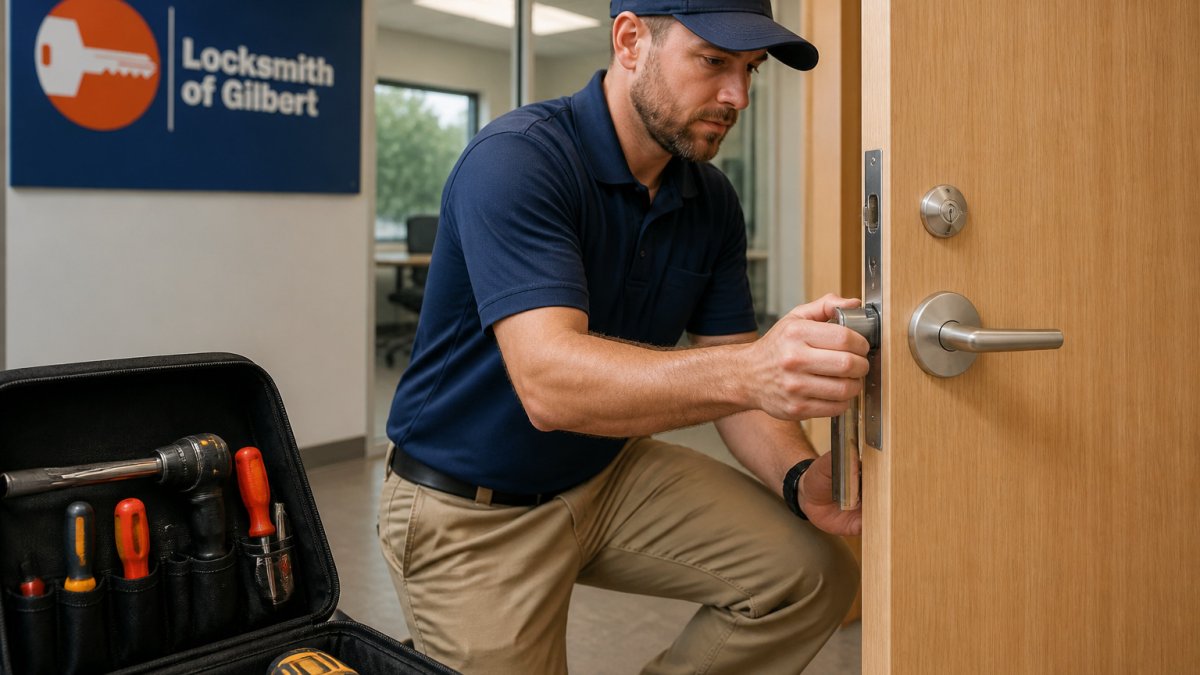
Changing the cylinder is often the simplest way to update a commercial lock. The cylinder takes the key, so replacing it changes who can get in without touching the rest of the hardware.
Follow these steps:
- Confirm the cylinder type and length you need.
- Remove the mounting screws or retaining clip holding the cylinder in place.
- Pull the old cylinder out carefully, keeping the cam and tailpiece aligned.
- Insert the new cylinder with the cam facing the correct direction.
- Reattach the retaining hardware and test the lock with several keys before you walk away.
Expected result: The new cylinder turns smoothly, the bolt throws fully, and only the new keys operate the lock.
How to Install a Commercial Mortise Lock
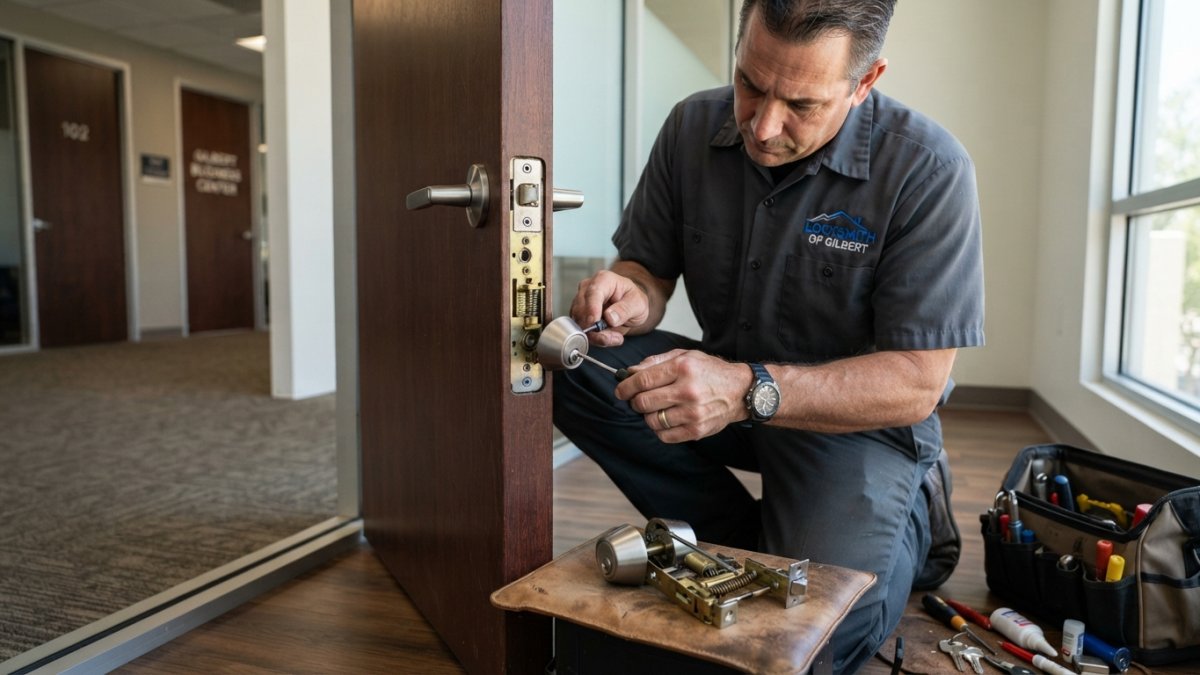
A mortise lock is set into a pocket cut into the door edge. It is common on commercial doors because it is strong and built for heavy use. Installation takes patience and accurate measurement.
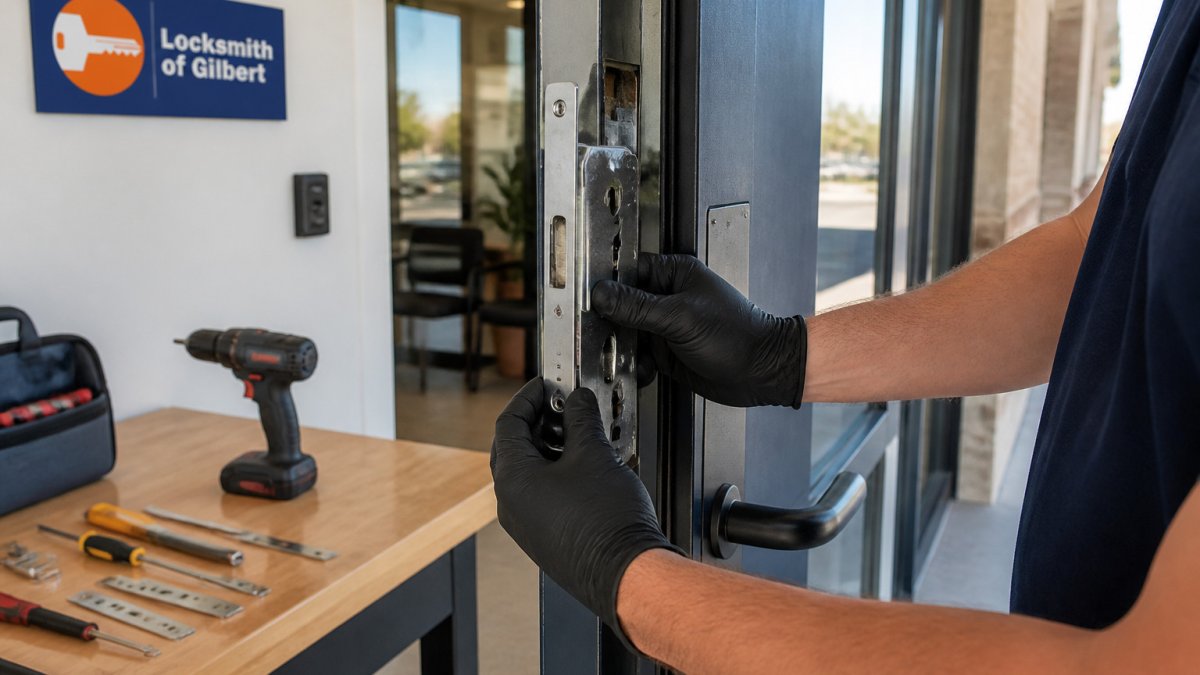
Key steps include:
- Measure the backset, the distance from the edge of the door to the center of the lock.
- Mark the mortise pocket and cut it to the correct depth.
- Set the lock body in the pocket and check that it sits flush.
Work slowly here, because a misaligned pocket is hard to correct later.
Storefront Door Lock Replacement Basics
Storefront doors are the highest-risk doors on most commercial properties. They are usually glass in aluminum frames, see constant traffic, and are the doors most likely to be tested after hours. Replacement is not a like-for-like swap with a residential lock, the hardware, frame, and code requirements are all different.
Identify the hardware you actually have
Storefront doors use a small set of hardware families. Knowing which one you have determines what can be replaced and what has to be matched:
- Mortise locks set into a pocket in the door stile. Common on aluminum storefront doors and strong enough for heavy use. Replacement requires matching the backset, faceplate dimensions, and cylinder type.
- Narrow stile locks are designed for the narrow aluminum stiles typical of glass storefronts. The lock body is slimmer than a standard mortise lock, and the cylinder and trim are specific to the narrow-stile format.
- Panic hardware (exit devices) is required on many commercial egress doors. A push bar or push pad releases the latch with a single motion. Some exit devices include keyed exterior trim; others rely on a separate deadbolt or a key switch.
Glass, aluminum, and the prep problem
Glass and aluminum storefront doors are less forgiving than wood or steel. The stile is narrow, the door is often hollow, and the prep is cut at the factory or by a specialized installer.
Before ordering, confirm:
- Door thickness and stile width, narrow-stile hardware will not fit a wide-stile door, and vice versa
- Backset and centerline, the distance from the door edge to the cylinder and to the lock body
- Faceplate dimensions, the visible plate on the door edge must cover the existing cut
Watch out: Ordering a storefront lock by photo or by the old lock's brand name alone is a common mistake. Two locks that look identical can have different backsets or faceplate sizes, and the difference only shows up at installation.
Code compliance: fire, egress, and accessibility
Storefront doors sit at the intersection of several code requirements, and replacement hardware has to satisfy all of them:
- Egress, doors on a means of egress must release with a single motion without a key, special knowledge, or effort. Panic hardware or a single-motion lever is typically required. Adding a deadbolt that requires a key to exit from the inside is a code violation on an egress door.
- Fire-rated doors, doors in fire-rated assemblies must use hardware listed for fire doors, and the door must self-close and latch. Replacing hardware on a fire door with a non-rated lock voids the rating.
- Accessibility, operable hardware on accessible routes must meet the accessibility standards for operating force and operation. Round knobs are generally not acceptable; levers and push bars are.
A professional assessment is worth the cost on storefront doors because a code violation can fail an inspection, void insurance coverage, or create liability after an incident.
Mechanical vs. electronic on a storefront
Storefront doors are a common entry point for electronic access because they are the doors staff and customers use most. The trade-offs:
- Mechanical locks need no power, no network, and no battery. They are the simplest and most reliable option, but they offer no audit trail and no remote management.
- Standalone electronic locks run on batteries and manage access at the door. They are a good fit for storefronts without existing wiring, but battery replacement and credential management become ongoing tasks.
- Networked or cloud-managed systems provide audit logs, schedules, and remote unlock, but they require power, connectivity, and a plan for what happens when the network is down. Always confirm a mechanical or keyed backup exists.
After replacement: test before you sign off
A storefront lock that is installed but not tested is a liability. Before the installer leaves, confirm:
- The bolt throws fully and the latch engages the strike without binding
- The door closes and latches on its own from a partially open position
- The exit device releases with a single motion from the inside
If any of those fail, the fix is usually alignment or strike adjustment, not a new lock, but it has to be caught before the installer leaves.
Scheduling Your Business Door Lock Upgrade With Locksmith Of Gilbert
If your business door locks are worn, your keys are out of control, or your storefront needs a stronger setup, Locksmith Of Gilbert can help. Homeowners can also review our residential locksmith services for comparison before booking.
Contact us to discuss your options and schedule a visit. Pricing depends on the lock type, quantity, and scope of work, so we recommend requesting a quote for your specific property through our website.
Frequently Asked Questions
How do you change a lock on a commercial door?
Changing a commercial door lock usually means removing the existing lockset, confirming the door preparation matches the new hardware, and installing the new lock body and trim. The cylinder can often be swapped alone if the lock body is still sound, which is faster and less costly. Test the lock and latch several times before the door goes back into regular use, and confirm that any panic or egress hardware still operates as intended.
Are commercial door locks different from residential locks?
Yes. Commercial locks are typically built with heavier internal components, more durable finishes, and mechanisms designed for frequent daily use. Many commercial doors also use mortise locks or push-bar exit devices rather than standard residential bored locksets. Businesses should check that new hardware matches the door type, the traffic level, and any fire or egress requirements that apply to the building.
When should a business rekey its locks instead of replacing them?
Rekeying makes sense when the lock hardware is in good condition but keys have been lost, an employee has left, or access needs to change. Replacement or upgrade is the better choice when the lock is worn, damaged, or no longer meets the security level the business needs.