 ultimate-guide
High-Security Lock Installation Benefits: A 2026 Guide
Table of Contents
- What High-Security Locks Are and How They Differ from Standard Locks
- Key Benefits of High-Security Lock Installation
- Resistance to Lock Picking, Bumping, and Drilling
- Restricted Key Systems and Key Control
- Commercial High-Security Locks for Business Protection
- Professional High-Security Lock Installation and Door Compatibility
- Commercial Lock Rekeying for Tenant Turnover and Access Control
- Frequently Asked Questions
Last Updated: October 20, 2026
What High-Security Locks Are and How They Differ from Standard Locks
A high-security lock is a lock engineered with advanced mechanisms and materials designed to resist picking, bumping, drilling, and other bypass techniques that compromise standard locks.
Standard locks rely on simple pin-tumbler mechanisms that locksmiths and security professionals have understood for decades. A skilled attacker can open them in seconds using basic tools.
At Locksmith Of Gilbert, we install high-security locks that provide measurable protection for both residential and commercial properties. The investment in a high-security lock installation pays dividends through reduced break-in risk, enhanced access control, and long-term security peace of mind.
Key Benefits of High-Security Lock Installation
Most articles on this topic list the same four or five benefits and stop.
**1. The practical benefit is time: a determined attacker needs minutes, not seconds, and most residential and commercial burglaries are opportunistic.
2. Key control that survives staff turnover. Restricted keyways mean only the manufacturer or an authorized dealer can cut a replacement key.
**3.
4. Insurance and audit alignment. Many commercial property policies and security audits ask for documented access control, and some give credit for rated hardware.
5. Durability that matches commercial duty cycles. High-security locks are typically built with heavier-duty cylinders, reinforced strike plates, and finishes rated for high-traffic doors.
Resistance to Lock Picking, Bumping, and Drilling
Lock picking exploits the tolerances built into standard pin-tumbler locks. When pins are set to the shear line, even slight variations in pin heights create exploitable friction points.
Bumping is a technique where an attacker inserts a specially cut "bump key" and strikes it while applying rotational pressure, causing pins to jump above the shear line momentarily. Standard locks fall to this attack reliably.
Drilling attacks target the lock cylinder directly, using a drill bit to destroy the pin stack and force the lock open. Standard locks offer minimal resistance, a carbide drill bit cuts through them in under a minute.
Restricted Key Systems and Key Control
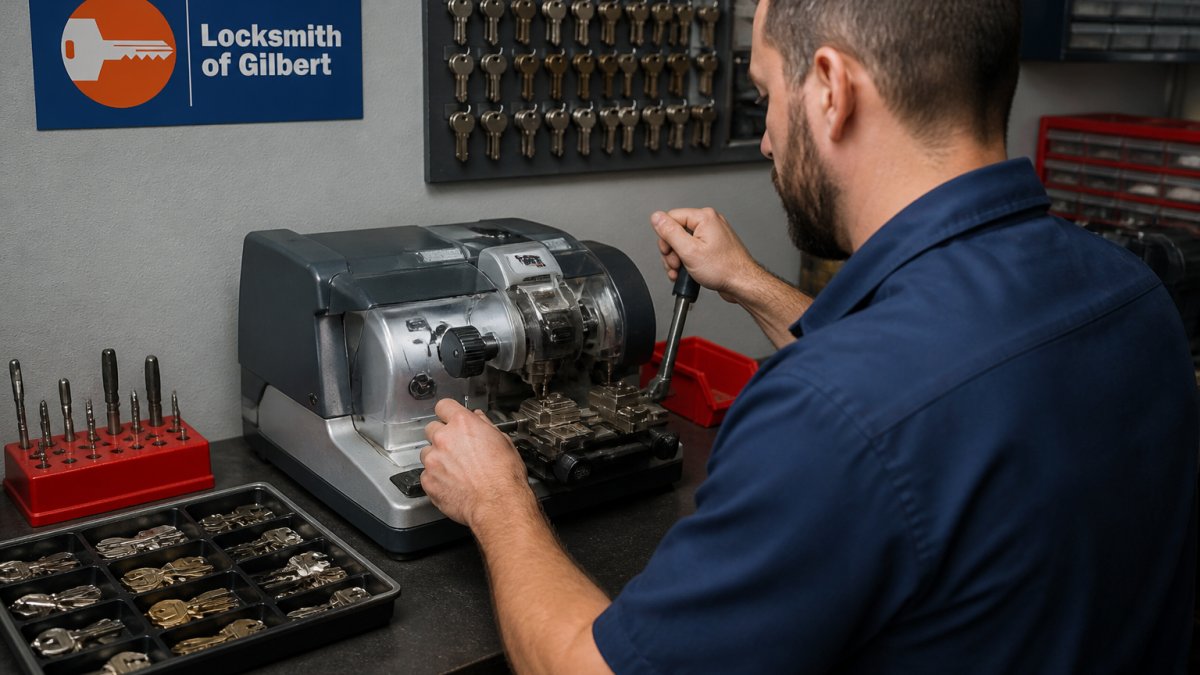
Restricted key systems are the backbone of high-security lock installation for commercial properties. A restricted keyway is a patented key shape that only the lock manufacturer can produce keys for. When you need a new key, you must go through an authorized dealer or your locksmith, not a hardware store.
Key control extends beyond physical key duplication. High-security lock systems maintain detailed records of every key ever issued, who holds it, and when it was distributed. If a key is lost or an employee leaves, you know exactly which key to rekey out of service.
Master key systems built on high-security locks allow property managers to create hierarchies where certain keys open specific suites while a master key opens everything. This structure enables different staff members to access only the areas they need, improving both security and operational efficiency. Rekeying to adjust access levels requires only replacing pins inside the lock cylinder, no hardware replacement necessary.
Commercial High-Security Locks for Business Protection
Commercial properties face different security threats than residential ones. Retail stores, offices, warehouses, and medical facilities need locks that protect valuable inventory, sensitive information, and employee safety.
For retail environments, high-security locks on storage areas, cash handling rooms, and office spaces prevent employee theft and unauthorized access.
In medical and legal offices, high-security locks protect patient records, confidential documents, and controlled substances.
Warehouse and industrial facilities use high-security locks on equipment rooms, chemical storage, and administrative offices.
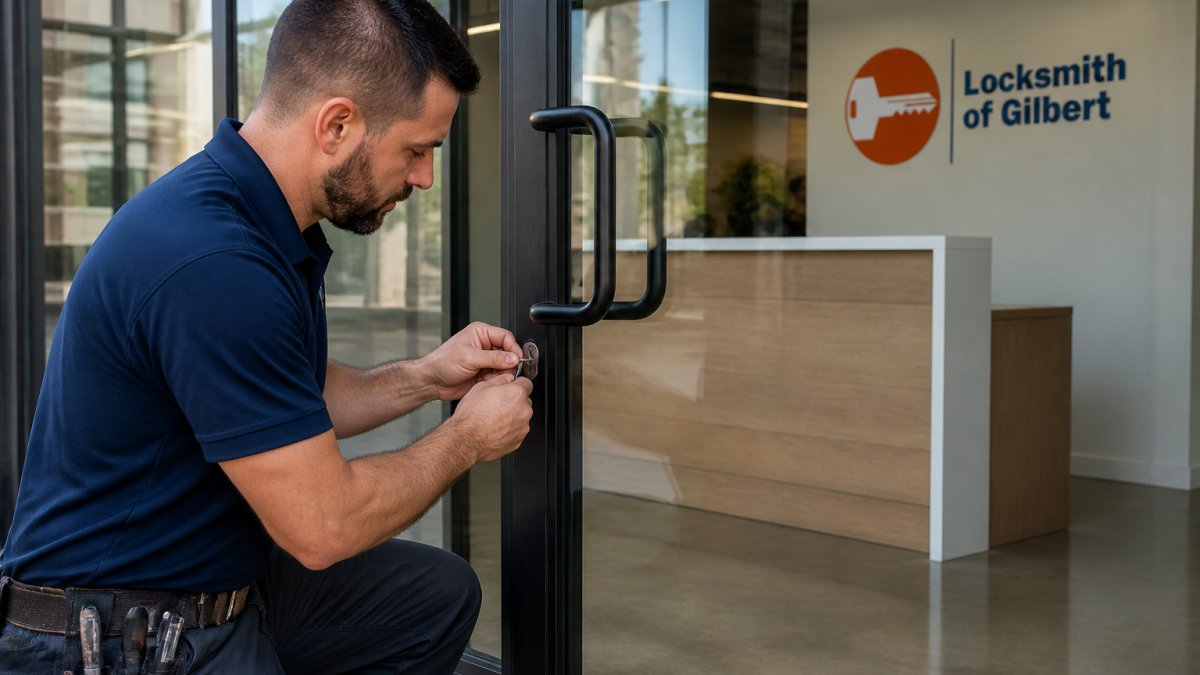
Locksmith Of Gilbert specializes in commercial high-security lock installation for businesses across the eastern valley.
Professional High-Security Lock Installation and Door Compatibility
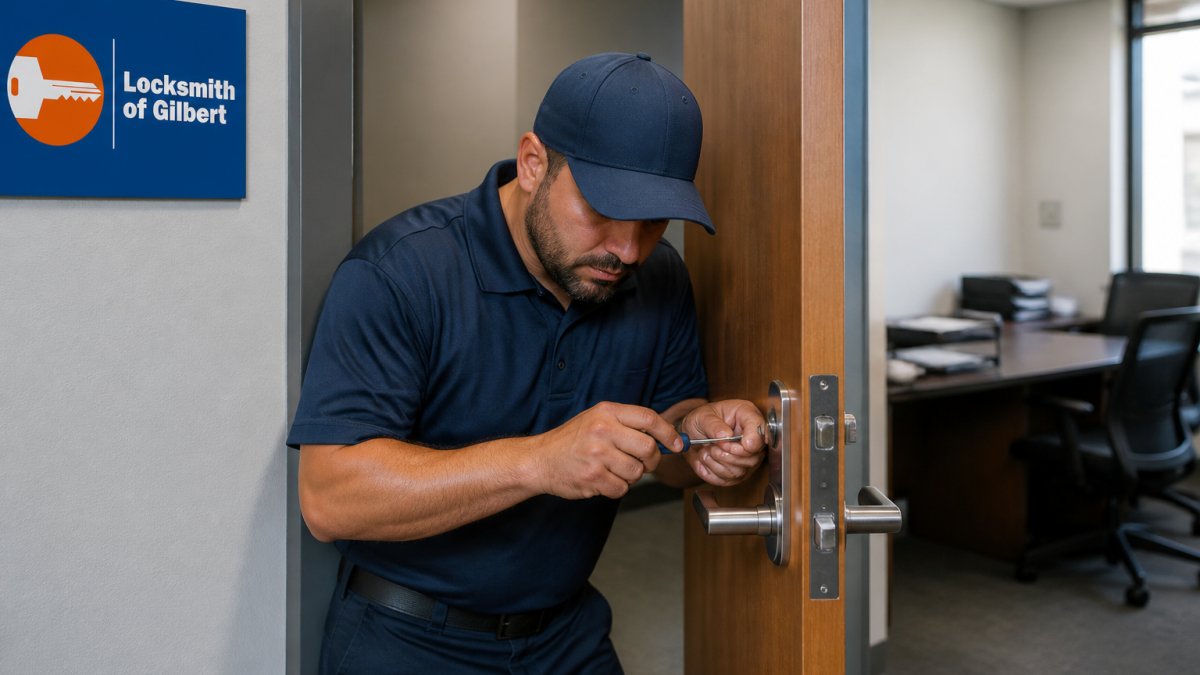
High-security lock installation is not a DIY project. Proper installation requires understanding door construction, frame reinforcement, and strike plate positioning, details that determine whether the lock performs as designed. A Grade 1 deadbolt mounted in a hollow-core door with a 1/2-inch strike plate screw is a Grade 1 lock that fails on the first kick.
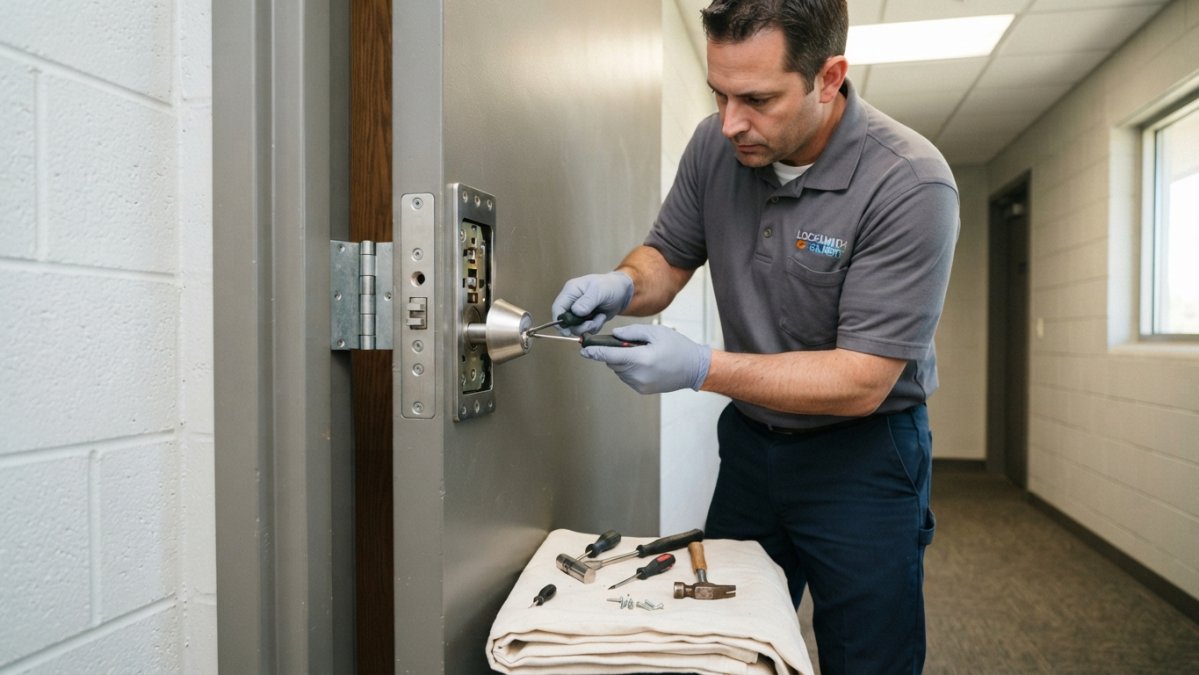
The compatibility assessment, step by step
A professional installation starts with a walk-through of the door assembly, not the lock box. The assessment covers:
- Door material and core. Solid wood, solid-core composite, and hollow metal doors can accept a high-security deadbolt with proper preparation. Hollow-core wood and thin-gauge metal doors usually need reinforcement or replacement before a high-security cylinder is worth installing.
- Door thickness. Most residential deadbolts are designed for 1-3/8-inch to 1-3/4-inch doors. Commercial hollow-metal doors are often 1-3/4 inches; some fire-rated assemblies require specific hardware. The cylinder and bolt must match the door thickness, or the lock will bind or sit proud of the face.
- Frame condition and material. A split jamb, rot, or a frame that flexes under pressure defeats any lock. Wood frames may need a reinforced strike or a security strike plate; hollow-metal frames may need internal reinforcement plates.
- Existing hardware and prep. Backset (2-3/8 inches vs. 2-3/4 inches), bore diameter, and cross-bore alignment determine whether a new lock drops into the existing prep or requires re-drilling. Mixing a high-security cylinder with mismatched hardware is a common source of callbacks.
- Cylinder placement. Keeping the cylinder away from the door edge and from glass within arm's reach reduces the risk of a reach-around or break-and-reach attack. Where glass is adjacent, a double-cylinder deadbolt or a protective plate may be appropriate.
- Fire and egress requirements. On commercial egress doors, hardware must comply with life-safety requirements, panic hardware, single-motion egress, and no double-cylinder deadbolts on egress paths. This is where a locksmith who works commercial doors earns their keep.
The whole-door checklist
A strong lock cannot compensate for a weak door, frame, or strike. Before signing off, the installer should confirm:
- Strike plate anchored with 3-inch screws into the framing stud or metal frame, not just the jamb.
- Hinges secured with long screws or security hinges on out-swinging doors.
- Door slab free of cracks, delamination, or flex at the lock area.
- Deadbolt throw fully engages the strike (at least 1 inch on most residential locks).
- No gaps that allow a shim or pry bar to reach the bolt.
- All locks on the door operate smoothly with the door closed and latched.
Standards to ask about
When comparing products, ask for the rating rather than the marketing language. ANSI/BHMA A156.5 covers auxiliary locks and deadbolts, with Grade 1 being the highest residential/commercial duty grade. UL 437 covers key locks and includes drill, pick, and bump resistance testing. For commercial doors, NFPA 80 governs fire-door assemblies and NFPA 101 covers life safety, both constrain which hardware can legally be installed on a rated door. A locksmith who can cite these without looking them up is a locksmith who installs to them.
What installation includes
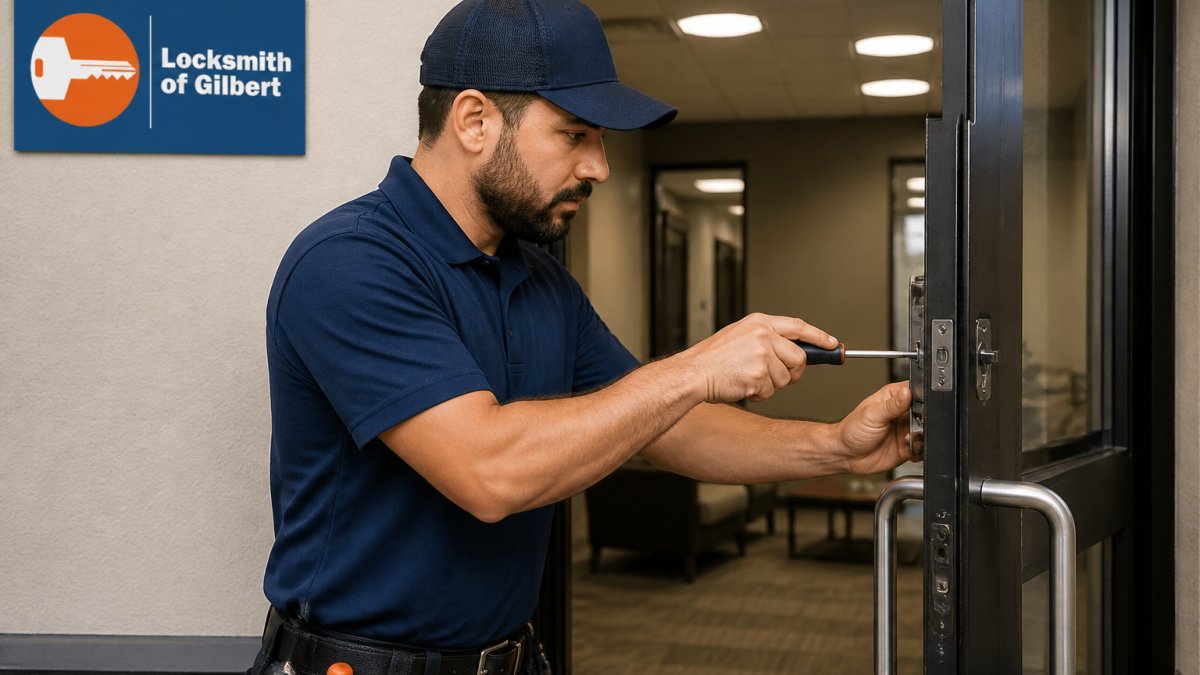
A complete installation includes the compatibility assessment, any door or frame reinforcement, cylinder and bolt fitting, strike alignment, operational testing, and documentation: key records, the lock model and rating, and maintenance recommendations. If a quote skips the assessment or the documentation, it's a hardware swap, not a security upgrade.
Commercial Lock Rekeying for Tenant Turnover and Access Control
Commercial lock rekeying is one of the most practical applications of high-security locks.
Property managers use rekeying to implement access changes quickly. When a department reorganizes, a new manager takes over, or security protocols change, rekeying adjusts access instantly.
For buildings with dozens of suites or hundreds of locks, the ability to rekey on demand transforms access control from a logistical nightmare into a manageable process.
High-security lock installation is an investment in measurable protection.
If you're managing a commercial property or business facility and need a security upgrade, we recommend starting with a professional assessment.
Frequently Asked Questions
What are the main benefits of high-security lock installation?
High-security lock installation provides multiple layers of protection against unauthorized access, break-ins, and theft. These locks resist common bypass techniques like picking, bumping, and drilling, which standard locks cannot withstand. They also feature restricted key systems that prevent unauthorized key duplication, giving you complete control over who can access your property. For businesses, this means reduced liability, better employee access management, and protection of valuable assets. The deterrent effect alone, knowing intruders will face serious resistance, makes a significant difference in property protection.
How do high-security locks differ from standard locks?
Standard locks use simple pin-tumbler designs that can be compromised in seconds using basic tools. High-security locks employ advanced mechanisms like hardened steel components, anti-drill plates, and complex keyways that resist manipulation. They include features such as security pins, restricted keyways, and reinforced cylinders. Standard locks typically allow key duplication at any hardware store, while high-security locks use patented key systems where only authorized locksmiths can duplicate keys. This combination of physical strength and key control makes high-security locks far more effective at preventing forced entry and unauthorized access.
Can high-security locks prevent lock picking and bumping attacks?
Yes. High-security locks are specifically engineered to resist both lock picking and bumping techniques. They use security pins with irregular shapes that prevent manipulation, and their cylinders are hardened against drilling attempts. The restricted keyway design makes it extremely difficult for unauthorized tools to fit inside. Bumping, a technique where a specially cut key is struck to manipulate pins, is ineffective against high-security locks because their pins have anti-bump features. While no lock is 100% impenetrable, high-security locks require specialized knowledge and tools that most intruders simply don't possess, making them an effective deterrent.
Why should businesses invest in commercial high-security locks?
Businesses face unique security challenges: multiple employees need access, valuable inventory must be protected, and unauthorized entry can result in significant losses. Commercial high-security locks provide access control through master key systems and restricted key duplication, so you decide who enters which areas. They protect against both external break-ins and internal theft. For property managers handling tenant turnover, high-security locks ensure old tenants cannot return and copy keys. The investment in commercial lock rekeying and high-security hardware typically costs far less than dealing with theft, liability claims, or security breaches. Businesses also benefit from the professional installation that ensures proper door frame and hardware compatibility.
How does key control work with restricted key systems?
Restricted key systems use patented keyway designs that only authorized locksmiths can duplicate. When you install a high-security lock, you receive keys that cannot be copied at standard hardware stores. This means you maintain complete control over who has access to your property. Property managers can issue keys only to current tenants, and businesses can revoke access immediately by rekeying locks when employees leave. The restricted key system prevents a lost key from becoming a security risk, since the finder cannot simply duplicate it. This level of key control is essential for commercial properties, rental units, and any situation where access needs to change regularly.
What should I expect during professional high-security lock installation?
A professional locksmith will first assess your existing door, frame, and hardware for compatibility. High-security lock installation requires precise alignment to function properly and provide full protection. The locksmith will remove your old lock, prepare the door opening if needed, and install the new mechanism with attention to strike plate positioning and door frame integrity. Proper installation ensures the lock functions smoothly and provides maximum resistance to forced entry. The entire process requires expertise, incorrect installation can compromise the lock's security benefits. After installation, the locksmith will test the lock multiple times and provide you with restricted keys and documentation. This professional approach is why hiring a qualified locksmith matters more than attempting DIY installation.
When should a business replace or upgrade its locks?
Businesses should upgrade to high-security locks when employee turnover occurs, when security concerns arise, or as part of routine maintenance. Tenant turnover is a critical moment, old tenants should never retain the ability to access your property. If you've experienced a break-in or attempted break-in, upgrading immediately sends a message that security matters. Aging locks lose effectiveness as mechanisms wear, making commercial lock rekeying or replacement necessary. Seasonal changes can also prompt upgrades, such as before peak inventory periods. Property managers typically rekey locks between every tenant, which is an ideal time to upgrade to high-security systems. A professional locksmith can assess your current security and recommend the right timing and approach for your situation.