 ultimate-guide
Signs of a Scam Locksmith Company: 10 Red Flags to Know
Table of Contents
- 10 Warning Signs of a Scam Locksmith Company
- Suspiciously Low Initial Quotes
- Unmarked Vehicles and No Branding
- Pressure to Drill or Replace Locks Immediately
- No Professional Identification or Credentials
- Pricing That Changes From Phone to Doorstep
- No Physical Business Address
- Aggressive Sales Tactics and Intimidation
- How to Report a Fraudulent Locksmith
- Questions to Ask a Locksmith Before Hiring
- How to Verify a Locksmith License and Credentials
- Locksmith Bait and Switch Tactics Explained
- Invoice and Receipt Red Flags After Service
- Conclusion
- Frequently Asked Questions
Last Updated: September 28, 2026
10 Warning Signs of a Scam Locksmith Company
A scam locksmith company is a fraudulent service that quotes a low price over the phone, arrives in an unmarked vehicle, and pressures you into paying far more than agreed before you get back inside your home or car. The signs of a scam locksmith company are consistent enough that you can spot most of them before anyone touches your lock, and this guide from Locksmith Of Gilbert walks through each one.
Lockout situations make you vulnerable. You are standing outside, often at night, often alone, and the person who shows up controls whether you sleep in your own bed. That imbalance is exactly what fraudulent operators exploit. The ten red flags below are the ones that matter most, followed by the questions to ask, the verification steps to take, and what to do if you have already been scammed.
Suspiciously Low Initial Quotes
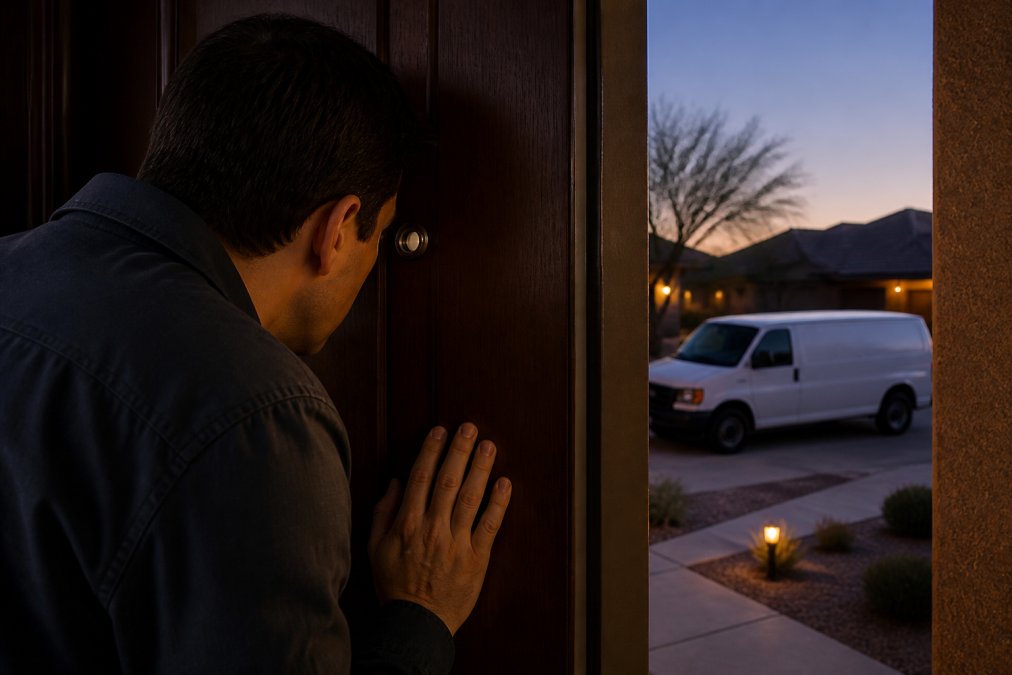
The most reliable early warning is a phone quote that sounds too good. A legitimate locksmith prices a job based on lock type, time of day, and travel, and will tell you the quote is an estimate that can change once the technician sees the hardware. A scam operator quotes an artificially low number to win the call, then invents reasons to raise it on site.
If the number you are given is dramatically below every other quote you collected, that is not a bargain. It is the bait.
Unmarked Vehicles and No Branding
A legitimate technician typically arrives in a marked vehicle or at minimum carries branded identification, a business card, and paperwork tied to a named company. An unmarked van with no signage, no company name on the technician's shirt, and no business card is a serious problem. You have no way to trace who was at your door, and no way to hold anyone accountable afterward.
Pressure to Drill or Replace Locks Immediately
Non-destructive entry, meaning lock picking or bypass techniques that leave the lock working, is standard practice for a competent locksmith on a functioning lock. A technician who immediately declares the lock must be drilled out and replaced is either unskilled or running a scam. Drilling destroys the cylinder. That means a hardware replacement charge on top of the labor, and it is one of the most common bait and switch tactics in the trade.
No Professional Identification or Credentials
Ask for identification before anyone starts work. A professional will hand over a license or certification, a business card, and a company name you can verify. Refusal, hesitation, or a vague answer about "the company" is a red flag. Some states license locksmiths and some do not, so the specific credential varies, but a real business can always tell you who it is and prove it. You can check licensing and complaint history through your state's consumer protection office or attorney general.
Pricing That Changes From Phone to Doorstep
The single most common complaint pattern is a price that grows between the call and the invoice. The quote was one number, the on-site assessment produces another, and by the time the work is done a service call fee, an emergency surcharge, and a hardware charge have appeared. Inconsistent pricing from phone to site is not a misunderstanding. It is the business model.
No Physical Business Address
Ask for the company's physical business address, not a dispatch center or a call center. A local locksmith operates from a real location you could drive to. A company that routes calls through an out-of-state call center and dispatches whichever subcontractor is nearby has no stake in your community and no reputation to protect. Check the address on the website against a local business directory and a map listing.
Aggressive Sales Tactics and Intimidation
Intimidation takes many forms. A technician may refuse to reassemble the lock until you pay. They may demand cash only, follow you to an ATM, or stand between you and your door. They may quote a number far above the estimate and imply the situation will get worse if you argue. Any of these is grounds to stop the transaction and call for help.
How to Report a Fraudulent Locksmith
Report a fraudulent locksmith to your state's consumer protection agency and your state attorney general's office, and file a complaint with the Better Business Bureau. If the technician demanded money under threat, that is a police matter, so call local law enforcement. Keep every document: the original phone quote, the invoice, the receipt, any text messages, and photos of the vehicle and license plate if you can take them safely. The FTC's consumer complaint portal accepts reports of deceptive business practices and routes them to the appropriate enforcement partners.
Questions to Ask a Locksmith Before Hiring
The fastest way to separate a real locksmith from a fraudulent one is to ask four specific questions before you agree to anything. A legitimate business answers all of them without hesitation. A scam operator gets vague, deflects, or pressures you to decide now.
- What is your business name and physical address? A real company answers immediately. A dispatcher reading from a script cannot.
- Are you licensed or certified, and can I verify that? Ask for the license number or the name of the certifying body.
- What is the total estimated cost, and what could change it? Get the answer in writing or by text before the technician arrives.
- Will you attempt non-destructive entry first? Any answer other than yes tells you what is coming.
How to Verify a Locksmith License and Credentials
Verifying a locksmith means checking three things before the technician arrives: the license or certification status, the business's physical presence, and its digital footprint. Locksmith licensing rules vary by state, and some states have no statewide license at all, so start with your state's consumer protection office or attorney general to find out what applies where you live. If your state does license locksmiths, the license number should be searchable in a public database, and the name on the license should match the name on the invoice.
Digital Footprint Verification
A company's online presence leaves a trail that is hard to fake consistently. Check whether the website lists a real local address, whether the phone number matches the one on the company's verified business listing, and whether reviews appear across multiple independent platforms rather than only on the company's own site.
Locksmith Bait and Switch Tactics Explained
Bait and switch in this trade follows a predictable script. The dispatcher quotes a low number to secure the job. The technician arrives, performs an on-site assessment, and announces that your lock is "high security" or "damaged" and cannot be opened without drilling. The price jumps, and because you are locked out and the old lock is already destroyed, you pay.
Invoice and Receipt Red Flags After Service
There is an insurance and liability angle here that most guides skip. If a fraudulent technician damages your door, frame, or lock hardware, your homeowner's or renter's insurance may cover the repair, but the claim usually requires documentation of who did the work and what was charged. A cash-only operator with no paper trail leaves you holding the full cost. Some service contracts and commercial property policies also require that work be performed by a licensed contractor, which means an unlicensed technician could void coverage for the affected hardware. For commercial properties, a single uninsured technician who damages a storefront door or an access control system can turn a minor repair into a five-figure loss with no path to recovery.
Conclusion
The signs of a scam locksmith company cluster around three things: a price that does not hold, an identity that cannot be verified, and pressure that does not let up. Spot any one of them and you have grounds to stop, ask questions, and call someone else.
Frequently Asked Questions
How do you know if a locksmith is legit?
Ask for their state license number and verify it through your state's licensing board or consumer protection office. Legitimate locksmiths carry proper identification, drive marked vehicles, and provide a written estimate before starting work. They also have a verifiable physical business address. If they hesitate to share credentials or pressure you to decide immediately, walk away.
What should I do if I suspect I have been scammed by a locksmith?
Document everything: save receipts, take photos of the technician and vehicle, and note the company name and phone number. Dispute the charge with your credit card company or bank immediately. File complaints with your state attorney general's office, the Better Business Bureau, and the Federal Trade Commission. If you felt threatened or the technician refused to leave, contact local law enforcement. Reporting fraud helps protect other homeowners in your area.
Why do some locksmith companies use bait-and-switch pricing?
Bait-and-switch pricing relies on urgency. When you are locked out, you are likely to accept the first quote you hear. Scam locksmiths advertise a low service call fee, then inflate the price once they arrive by claiming the job requires drilling, specialty hardware, or emergency surcharges. Always ask for a total estimate before the technician dispatches, and confirm whether the quoted amount covers labor and hardware.
How can I verify a locksmith's credentials before they arrive?
Request the locksmith's license number when you call, then check it against your state's licensing database. Search the business name online to confirm a physical address and read reviews across multiple platforms. A legitimate company will answer these questions without hesitation and may offer to email documentation before the appointment.