 how-to
How to Repair a Broken House Door Lock
Last Updated: October 25, 2026
Quick Summary
A broken house door lock can range from a key that won't turn to a latch that won't spring back. Start by testing the lock from both sides to identify whether the problem is in the keyway, cylinder, or latch mechanism, then try cleaning, lubrication, and tightening screws before considering replacement.
- Use graphite powder to lubricate locks; avoid WD-40 and general oils that leave sticky residue
- A lock that's hard to turn usually responds to compressed air cleaning and graphite powder lubrication
- Bent latch bolts and damaged cylinders cannot be repaired and require lock replacement
- Locks typically last 10-15 years; older locks should be replaced rather than repeatedly repaired
- Call a professional if a key breaks inside the lock, the door frame is damaged, or you need security upgrades
Table of Contents
- Diagnosing Your Broken House Door Lock
- Fixing a Door Lock That Is Hard to Turn
- Repairing a Door Latch Not Springing Back
- Removing and Removing a Broken Key Stuck in Lock
- Addressing Door Alignment and Frame Issues
- Door Lock Repair or Replacement: Making the Right Choice
- When to Call a Professional Locksmith
- Getting Your Lock Repaired or Replaced
- Frequently Asked Questions
Diagnosing Your Broken House Door Lock
A broken house door lock can range from a key that won't turn to a latch that won't spring back. First, figure out exactly what's wrong.
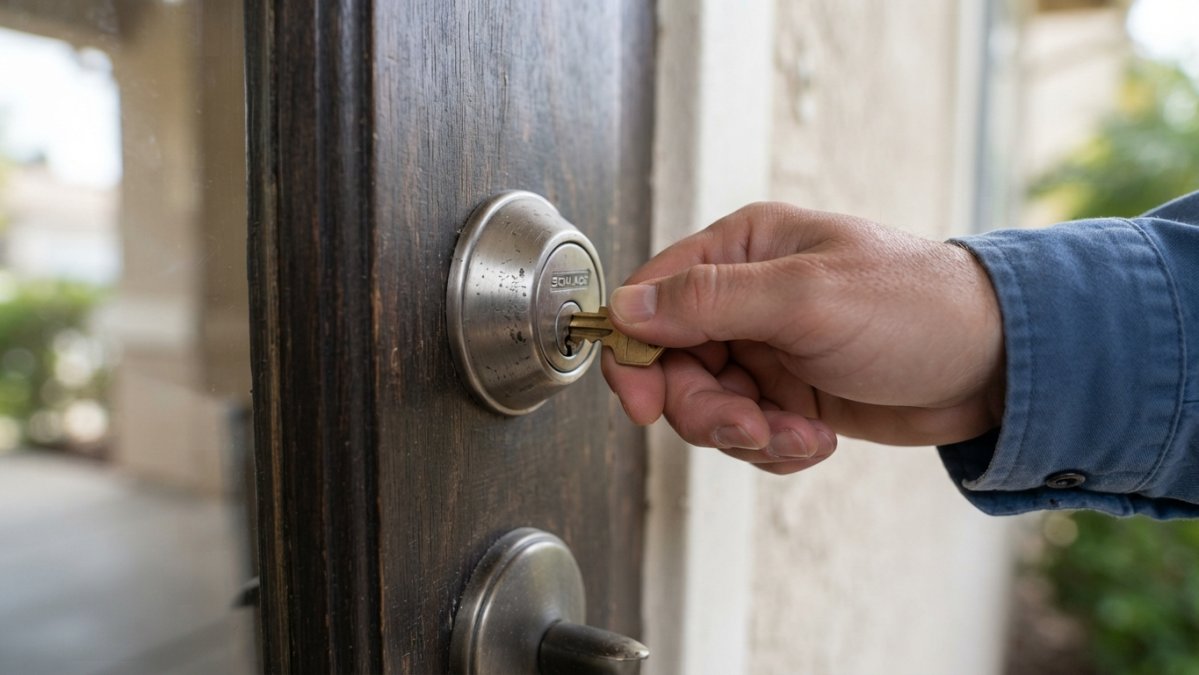
Test the lock from both sides: does the key go in smoothly and turn all the way, and does the latch bolt retract when you turn the knob? This tells you whether the problem is in the keyway, cylinder, or latch mechanism.
Identifying the Symptom
Your broken house door lock will show one of several clear signs, and knowing which narrows down the fix.
The lock might be stiff, the key might stick halfway, the latch bolt might not retract, or the key might not go in at all. Each symptom points to a different problem inside the mechanism.
Note whether the key turns partway and stops, doesn't turn at all, or the handle moves without the latch. These details matter when deciding whether to repair or replace.
Testing the Key and Mechanism
Insert the key slowly and feel for resistance. A key that slides in and turns easily means the cylinder is probably fine; one that catches means something inside is blocking it.
Try the key from both sides. If it works from one side but not the other, the problem is on that side; if neither works, it's deeper in the mechanism.
Test the handle without the key. A loose handle might just need tightening; one that doesn't move at all might mean broken internal linkage.
Fixing a Door Lock That Is Hard to Turn
A lock that's hard to turn usually means debris or rust has built up inside the keyway or cylinder, which cleaning and lubrication often fix.
Before applying lubricant, clear out what's blocking the mechanism. Dust, dirt, and rust accumulate over time and make the lock sticky.
Cleaning Debris from the Keyway
Start with compressed air: hold the can upright and blow into the keyway from multiple angles for 10-15 seconds, then test the key.
If that doesn't work, gently brush around the keyway opening with an old toothbrush to dislodge stuck particles. Don't force anything into the lock.
For stubborn debris, straighten a paper clip and gently probe the keyway opening to loosen trapped dirt. Don't scratch the cylinder or break the wire off inside.
Test the key again; it should move more smoothly. If it's still stiff, move on to lubrication.
Applying the Right Lubricant
Use a lubricant designed for locks. Graphite powder is best: it's dry, won't attract dirt, and won't gum up over time.
Avoid WD-40 and general-purpose oils, which leave sticky residue that traps dust and can damage lock components.
If you don't have graphite powder, spray a tiny amount of silicone-based lubricant on the key, insert it, turn it several times, and wipe away any excess.
Test the lock after lubrication; it should turn much more smoothly.
Repairing a Door Latch Not Springing Back
When the latch bolt doesn't retract as you turn the handle, something inside the latch mechanism is preventing the spring from pushing the bolt back.
The latch has a spring that pulls the bolt back when you release the handle. If that spring is broken or the bolt is bent, the latch won't work.
Inspecting the Latch Bolt
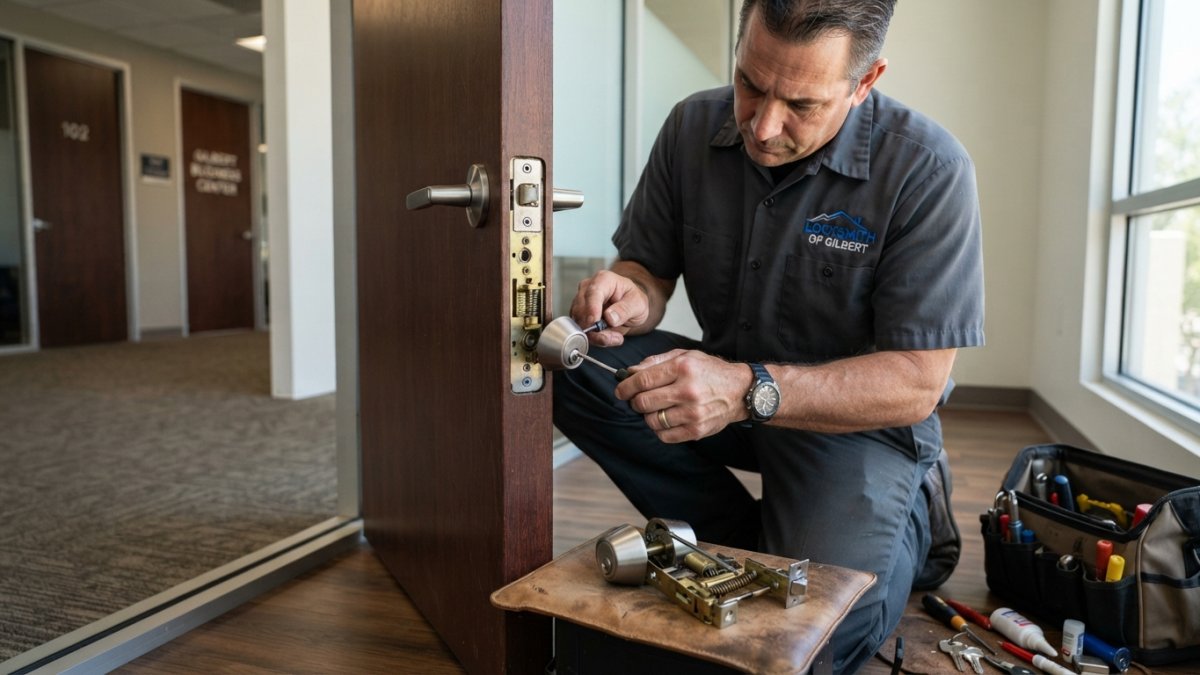
Remove the lock from the door to inspect it. Most locks have screws holding the knob or handle; remove these and pull the lock away.
A bent latch bolt won't retract smoothly and means the lock needs replacing.
Check the spring behind the bolt. A broken or missing spring means the bolt won't retract and usually requires replacing the entire lock mechanism.
Press the bolt with your finger. One that moves freely and springs back might just need cleaning and lubrication; one that's stuck needs replacement.
Checking and Tightening Hardware
Sometimes a loose screw is the culprit. Screws holding the latch mechanism loosen over time, letting internal parts shift and preventing the bolt from retracting.
Tighten each visible screw on the lock body. Don't overtighten; snug them up and test the latch after each adjustment.
Check the mounting screws holding the lock to the door too; loose ones let the lock shift and prevent smooth operation.
After tightening, test the latch from inside and outside; the bolt should retract smoothly.
Removing and Removing a Broken Key Stuck in Lock
A key that breaks inside the lock is frustrating but usually removable. Keys break from pressure or a jammed mechanism, and either way you can extract it without damaging the lock.
Never force the key; forcing it breaks it further and pushes pieces deeper. Patience and the right technique work better.
Safe Extraction Techniques
First, grip the exposed part of the key with pliers and pull straight out with steady pressure, not jerking motions.
If it still won't budge, wiggle it gently while pulling; small back-and-forth motions sometimes free a stuck key. If it resists, stop.
Another option is a thin piece of metal, like a small saw or paper clip, to hook the broken piece and pull it out.
If none of these work, the lock might need professional help. Trying too hard can damage the cylinder beyond repair.
Preventing Key Breakage
Keys break from excessive force or a jammed lock. Never force a key that resists; if it doesn't turn easily, stop immediately.
Keep your locks clean and lubricated. A well-maintained lock is less likely to jam. Regular lubrication prevents the internal parts from sticking.
Use the correct key for each lock. The wrong or worn-out key stresses both key and lock; if a key feels loose or doesn't fit snugly, have a new one made.
Handle keys gently. Don't use them as tools or put excessive pressure on them, and they'll last longer.
Addressing Door Alignment and Frame Issues
Sometimes the broken house door lock isn't actually broken; the door or frame has shifted, preventing the lock from working properly.
Check if the door closes smoothly and evenly.
Look at the gap between door and frame.
If the door is slightly out of alignment, loosen the hinge screws slightly, tap the door into better alignment, then retighten.
If the frame is bent or the door is severely twisted, professional help might be needed; structural issues can't be fixed with lock repairs alone.
Door Lock Repair or Replacement: Making the Right Choice
Not every broken house door lock is worth repairing. Replacement depends on the lock's age, the severity of the damage, and your security needs.
When to Repair vs. When to Replace
Repair makes sense for newer locks with minor problems: a lock that's hard to turn because of dirt, a loose screw, or a worn key is an easy fix.
Replacement makes sense for older locks or severe damage.
Consider the lock's age. Locks typically last 10-15 years with normal use; if yours is older, replacement beats repeated repairs and offers improved security.
Think about security. An old, worn lock is easier to pick or force; if security is a concern, replace it with a modern lock that offers better protection against break-ins.
Security Upgrades and Lock Types
When you replace a lock, consider upgrading. Modern locks offer features older ones don't.
A deadbolt is stronger than a simple spring latch. If you have only a spring latch, adding a deadbolt improves security significantly.
Smart locks offer convenience and security: unlock with your phone or a code, and they log who entered and when.
High-security locks have extra features that resist picking and forcing. They cost more but offer the best protection if security is a priority.
Deciding whether to repair or replace depends on the lock's age, damage severity, and your security needs.
| Situation | Best Choice | Reason |
|---|---|---|
| Newer lock, minor problem | Repair | Hard turn, loose screw, worn key are easy fixes |
| Bent latch bolt | Replace | Cannot be repaired, needs replacement |
| Damaged cylinder | Replace | Won't turn, needs replacement |
| Lock forced open | Replace | Damaged beyond repair, security compromised |
| Lock over 10-15 years old | Replace | Repeated repairs cost more than replacement |
| Security upgrade desired | Replace | Modern locks offer better break-in protection |
When to Call a Professional Locksmith
Some broken house door lock problems are beyond DIY. Knowing when to call a professional saves time and prevents damage.
Call if you can't remove a broken key; trying too hard can damage the cylinder, and a professional has tools to remove it safely.
Call if the door or frame is damaged. Structural issues need professional assessment to determine whether the door can be repaired or replaced.
Call if you need security upgrades.
At Locksmith Of Gilbert, we handle all types of lock repairs and replacements. Our team works with residential, commercial, and automotive locks.
Getting Your Lock Repaired or Replaced
A broken house door lock doesn't have to stay broken. Many problems are fixable with basic cleaning, lubrication, and tightening. Others require replacement or professional help.
Start by diagnosing the problem. Is the lock hard to turn? Does the latch not spring back? Is a key stuck inside? Each symptom has a solution.
Try the simple fixes first. Clean the keyway, apply lubricant, and tighten loose screws. These often solve the problem without cost or hassle.
If the lock is severely damaged, bent, or won't work despite your efforts, replacement is the right choice for better security and reliable operation.
When you need professional help, professional residential locksmith services are available for your home. For businesses, prompt commercial locksmith services handle security upgrades and emergency access. Both options include rekeying locks vs. replacing information to help you decide between repair and replacement. For stuck keys, techniques for removing broken keys show safe extraction methods.
Frequently Asked Questions
Can a locksmith repair a broken house door lock?
Yes. A professional locksmith can diagnose the issue and repair many broken house door locks by cleaning the mechanism, replacing worn parts, adjusting the latch, or tightening loose hardware. Some locks can be restored to full function; others may need replacement. A locksmith can assess whether repair is cost-effective or if a new lock is the better choice for your security and budget.
Why isn't my door latch springing back?
A latch that doesn't retract usually has a worn spring, misaligned door frame, or loose hardware inside the lock mechanism. Inspect the latch bolt for damage, check that all screws are tight, and verify the door closes evenly in the frame. If the door frame is warped or the hinges are sagging, the latch may bind. Cleaning and lubricating the mechanism sometimes restores function; persistent problems often require professional repair or replacement.
What should you do if a key is stuck in a door lock?
Do not force the key. Apply a small amount of graphite powder or silicone-based lubricant (never oil-based) around the keyway, wait a few minutes, then gently wiggle the key while turning it slowly. If the key remains stuck, stop and call a locksmith to avoid breaking it inside the cylinder. A broken key inside the lock requires professional extraction and may damage the cylinder, making replacement necessary.
How do you know whether a door lock needs repair or replacement?
Repair is usually worth considering if the lock is relatively new, the mechanism responds to cleaning and lubrication, hardware is intact, and the cost is significantly less than replacement. Replace the lock if it's old, the cylinder is damaged, the key is worn and won't turn reliably, or the lock has failed repeatedly. Consider replacement also if you're upgrading security or moving to a new home and want fresh locks for peace of mind.