 how-to
How to Remove a Broken Key from an Ignition Cylinder
Table of Contents
- Assess the Broken Key and Ignition Damage
- Essential Broken Key Extraction Tools
- Step-by-Step Extraction Techniques
- Safety Precautions and What to Avoid
- Ignition Cylinder Replacement Cost and When It's Needed
- When to Call an Automotive Locksmith for Emergency Services
- Frequently Asked Questions
Last Updated: September 23, 2026
Assess the Broken Key and Ignition Damage
Knowing how to remove a broken key from an ignition cylinder can turn a stressful situation into a manageable one. But before you grab tools and start pulling, you need to understand what you're dealing with. The wrong move could trigger your vehicle's steering lock or damage the ignition switch beyond repair.
Start by examining the broken key fragment. Look closely at what's still visible in the keyway. Is it metal shavings, or a large piece of the key shaft? Can you see the key's teeth, or is it smooth? This tells you whether the key snapped cleanly or shattered from metal fatigue.
Next, check the ignition cylinder itself. Try turning the steering wheel gently. If it locks up, your steering column may already be affected. Listen for grinding sounds or feel for grinding sensations when you try to turn the key. These are signs the cylinder has internal damage.
Look at the dashboard. Do your warning lights stay on? Is the immobilizer system flashing? A broken key can sometimes trigger the vehicle's security system, which prevents the engine from starting even after you remove the fragment.
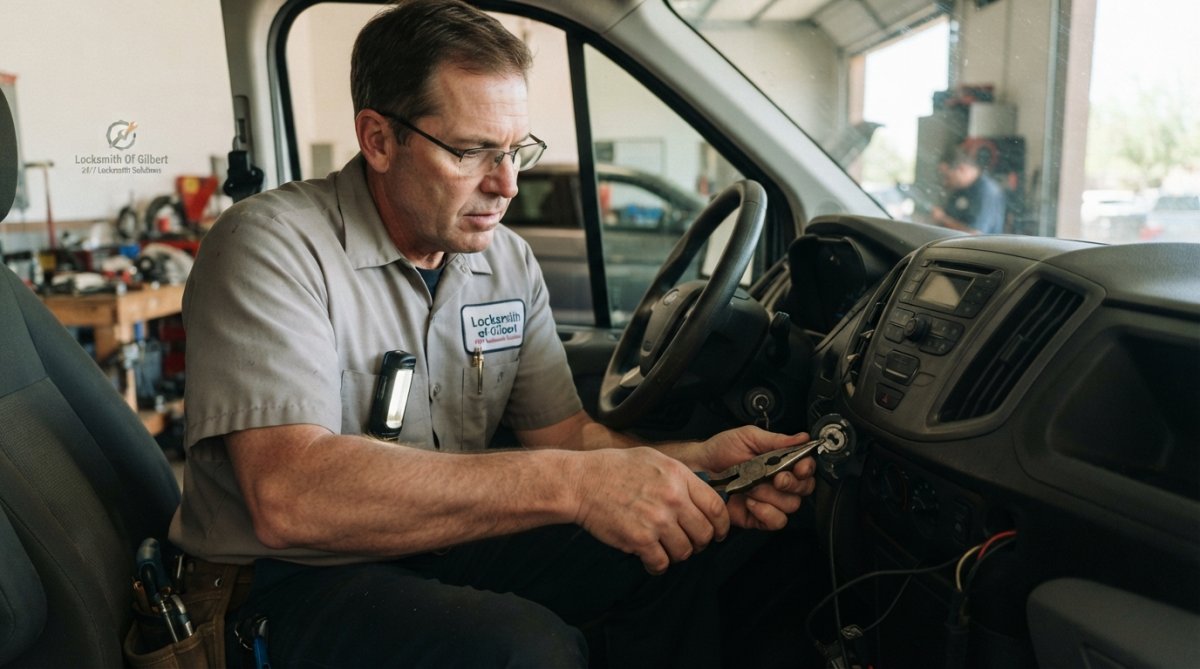
If you're in the eastern valley and this happens at 2 AM, Locksmith Of Gilbert offers 24/7 automotive locksmith services. We assess ignition damage before attempting extraction, which saves you from making it worse.
Essential Broken Key Extraction Tools
You don't need many tools, but you need the right ones. Using the wrong tool can snap the fragment deeper or scratch the ignition cylinder so badly it needs replacement.
Tools that actually work:
- Needle-nose pliers with a fine grip (not regular pliers)
- A jigsaw blade or scroll saw blade (thin, sharp edge)
- Graphite spray lubricant or silicone spray
- A key extraction tool (if you have one)
- Tweezers for tiny fragments
- A flashlight or headlamp
Tools to avoid:
- Super glue or cyanoacrylate (see the safety section below)
- Magnets (they don't work on most keys and can damage electronics)
- Screwdrivers (too thick, will scratch the cylinder)
- Pliers with wide jaws (they crush fragments instead of gripping them)
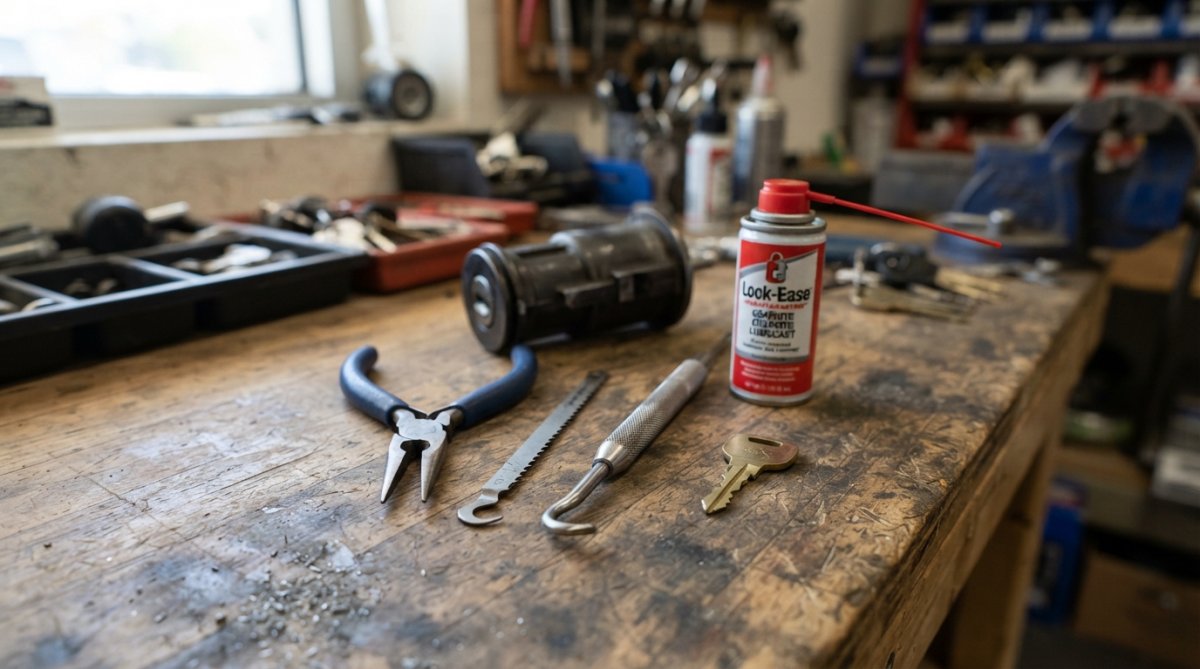
The key extraction tool is worth mentioning. It's a small, specialized tool designed to hook broken key fragments. You can buy them online or at automotive supply stores. They're cheap and much safer than improvising with pliers.
Lubricant matters more than you'd think. Graphite spray is better than silicone spray for ignition locks because it doesn't leave residue. But either works. The lubricant reduces friction and helps the fragment slide out instead of getting stuck.
Step-by-Step Extraction Techniques
Method 1: Using Needle-Nose Pliers
This is the most common approach and works when the key fragment is large enough to grip.
Step 1: Prepare the ignition. Turn off the engine. Make sure the key is in the OFF position, not ACC or ON. This prevents the steering lock from engaging while you work.
Step 2: Get a good grip. Use your flashlight to see inside the keyway. Position the needle-nose pliers around the visible part of the broken key. Grip firmly but don't squeeze so hard you crush the fragment.
Step 3: Pull straight out. Pull gently and steadily toward you. Don't twist or rock the pliers side to side. Twisting can break the fragment into smaller pieces or damage the tumblers.
Step 4: Check for remaining pieces. Once you remove the main fragment, look inside the keyway with your flashlight. Small pieces may still be stuck. Use tweezers to remove them carefully.
This method works best when at least half the key is still visible. If only a tiny bit is sticking out, move to Method 2.
Method 2: Using a Scroll Saw or Jigsaw Blade
When the key fragment is deep in the keyway and hard to grip, a thin blade can hook it out.
Step 1: Choose the right blade. A scroll saw blade is thinner than a jigsaw blade but works the same way.
Method 3: Lubricant Application and Waiting
Sometimes the simplest approach works best.
Step 1: Apply lubricant. Spray graphite lubricant into the keyway. Use short bursts. You want the lubricant to coat the fragment and the cylinder walls, not flood the ignition.
Safety Precautions and What to Avoid
Why Super Glue and Cyanoacrylate Are Dangerous
The internet is full of advice to use super glue on broken keys. This is bad advice. Here's why.
Don't use it. Period.
Avoiding Airbag Triggers and Steering Lock Damage
Modern vehicles have safety systems that can activate if you mess with the ignition. You need to know what you're risking.
Ignition Cylinder Replacement Cost and When It's Needed
Signs of Permanent Ignition Damage
Not every broken key damages the ignition cylinder. But some do. You need to know the difference between a cylinder that still works and one that's ruined.
Signs the cylinder is damaged:
- The key fragment won't come out no matter how gently you try
- The ignition feels gritty or grinding when you turn it
- The steering wheel locks and won't unlock
- The immobilizer light stays on after you remove the key
- A new key won't turn in the ignition
- The ignition cylinder is visibly cracked or broken
Signs the cylinder is still good:
- The fragment comes out without excessive force
- The ignition feels smooth after extraction
- A new key works fine
- No warning lights on the dashboard
- The steering wheel unlocks normally
Post-Extraction Ignition Health Check
After you remove the broken key, test the ignition before you declare victory.
When to Call an Automotive Locksmith for Emergency Services
Situations Where DIY Extraction Risks Damage
Some broken key situations are beyond DIY repair. Knowing when to stop and call a professional saves money and prevents worse problems.
Call a locksmith if:
- The key broke deep in the ignition and you can't see more than a tiny fragment
- You've tried extraction for 20 minutes without progress
- The key won't budge even with lubricant
- You hear grinding or feel grinding in the ignition
- The steering wheel locked and won't unlock
- You're worried about damaging the immobilizer system
- The vehicle is newer (2010 or later) with complex electronics
- You don't have the right tools
Professional Extraction and Immobilizer System Checks
A professional locksmith brings tools and knowledge you don't have. Here's what the process looks like.
Frequently Asked Questions
How do I safely remove a broken key from an ignition cylinder without causing damage?
The safest approach depends on how much of the key is visible. If the fragment protrudes, use needle-nose pliers with a gentle twisting motion to extract it. Apply graphite spray or silicone lubricant first to reduce friction. For fragments deeper in the keyway, a scroll saw blade can be carefully inserted alongside the key to create leverage. Avoid forcing the key or using super glue, as both can cause permanent damage to the ignition lock assembly and tumblers. If extraction proves difficult after 15 minutes of careful work, contact a professional locksmith to prevent steering column or ignition switch damage.
What broken key extraction tools do I actually need?
Essential tools include needle-nose pliers for direct extraction, a scroll saw or jigsaw blade for leverage, graphite spray or silicone-based lubricant, and a flashlight to see inside the keyway. A key extraction tool (a specialized hook designed for this purpose) is helpful but not mandatory if you have pliers. Some people use a magnet, but magnets are ineffective on most modern key materials and can damage the ignition cylinder's wafer pins and tumblers. Avoid super glue or cyanoacrylate products entirely, they bond the fragment permanently to the cylinder and require professional removal.
Is it safe to use super glue to remove a broken key from my ignition?
No. Super glue and cyanoacrylate products are extremely dangerous and should never be used on an ignition cylinder. When applied to a key fragment, the glue bonds the metal to the cylinder's internal tumblers and wafer pins, making extraction exponentially harder and often requiring complete ignition lock assembly replacement. Professional locksmiths frequently encounter vehicles damaged by DIY super glue attempts, and the cost to repair or replace the cylinder far exceeds the cost of professional extraction from the start. Stick to mechanical methods: pliers, saw blades, and lubricants.
When should I call an automotive locksmith instead of trying DIY extraction?
Call a professional locksmith immediately if the key fragment is deeply embedded, if you lack the proper tools, or if you're concerned about damaging the steering column or triggering airbags. If the key doesn't budge after 15 minutes of gentle extraction attempts, stop and seek help. Locksmiths have specialized key extraction tools and can assess whether the ignition switch, transponder chip, or immobilizer system has been damaged. They can also perform a post-extraction ignition health check to confirm the vehicle starts and functions safely. For vehicle owners in the eastern valley experiencing this emergency, professional automotive locksmith emergency services are available 24/7.
A broken key in your ignition is fixable. Most of the time, you can remove it yourself with basic tools and patience. But if the key is stuck deep, if you hear grinding, or if you're unsure about the ignition's condition, professional extraction is the smart choice. Locksmith Of Gilbert offers 24/7 automotive locksmith services across the eastern valley. Contact us for broken key extraction, new key programming, and ignition system checks. We'll get you back on the road safely.