 how-to
Locksmith Guarantee for Cut Keys: What's Covered
Table of Contents
- What a Locksmith Guarantee for Cut Keys Actually Covers
- Understanding Locksmith Key Cutting Warranty Terms
- How to Test a Newly Cut Key Before Leaving
- What to Do When a Replacement Key Not Working Occurs
- Questions to Ask a Locksmith Before Key Cutting
- Key Types and How They Affect Your Guarantee
- Protecting Yourself: What to Know About Locksmith Guarantees
- Frequently Asked Questions
Last Updated: October 15, 2026
What a Locksmith Guarantee for Cut Keys Actually Covers
A locksmith guarantee for cut keys covers the workmanship of the cutting process: if a key is cut incorrectly and doesn't work, the locksmith remakes it at no charge.
At Locksmith Of Gilbert, we know guarantees matter. Most cover the precision of the cut and compatibility with your lock, not lock damage, misuse, or a defective blank.
Many customers assume a guarantee covers more than it does, that the key works forever, or that a lost key gets replaced.
Understanding Locksmith Key Cutting Warranty Terms
Locksmith key cutting warranty terms are simple in theory but confusing in practice. A typical warranty guarantees the cut key will work in the specified lock for a defined period, usually 30 to 90 days.
Typical Coverage Duration
Most locksmiths offer a 30- to 90-day guarantee on cut keys, giving you time to test the key and report issues. The duration typically resets if the locksmith remakes the key due to an initial error. Within the warranty period, a replacement is usually cut free; after it ends, key issues are your responsibility. Duration matters because locks wear over time, a 90-day window lets you find problems while the locksmith is still accountable.
What's Excluded from Most Guarantees
Most locksmith guarantees explicitly exclude several situations. Common exclusions include:
- Damage to the lock caused by the key. If the key damages the lock's internal mechanism, that's typically not covered.
- Wear and tear over time. Locks wear naturally. If a key stops working months after it was cut, the lock may have worn, not the key.
- Misuse of the key. Using excessive force, trying to force the key into a lock it wasn't made for, or using it for purposes beyond its design voids the guarantee.
These exclusions exist because they're outside the locksmith's control: a guarantee covers the locksmith's work, not your lock's lifespan or your use of the key.
How to Test a Newly Cut Key Before Leaving
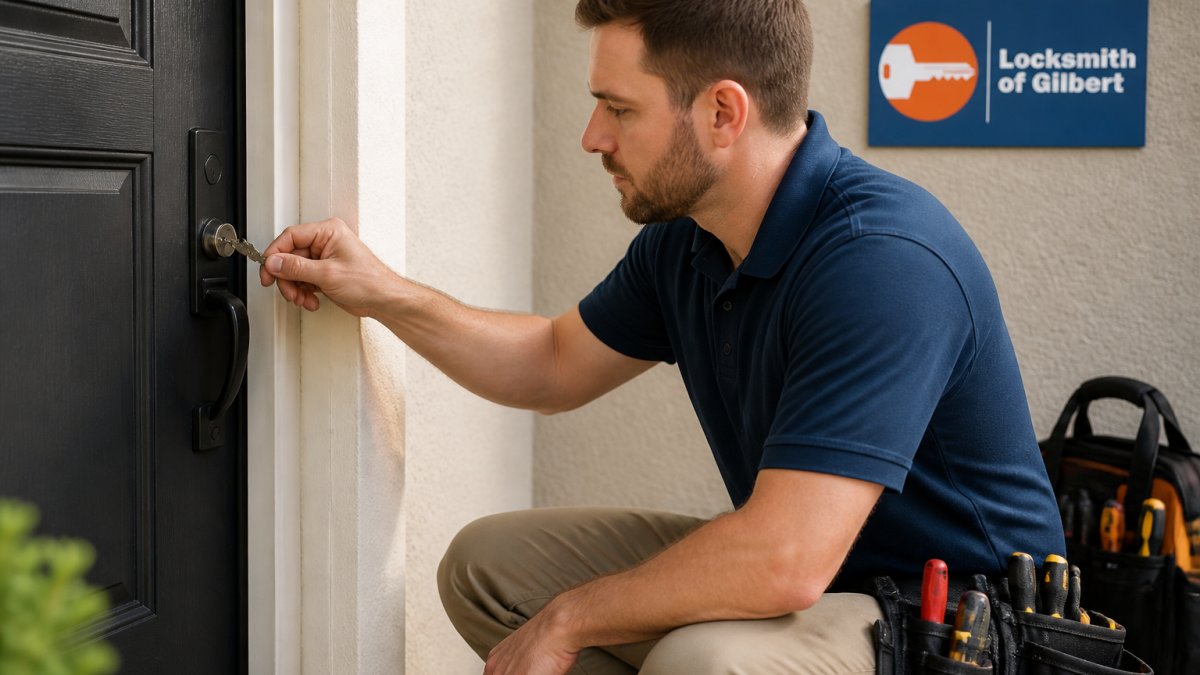
Test a newly cut key before leaving the locksmith's location. If it doesn't work, the locksmith can often remake it on the spot.
Here's how to test properly:
- Insert the key slowly. Don't force it. The key should slide in smoothly without resistance.
- Turn the key gently. A properly cut key turns with moderate pressure. If you need to apply significant force, something's wrong.
- Test the full range. Turn the key all the way through the lock's cycle, locking and unlocking.
Don't accept a key that "mostly works", a properly cut key works smoothly every time. If you're struggling, tell the locksmith immediately; most will remake it without argument.
What to Do When a Replacement Key Not Working Occurs
If your newly cut key doesn't work, contact the locksmith who cut it, ideally within the guarantee period. Most will remake it at no cost if the problem is their fault. Be specific when you call: does the key not insert, insert but not turn, or turn partway and stick? This helps the locksmith diagnose quickly. A responsive locksmith will ask you to come back or send someone out.
Questions to Ask a Locksmith Before Key Cutting
Most locksmith pages say "ask about the guarantee" and stop there, useless at the counter. These questions confirm coverage in writing or expose a gap before you pay.
Questions that produce a usable answer
- "Can I see the written warranty terms before you cut?" A verbal "we stand behind our work" is not a warranty. Ask for the terms on the receipt, a warranty card, or a service agreement. If nothing's in writing, treat the guarantee as nonexistent.
- "What is the exact coverage window, and does it reset if you remake the key?" Get a number of days, not "a while." Ask specifically whether a remake starts a new window or whether the original window still governs.
- "Does the guarantee cover the cut only, or also the blank and any programming?" These are three separate things. A cut can be perfect while the blank is defective or the transponder chip was never programmed. Confirm which of the three is covered.
Questions specific to commercial and master-key work
If you manage a building, offices, or a fleet, the guarantee conversation changes. Ask:
- "Does the guarantee cover keys cut to a master key system, or only stand-alone keys?" Master-keyed and grand-master-keyed systems depend on precise depth and spacing across every key in the hierarchy. A single miscut key can fail in one lock while working in another.
- "If a cut key fails in one lock but works in others, how do you handle it?" The answer tells you whether the locksmith understands cylinder wear, pin stack differences, and the difference between a bad cut and a worn cylinder.
- "Can you provide a certificate of coverage for our files?" Many commercial clients need something to attach to a work order or a maintenance log.
What a weak answer sounds like
- "We've never had a problem." That's a claim about the past, not a warranty.
- "Bring it back and we'll look at it." No timeframe, no remedy, no commitment.
- "The guarantee is on the key, not the lock." True, but incomplete, ask what happens when the key was cut correctly and the lock is worn.
Why this matters more for commercial work
A residential customer with one bad key loses a few minutes. A property manager with 40 suites and a master key ring loses access control across a building. Facilities supervisors should ask these questions before authorizing any key-cutting work order, and file the answers in the building's maintenance record.
Key Types and How They Affect Your Guarantee
The type of key affects both the cutting process and the guarantee terms.
Standard Keys and High-Security Keys
Standard keys are simpler to cut and covered by most basic locksmith guarantees, the typical residential and commercial keys in most homes and offices.
High-security keys are more complex, with restricted blanks, patented designs, or anti-pick profiles.
High-security keys often carry a higher price and sometimes a more limited guarantee, since the blank is more expensive and remaking it costs more.
Transponder and Chip Keys
Transponder and chip keys are automotive keys with electronic components. Cutting them is more complex: the cut must be precise, and the key must work mechanically and electronically. Guarantees for transponder and chip keys often differ: the locksmith guarantees the cut, not the electronic programming. If a correctly cut key won't start your car, the issue is likely programming. When getting one cut, ask whether the guarantee covers both the cut and the programming, some locksmiths include programming, others don't.
Protecting Yourself: What to Know About Locksmith Guarantees
A guarantee is only as strong as the paper behind it. Here's what a cut-key guarantee covers, what it excludes, how to test a new key, and what to do when one fails.
What a cut-key guarantee actually covers
A cut-key guarantee is a workmanship guarantee: it covers the accuracy of the cut and the key's ability to operate the intended lock. It is not a guarantee on the lock, cylinder, blank manufacturer, or transponder programming, those are separate products and warranties. In practice: if the key was cut incorrectly and doesn't operate the intended lock, the locksmith remakes it.
Written warranty terms: a checklist
Before you pay, confirm these appear in writing on the receipt, warranty card, or service agreement:
- Duration. A specific number of days from the service date. Common windows run from a few weeks to a few months.
- What's covered. Cutting accuracy, key operation, or both. Ask whether the blank and any programming are included.
- Remedy. Remake, refund, or credit. Know which one applies.
If any are missing, ask. A locksmith who can't answer in writing is offering a verbal promise, not a warranty.
How to test a newly cut key safely
Test before you leave the counter, without forcing anything.
- Inspect the cut. The bitting, ridges and valleys, should be clean, even, and free of burrs, which can make a correct key hang up.
- Insert slowly. The key should slide in with light resistance. If it stops partway, don't push harder, tell the locksmith.
- Turn gently. A correctly cut key turns smoothly through the full locked-to-unlocked cycle.
- Cycle it several times. A key that works once but not the third time may have a marginal cut.
- Test every lock it's meant for. For master-key systems, confirm it opens what it should and nothing else.
- Don't lubricate or wiggle to compensate. If you have to work the key, the cut or lock is the problem, forcing it can damage the cylinder and void the guarantee.
What to do when a cut key does not work
- Stop using the key. Forced attempts can damage the lock and complicate the claim.
- Contact the locksmith within the guarantee window. Call the same business that cut the key, not a different one.
- Describe the failure precisely. Won't insert, inserts but won't turn, turns partway, or works in one lock but not another, this tells the locksmith whether the issue is the cut, the blank, or the lock.
- Document everything. Photograph the key, lock, and receipt; note the cut date and the failure date.
- Ask for the remedy in writing. Confirm whether the locksmith will remake, refund, or credit, and by when.
- Escalate if needed. If the locksmith is unresponsive, a chargeback through your card issuer is a common path for a defective service. Keep your documentation.
Differences between key types and guarantee coverage
| Key type | What the cut involves | Typical guarantee focus |
|---|---|---|
| Standard pin-tumbler key | Simple bitting cut on a standard blank | Cut accuracy and operation |
| Restricted / patented key | Cut on a controlled blank that requires authorization to duplicate | Cut accuracy, plus blank availability and authorization |
| High-security key | Precision cut with tight tolerances, often on a patented profile | Cut accuracy; blank cost and availability may be excluded |
| Transponder / chip key | Mechanical cut plus electronic programming | Cut is covered; programming is often a separate warranty |
| Laser-cut / sidewinder key | Milled rather than stamped, tight depth and spacing tolerances | Cut accuracy; equipment-specific, so not every shop can remake |
Ask which applies to your key and whether the guarantee covers the cut, the blank, the programming, or all three.
Commercial key-control coverage
For commercial clients, the guarantee should extend to the paperwork. Ask for the key code, blank manufacturer, cut date, and warranty terms on the invoice, that record lets a property manager prove a claim, reorder matching keys, and keep the master-key system consistent. A locksmith who can't document commercial key work is a liability on a multi-tenant property.
What a guarantee is not
A guarantee is not insurance. It doesn't cover a lost or stolen key, a worn-out lock, a cylinder damaged by forcing, or a key used in a lock it wasn't cut for, only the locksmith's workmanship on the day of the cut. Knowing that boundary keeps a claim from becoming an argument.
Frequently Asked Questions
Do locksmiths guarantee cut keys?
Most professional locksmiths do offer guarantees on cut keys, though the scope and duration vary. A locksmith guarantee for cut keys typically covers defects in the cutting process and ensures the key functions in the lock it was designed for. Guarantees usually last 30 to 90 days, but you should always ask about the specific terms before authorizing the work. Get the guarantee details in writing so you know exactly what's covered if the key fails.
What does a locksmith key cutting warranty typically cover?
A locksmith key cutting warranty generally covers defects in the cutting accuracy and workmanship, ensuring the key operates the lock smoothly. It covers replacement or re-cutting if the key doesn't work due to the locksmith's error. Most warranties do not cover damage from misuse, wear on the lock itself, or keys damaged after you leave the locksmith's premises. Ask whether the warranty applies only to the initial cut or includes one free replacement if the key fails within the coverage period.
How can I test a newly cut key before leaving?
Test the key in the lock before you leave the locksmith's location. Insert it fully, turn it gently in both directions, and verify it operates the lock smoothly without binding or sticking. Test it multiple times to ensure consistent function. If the key binds, doesn't turn fully, or feels loose, tell the locksmith immediately so they can adjust or re-cut it while you're there. This prevents the frustration of discovering a faulty key after you've driven away or returned home.
What should I do if my replacement key doesn't work after I leave?
Contact the locksmith as soon as possible and explain the issue. If the key is still within the guarantee period and the problem stems from a cutting error, the locksmith should re-cut or replace it at no charge. Bring the faulty key and the lock to verify the problem. Document the issue and request the locksmith's response in writing. If the locksmith refuses to honor the guarantee or becomes unresponsive, check whether your state's consumer protection laws require dispute resolution or allow you to pursue a refund through your credit card issuer.