 how-to
Rekeying Multiple Locks to the Same Key: A Step-by-Step Guide
Table of Contents
- Understanding Lock Cylinder Compatibility Before You Start
- Keyed Alike vs. Master Keyed: Which System Works for You
- Can You Really Use the Same Key for a Deadbolt and Doorknob
- Tools and Materials You'll Need to Rekey Multiple Locks
- How to Rekey Locks to Match Your Existing Key
- Testing and Troubleshooting Your Rekeyed Locks
- When to Call a Professional Locksmith
- Frequently Asked Questions
Last Updated: October 17, 2026
Understanding Lock Cylinder Compatibility Before You Start
Before rekeying multiple locks same key, verify that all your locks can work together. Not every lock can be rekeyed to match another; the brand, model, and keyway design determine whether it's possible.
Think of the keyway as a lock's fingerprint: two locks with different keyways cannot use the same key. Check this first before investing time in a rekeying project.
Checking the lock brand and model
Identify every lock you want to rekey and write down its brand name and model number, usually stamped on the metal face or cylinder.
If you can't find a model number, photograph the lock and search online. The exact brand matters because manufacturers use different keyway designs.
Verifying keyway matching
The keyway is the shape of the slot where your key goes, and two locks can only share a key if their keyways are identical.
Many brands offer multiple keyway options. Schlage, Kwikset, and other major manufacturers make locks with widely available standard keyways.
Check the packaging or manufacturer's website for keyway information; some locks are labeled with a keyway code.
Keyed Alike vs. Master Keyed: Which System Works for You
When you want multiple locks to open with the same key, you have two main approaches: keyed alike or a master-key system.
Keyed alike means every lock in the group uses the same key, with no hierarchy.
Master keyed means the locks are built with a hierarchy: a master key opens every lock, while each lock has its own change key that opens only that lock.
Security trade-offs to weigh:
- Keyed alike: Convenience is high, but a single lost key compromises every lock in the group. If the key is lost, you must rekey all locks in the set, not just one. For a home with one household, that is usually acceptable. For a rental property or a business with turnover, it can be a significant cost and disruption.
- Master keyed: Access is more granular, so a lost change key affects only one lock, while a lost master key affects the entire system. Master-key systems also cost more to set up because the locks must be pinned to a hierarchy, and they require a locksmith or a specialized kit to build and maintain.
- Key control: With keyed alike, every key copy is a potential master key for the group. With master keyed, you can issue change keys more freely and keep the master key under tighter control. If you plan to hand out keys to employees, contractors, or tenants, master keying gives you a way to limit exposure.
What happens if a shared key is lost: With keyed alike, the safe response is to rekey every lock in the group to a new key, repeating the multi-lock procedure for all cylinders. This is the main reason commercial properties often choose master keying even when keyed alike would be simpler.
A practical decision framework:
- Choose keyed alike if all users should access all doors, the group is small, and you're comfortable rekeying the whole set if a key is lost.
- Choose master keyed if you need different access levels, issue keys to people outside your household, or want to avoid rekeying every lock when one key goes missing.
- If unsure, start with keyed alike for a small residential set and consult a locksmith before building a master-key system. Master keying requires planning the hierarchy before the locks are pinned; changing it later is more work than starting correctly.
Can You Really Use the Same Key for a Deadbolt and Doorknob
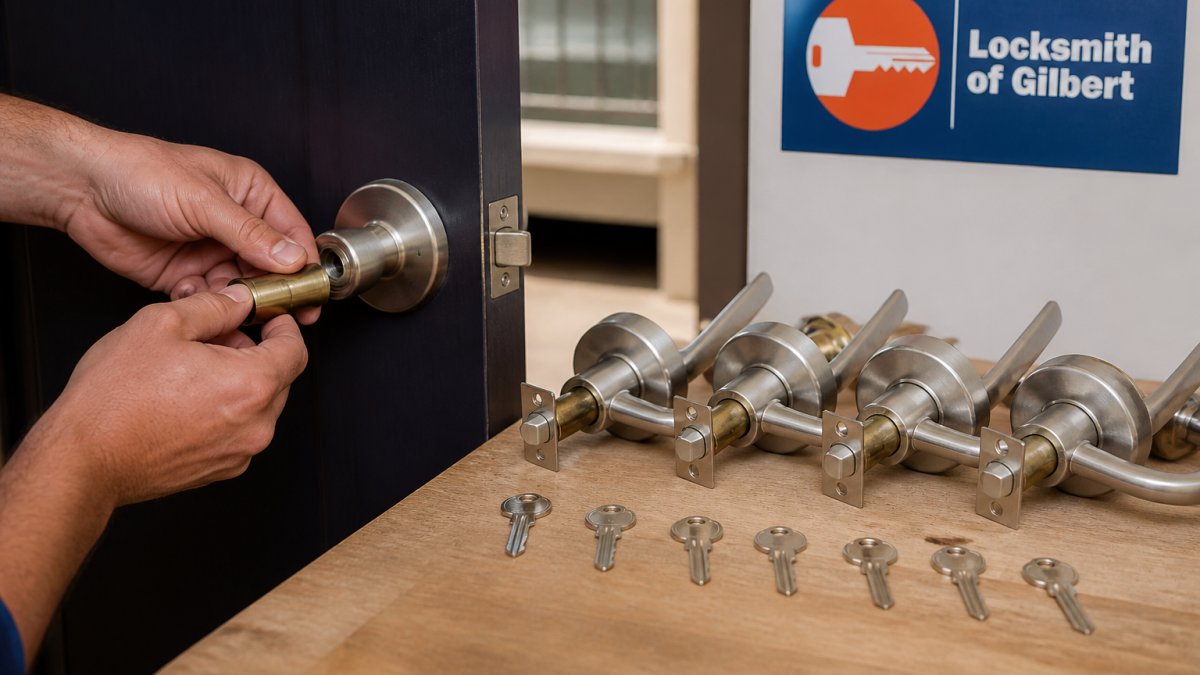
Yes, you can rekey a deadbolt and a doorknob to use the same key, but only if they share the same keyway, compatibility is the whole answer.
Most residential deadbolts and doorknobs from the same manufacturer share a keyway; Kwikset and Schlage both make deadbolts and doorknobs that can be rekeyed to match.
Before you start, remove both locks and compare the key slots.
Tools and Materials You'll Need to Rekey Multiple Locks
Rekeying one lock is a small project; rekeying several to the same key is a workflow, and the tools and preparation change accordingly.
Essential tools for multi-lock work:
- Rekeying kit specific to your lock brand and keyway (one kit per brand if you have mixed brands)
- Screwdrivers (flathead and Phillips, sized to your lock screws)
- Plug follower (included in most kits; a second follower helps when working on two locks in parallel)
What's in a rekeying kit and what to add for multiple locks: A standard kit includes pin stacks (key pins and driver pins), springs, a follower tool, and instructions.
Preparation steps that save time and prevent errors:
- Label each lock before disassembly with a numbered piece of masking tape on the lock body or its parts container.
- Keep one container per lock and place removed pins, springs, and the plug in it. Never mix parts between locks, even identical ones.
- If you're new to rekeying, photograph each lock's pin stack before removal as a reference if a pin rolls away.
- Set up your work area so the follower, tweezers, and pin tray are within reach; a consistent layout reduces mistakes.
- Have your existing key and a test key blank ready, the existing key sets each pin stack, and the blank tests the lock before reinstallation.
Sourcing note: Rekeying kits for common residential brands are widely available at hardware stores and online. Compare the pin assortment included rather than just the kit price.
How to Rekey Locks to Match Your Existing Key
This is the core process. Follow these steps carefully for each lock you want to rekey. The procedure is the same whether you're working on a deadbolt, doorknob, or any other pin-tumbler lock.
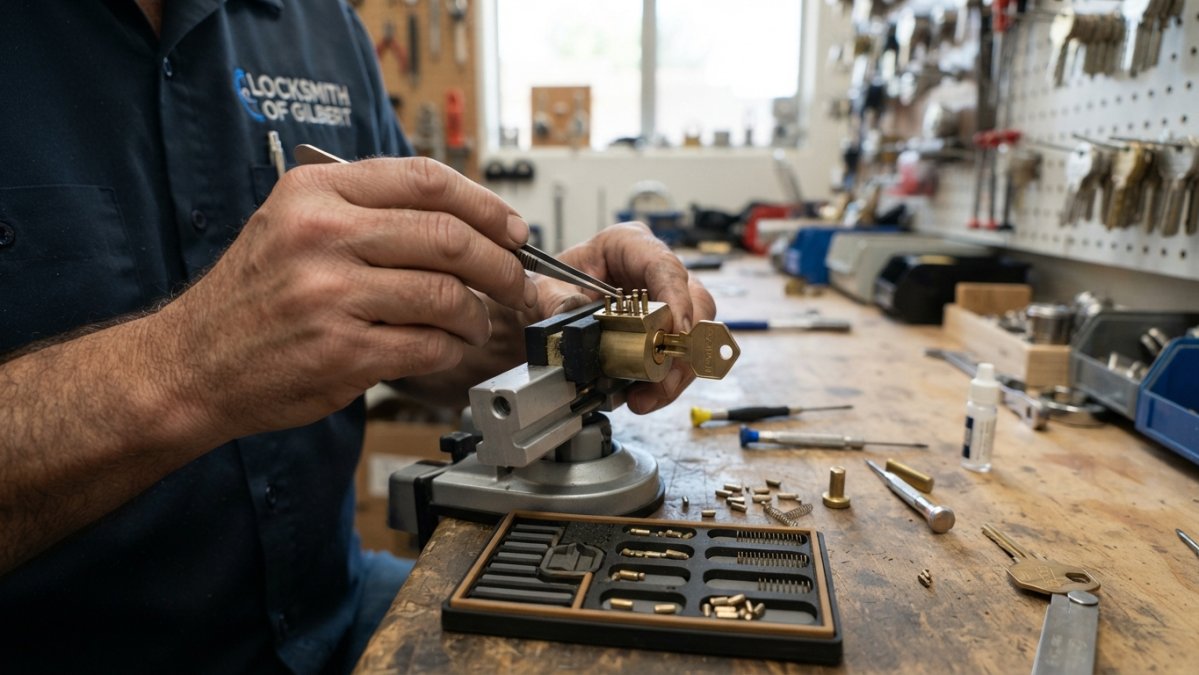
Step 1: Remove and disassemble the first lock
Remove the lock from the door with a screwdriver, then identify the cylinder, the part that rotates when you turn the key.
Some locks have a retaining ring or clip holding the cylinder; remove it carefully with your screwdriver. Don't force it, consult the lock's instruction manual if you're stuck.
Step 2: Extract the plug and pin stack
The plug is the rotating part inside the cylinder.
Use your plug follower to gently push the plug out of the cylinder; it prevents the pins from falling out as you remove the plug.
Once the plug is out, carefully remove the key. The pins should stay in place because of the follower. If they don't, the follower wasn't inserted correctly.
Step 3: Identify and replace the pins
Inside the plug are small stacked pins: key pins on the bottom and driver pins on top.
Remove the old pins one by one with tweezers, keeping them organized in your tray, and count them (usually five to six).
Now match your existing key to the new pin configuration.
Insert the new pins in the same order, matching heights to your key's cuts.
Step 4: Reassemble and test the lock
Once all new pins are in place, carefully remove the plug follower, reinsert your existing key, and turn it gently to verify the pins align.
Slide the plug back into the cylinder. If it doesn't slide smoothly, a pin is likely misaligned. Remove the plug and check your pin arrangement.
Once the plug slides in smoothly, reinstall the retaining ring or clip, screw the lock back into the door, and test your key multiple times to confirm smooth operation.
Step 5: Repeat for remaining locks
Follow the same process for each additional lock; the only difference is that you're matching each lock to your existing key rather than creating a new one.
After rekeying all your locks, test your key in each one, walking through your home or business to verify the same key opens every modified lock. If any lock doesn't work, rekey it again.
Testing and Troubleshooting Your Rekeyed Locks
After rekeying, test each lock thoroughly: insert your key and turn it slowly. It should turn smoothly without binding or resistance.
If your key doesn't turn:
- The pins are likely misaligned. Remove the lock and rekey it again.
- Double-check that you used the correct pin heights for your key's cuts.
- Verify that all pins are seated correctly in the plug.
If the key turns but the lock doesn't open:
- The lock mechanism might be damaged. Try the original key to see if the lock works at all.
- If the original key doesn't work either, the lock needs replacement, not rekeying.
If the key turns but feels rough:
- A pin might be slightly misaligned or the plug follower left residue. Remove the lock, clean the pins and cylinder, reinsert the plug, and test again.
Test each lock multiple times before calling the job complete. If it fails after a few days, you likely have a pin alignment issue.
When to Call a Professional Locksmith
Rekeying is manageable for a homeowner, but some situations call for professional help. If you're uncomfortable working with small metal parts, or if you've tried rekeying and it didn't work, contact a locksmith.
At Locksmith Of Gilbert, we handle rekeying projects of any size.
High-security or smart locks often warrant professional rekeying: their pin configurations are more complex, and mistakes can damage the mechanism.
Frequently Asked Questions
Can multiple locks be rekeyed to use the same key?
Yes, multiple locks can be rekeyed to use the same key if they share the same keyway and lock type. Rekeying multiple locks to the same key involves replacing the internal pin stacks so that your existing key will operate each lock. This process works best when all locks are the same brand and model, though some compatible locks from different manufacturers may also work. A locksmith can verify compatibility and handle the rekeying process to ensure all locks function with a single key.
Do locks need to be the same brand to be keyed alike?
Locks don't always need to be the same brand to be keyed alike, but they must share the same keyway. The keyway is the specific shape inside the lock that your key fits into. Two locks with different brand names but identical keyways can often be rekeyed to the same key. However, mixing brands increases the risk of compatibility issues. Matching locks from the same manufacturer is the safest approach. If you're unsure whether your locks share a compatible keyway, measure the keyway profile or consult a locksmith before attempting to rekey them.
Can I rekey a deadbolt and a doorknob to the same key?
Yes, you can rekey a deadbolt and a doorknob to the same key if both locks have compatible keyways. Many residential doors have a deadbolt and a keyed doorknob installed side by side, and both can often be rekeyed to operate with the same key. This creates a convenient single-key system for your entry door. However, compatibility depends on the specific lock models and brands. Some doorknobs use different keyway standards than deadbolts, so you'll need to verify that both locks can accept the same key pins before rekeying.
What should I do if my locks are not compatible for rekeying to the same key?
If your locks are not compatible, you have two options: replace one or more locks with compatible models, or use a master-key system. A master-key system allows multiple locks with different keys to be opened by one master key, though this requires locks specifically designed for master-key operation. Alternatively, you can replace incompatible locks with new ones that share the same keyway as your other locks. A professional locksmith can assess your locks, explain which option best fits your security needs, and handle the installation or rekeying work.
Rekeying multiple locks to the same key gives you convenience and security. You get the peace of mind that comes with controlling access to your property, and you eliminate the hassle of carrying multiple keys. If you're ready to move forward but want expert guidance, Locksmith Of Gilbert is here to help. Our 24/7 team handles rekeying for homes and businesses throughout the eastern valley. Contact us for a consultation or to schedule your rekeying service today.