 How-to
How to Secure a Sliding Glass Door for Renters
Last Updated: November 19, 2026
Quick Summary
To secure a sliding glass door as a renter, stack removable devices that cover the latch, track, and glass without drilling. Fit a cut dowel or track blocker in the lower track, add an anti-lift pin and security film, and get written landlord approval for anything that leaves holes.
- Test the existing latch first by pushing the closed panel from outside with steady pressure.
- Measure the open channel of the lower track, not the door itself, before buying a blocker.
- A blocker that sits too loose can fall out when the door is bumped, so test it with a firm push.
- Security film holds broken glass in place and pairs well with a stick-on glass alarm.
- Never bar a door that serves as a bedroom egress, and test the exit monthly with the lights off.
Table of Contents
- Why Sliding Glass Doors Are a Target and What Renters Can Do
- Start With Landlord Approval and Your Lease Terms
- Choosing a Renter-Friendly Sliding Door Lock
- Installing a Sliding Door Security Bar or Track Blocker
- Adding Sliding Glass Door Security Film and Glass Alarms
- Preventing Panel Lift and Reinforcing the Frame
- Keeping Egress, Kids, Pets, and Accessibility Safe
- Building a Layered Security Plan for Your Rental
- Frequently Asked Questions
Why Sliding Glass Doors Are a Target and What Renters Can Do
A sliding glass door is a glass wall with a handle, and most renters inherit one that has never been upgraded. Renters often want real protection without breaking a lease. Learning how to secure a sliding glass door for renters starts with understanding what makes the door easy to defeat.
The good news: nearly every fix is removable. You do not need to drill, cut, or replace anything to make a patio door meaningfully harder to open.
The Three Weak Points: Latch, Track, and Glass
Every sliding glass door fails in one of three places.
- The latch. Most builder-grade patio door latches are small hooks. A firm push can pop them.
- The track. The door rides on a rail. Lift it a little and it can come off.
- The glass. Tempered glass resists impact but still breaks. Once it does, the lock alone no longer provides protection.
Most renters fix only the latch and stop there. That leaves two open doors, so to speak. A layered approach covers all three, and each layer stays removable at move-out.
Start With Landlord Approval and Your Lease Terms
Read your lease before you buy anything. Most leases allow removable security devices and forbid permanent alterations, but the exact language matters.
Get written approval by email for anything that touches the door or frame. A verbal "sure, go ahead" from a property manager is hard to prove at move-out. Send a short email that names the device, describes how it attaches, and asks for confirmation that it is permitted.
Ask three questions before you buy:
- Does this device leave holes, marks, or adhesive residue?
- Does it affect the door's normal operation or the manufacturer's warranty?
- What must be restored at move-out, and who inspects it?
Sort Devices by Reversibility, Not Just by Security
Renters get into deposit disputes not because a device was banned but because it left a mark. Group every option into one of three tiers before you spend money.
- Fully reversible. Tension bars, cut dowels, track blockers, and folding patio door locks sit in the track or clamp the panels with no fasteners. Remove them and the door looks untouched. These almost never require approval, though it is still smart to mention them.
- Reversible with care. Adhesive glass film, stick-on glass alarms, and tension-mounted secondary latches leave residue if removed carelessly. Most leases permit them, but removal technique decides whether you get dinged.
- Fastener-dependent. Anti-lift pins, anti-lift screws, and screw-mounted secondary latches leave small holes. These are the devices most likely to need written approval and the ones most likely to trigger a repair charge if the landlord is strict.
A common pattern is that landlords object less to the device than to the hole. If you must use a fastener-dependent device, ask whether the landlord prefers you leave it installed at move-out or patch the holes yourself.
Document Before and After
Photograph the door track, frame, and glass before installation and again after removal. Date the photos.
If you need to change the lock itself, ask your landlord first. Our guide on how to rekey rental property locks walks through the legal and practical steps, including when to call a professional.
Keep the approval email and the photos together in one folder.
Choosing a Renter-Friendly Sliding Door Lock
A renter-friendly sliding door lock is any device that adds resistance without permanent installation. The best choice depends on your door type, budget, and how much effort you want at installation. Use the table to narrow the field, then run the measurement and compatibility checks below before you buy.
| Device | Installation Effort | Blocks What | Removable |
|---|---|---|---|
| Security bar or cut dowel rod | None | Sliding | Yes |
| Track blocker | Low, no drilling | Sliding | Yes |
| Folding patio door lock | Low, no drilling | Sliding and lifting | Yes |
| Secondary latch lock | Medium, some screw | Sliding | Yes, small holes |
| Anti-lift pins or screws | Medium | Panel lift | Partly |
Measure Before You Buy
Measure the open channel of the lower track, not the door itself. Note the track depth and the gap between the fixed panel and the sliding panel.
Write down the track width and height, then match those numbers to the product specs. For doors that need more than a removable bar, our breakdown of high-security lock installation benefits explains what a permanent upgrade actually adds.
Run These Compatibility Checks
Most ill-fitting purchases fail on one of four points. Check each before you order.
- Track shape. Some lower tracks are flat, some are raised rails, and some have a center fin. A blocker designed for a flat track will rock or fall out on a raised rail. Look at the cross-section of your track and match it to the product photo.
- Panel thickness and frame depth. A folding patio door lock clamps the sliding and fixed panels together, so it needs enough frame depth to grip. Measure the frame thickness at the point where the clamp sits.
- Latch style. Secondary latches replace or supplement the existing hook. Confirm whether your door uses a mortise-style latch or a surface-mounted one, because the mounting pattern differs.
Watch out: product listings often quote a single "fits most doors" range. Treat that as a starting point, not a guarantee, and confirm the four checks above against your actual door.
Choose by Budget and Effort
If you want the fastest, cheapest layer, start with a cut dowel or adjustable bar, no tools, no fasteners, and it comes out in seconds. If you want to block both sliding and lifting in one device, a folding patio door lock covers more ground for a modest step up in effort. If you are willing to make small holes and have written approval, anti-lift pins plus a secondary latch give the most resistance.
Check the Existing Latch First
Before adding anything, test the latch that is already there. Close the door, engage the lock, and push the sliding panel from the outside with steady pressure. If it pops with light force, the latch is the first thing to address, a track blocker behind a failing latch still helps, but the latch is the weak link. Lubricate the latch mechanism and confirm the strike aligns; a misaligned latch that does not fully engage is common in older rentals and costs nothing to fix.
Installing a Sliding Door Security Bar or Track Blocker
A sliding door security bar is the fastest win in the whole guide. Cut a wooden dowel or buy an adjustable metal bar to fit the closed track. Lay it in the lower track behind the sliding panel.
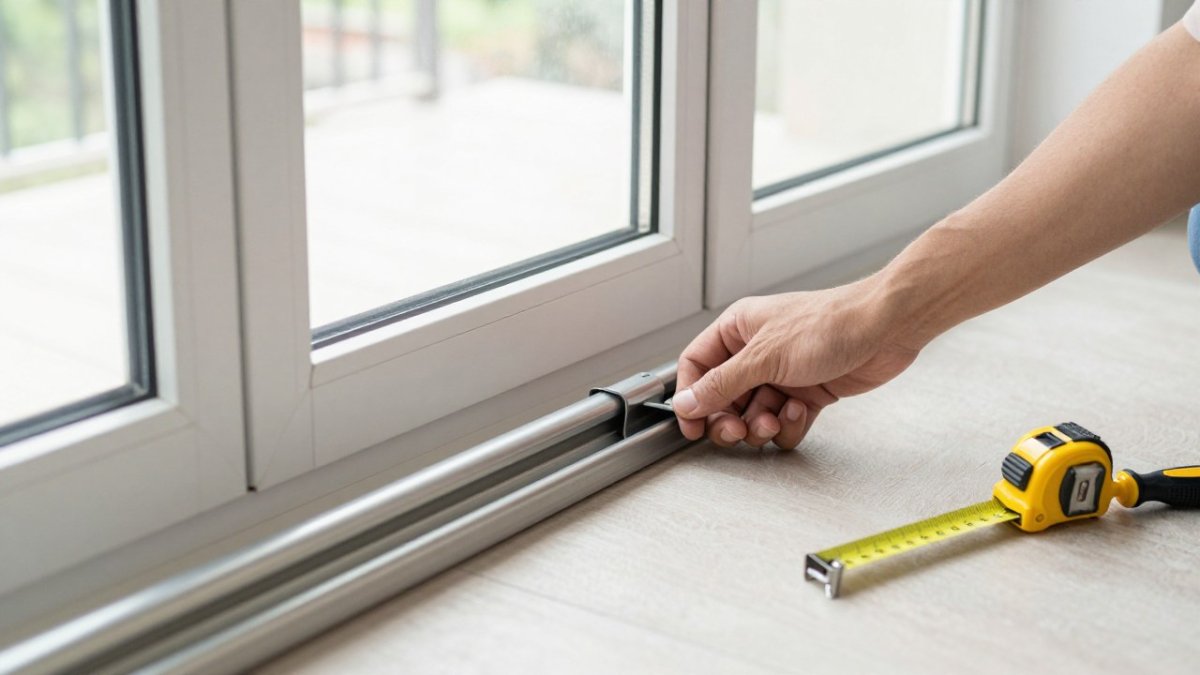
Step-by-Step: Fitting a Track Blocker
- Close the door and lock the latch.
- Measure the exposed track behind the sliding panel.
- Cut or adjust the blocker to that length, minus a hair for fit.
- Set the blocker in the lower track, snug against the panel.
- Slide the door to test. It should stop within an inch.
- Add a second blocker on the upper track if the door has one.
Watch out: a blocker that sits too loose can fall out when the door is bumped. Test it with a firm push before you trust it.
Adding Sliding Glass Door Security Film and Glass Alarms
A sliding glass door security film holds broken glass in place. It does not stop a break, but it slows entry and makes noise.
Pair film with a glass alarm. These stick-on units sense vibration or breakage and sound a loud siren. They need no wiring and peel off at move-out.
- Film slows the break and keeps shards together.
- Alarms turn a quiet break into a loud event.
- Both work on rentals with no landlord approval in most cases.
Together they cover the third weak point: the glass itself.
Preventing Panel Lift and Reinforcing the Frame
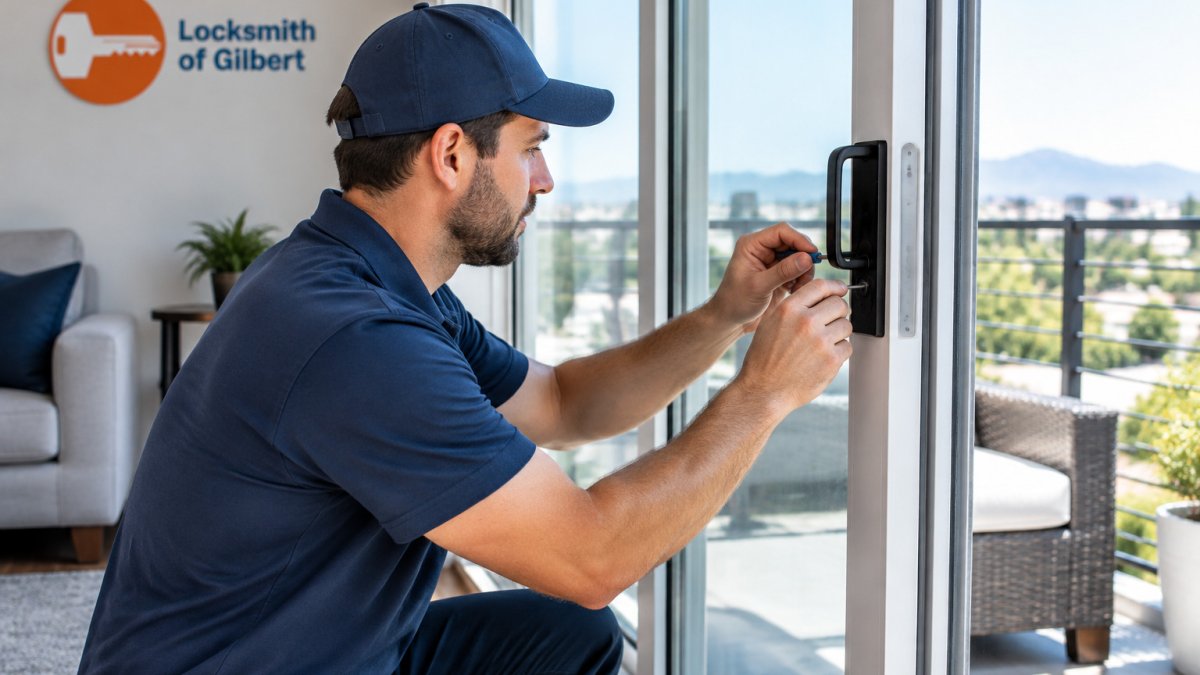
Panel lift is the trick most renters never hear about. The sliding panel sits in the track and can be lifted up and out if there is enough play.
Options include:
- Anti-lift pins that screw into the top track and stop upward travel.
- Anti-lift screws set into the upper frame.
- A folding patio door lock that clamps the panels together.
Check the door alignment first. A door that drags or sits low may already be lifted. If the frame is soft or the track is bent, a removable device will not fix it.
Keeping Egress, Kids, Pets, and Accessibility Safe
Security devices must never block your way out. A sliding glass door is often the second exit in a rental, and code requires it to open freely from the inside.
Follow these rules:
- Use devices that release from inside without a key.
- Never bar a door that serves as a bedroom egress.
- Keep blockers low enough that a child can step over them.
If you get locked out, do not force the door. Our guide to emergency house lockout service for renters covers what to expect and how to get back in without damage.
Building a Layered Security Plan for Your Rental
A layered security plan stacks small, removable devices so no single failure opens the door. Use this checklist.
- Written landlord approval on file
- Latch tested and lubricated
- Track blocker or security bar fitted
- Anti-lift pin or screw installed
Run the checklist once a season. When a device needs a real install, or the door itself needs work, our team handles professional residential locksmith services for renters and property managers across the east valley.
Securing a rental patio door comes down to layers, not one gadget. If you want the job done right the first time, Locksmith Of Gilbert offers 24/7 availability, full-service residential locksmithing, and rekeying for rentals.
Frequently Asked Questions
What is a good renter-friendly lock for a sliding glass door?
A patio door latch or foot lock that clamps onto the existing track is the most common renter-friendly choice because it needs no drilling and lifts out when you move. Pair it with a cut-to-length dowel or security bar in the lower channel for a second layer. Check your lease first, measure the track depth and clearance before buying, and keep the packaging so you can reverse the install at move-out.
Can you secure a sliding glass door without drilling?
Yes. Track blockers, security bars, dowel rods, anti-lift clips that tension into the upper track, and peel-and-stick glass alarms all install without a drill. Clean and dry the frame before applying any adhesive film or alarm, and test the door's sliding movement afterward to confirm nothing binds. Anything that requires screws into the frame or track should get landlord approval in writing first.
Is security film effective on sliding glass doors?
Security film holds shattered glass together, which slows entry through a broken pane, but it does not stop a determined intruder on its own. Treat it as one layer in a layered security plan alongside a track blocker and a secondary latch. Renter-grade films peel off cleanly, though you should confirm your lease allows adhesives on the glass before applying.
Should renters ask their landlord before adding a sliding door lock?
Yes, for anything permanent. Get written permission before screwing into the door frame, replacing the existing latch, or adding an anti-lift device that alters the track. Removable, no-drill devices usually fall under normal occupancy, but a quick email protects your deposit either way. If the door is damaged or the latch is failing, report it to the landlord in writing and ask for a repair rather than patching it yourself.