 how-to
How to Rekey Rental Property Locks: A Step-by-Step Guide
Table of Contents
- Why Rekeying Rental Property Locks Matters
- Landlord Lock Change Laws and Legal Requirements
- Rekeying vs. Replacing Locks: Cost and Security Comparison
- Tools and Materials You'll Need
- Step-by-Step Rekeying Process
- Best Door Locks for Rental Properties
- Emergency Locksmith Services for Property Managers
- Common Mistakes to Avoid When Rekeying
- Frequently Asked Questions
Last Updated: October 4, 2026
Why Rekeying Rental Property Locks Matters
Tenant turnover creates a critical security gap: the old tenant still has keys. When you rekey rental property locks, you swap internal pins so old keys no longer work, faster and cheaper than full replacement. It protects your liability, maintains access control, and signals professional management to prospective tenants.
At Locksmith Of Gilbert, we handle rekeying for landlords and commercial property managers across the eastern valley. Below, we'll walk through the mechanics, legal requirements, and best practices for how to rekey rental property locks effectively.
Landlord Lock Change Laws and Legal Requirements
Legal obligations vary by state and locality. Most jurisdictions require secure locks; some mandate rekeying between tenants. Failing to comply exposes you to significant liability.
State-Level Requirements and Timelines
State requirements vary: California mandates rekeying between tenants; New York requires functional locks but may not mandate rekeying; Texas and Florida allow landlords to charge for rekeying if the lease permits. Most jurisdictions impose 30-60 day timelines after tenant vacancy. Check your local housing authority for exact requirements and whether rekeying must occur before move-in or within a grace period.
Liability and Insurance Implications
Failure to rekey between tenants can result in insurance claim denial, insurers view unrekeyed locks as negligence. Document all rekeying: dates, provider, and proof of completion. For multi-unit and commercial properties, maintain a master log by unit. Insurance carriers often require documented rekeying schedules for commercial properties as a condition of coverage.
Lease Language and Tenant Notification
Your lease should address lock responsibility: cost allocation, rekeying timeline, key replacement policy, and additional key requests. Provide 24-48 hours' written notice before rekeying. For multi-unit or commercial properties, consult a local property management attorney to ensure lease language aligns with local law and insurance requirements.
Rekeying vs. Replacing Locks: Cost and Security Comparison
Rekeying changes internal pins only, fast, affordable, and ideal between tenants. Replacing locks installs new hardware with modern features and warranty coverage, suitable for worn or damaged locks. For rental properties, rekeying is the practical choice between tenants. Reserve replacement for locks over 10 years old or when upgrading security across the property.
Tools and Materials You'll Need
Essential tools: rekeying kit (follower tool, tweezers, springs), flathead screwdriver, key blank, and new pin set. Optional: magnifying glass, work mat, silicone-based lock lubricant. A basic kit costs less than one professional service call. For multiple units, buy pins and springs in bulk and verify compatibility before purchasing.
Step-by-Step Rekeying Process
The rekeying process has four main stages. Each step matters for security and function.
Step 1: Remove the Lock Cylinder
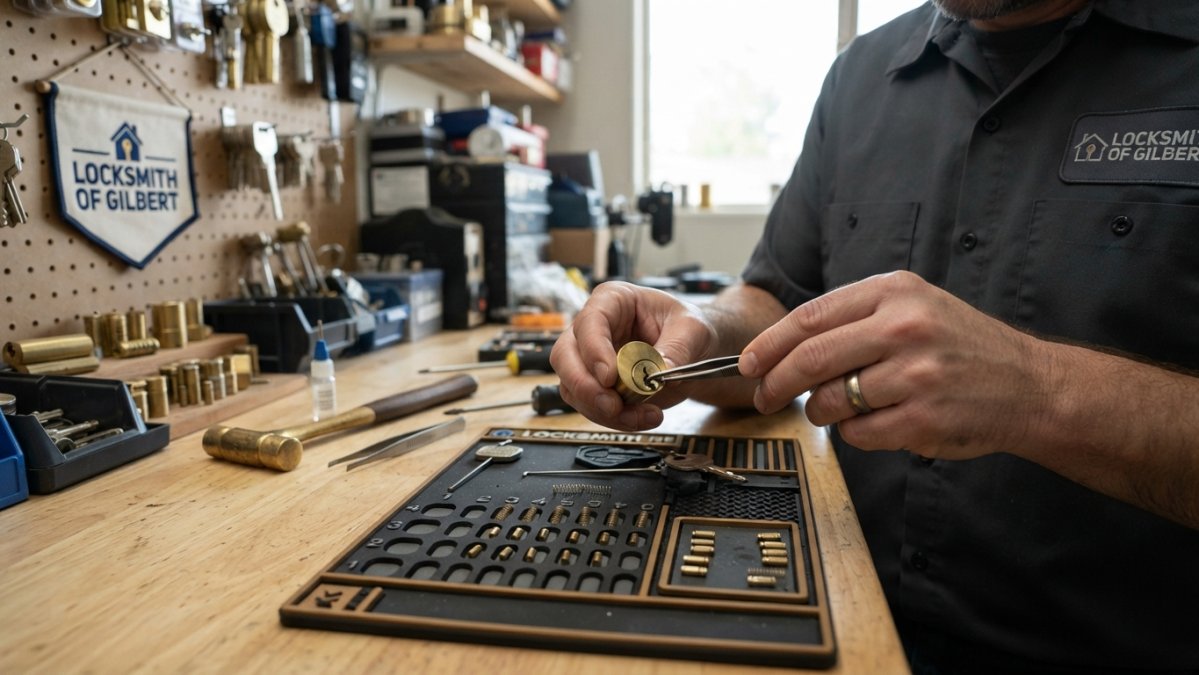
Start by removing the lock from the door. Most deadbolts have a set screw on the interior side. Turn it counterclockwise to release the cylinder from the housing.
Once the cylinder is out, place it on your work surface. Keep the key inserted, this keeps the plug aligned and prevents pins from falling out. You'll need a small flathead screwdriver to access the set screw and remove the retaining ring that holds the plug in place.
Step 2: Extract the Plug and Pins
Insert the follower tool into the cylinder. This tool prevents the springs from launching pins across the room when you remove the plug.
Turn the key to the 12 o'clock position and gently pull the plug straight out. As it comes free, the follower tool moves up to hold the springs in place. Now remove the springs and bottom pins one at a time. Keep them organized so you don't mix them up.
This step requires patience. Pins are tiny and springs are compressed. Work slowly over a contained area so nothing gets lost.
Step 3: Install New Pins and Springs
Insert your new springs into the cylinder first. Then place the new bottom pins in sequence. Each pin height corresponds to a specific key bitting, so order matters.
Once all new pins and springs are installed, reinsert the plug using the follower tool again. The tool keeps everything aligned as the plug slides back in. Remove the follower tool carefully.
Test the new key in the plug before reinstalling the cylinder in the door. The key should turn smoothly without binding.
Step 4: Reassemble and Test
Slide the cylinder back into the lock housing. Tighten the retaining ring and set screw. Install the lock back on the door if you removed it.
Test the new key multiple times. Turn it fully in both directions. The lock should operate smoothly without grinding or sticking. If it binds, you may have installed a pin incorrectly or at the wrong height.
Test the old key to confirm it no longer works. This verifies your rekeying was successful and old tenants cannot access the property.
Best Door Locks for Rental Properties
Not all locks are created equal. For rental properties, durability, security, and key management efficiency matter most. Your choice depends on property size, tenant turnover, and whether you manage residential units, commercial spaces, or both.
Pin-Tumbler Deadbolts for Single-Unit Rentals
Pin-tumbler deadbolts remain the standard for single-unit residential rentals. They're affordable, reliable, and easy to rekey. A quality deadbolt with solid brass or steel construction will outlast multiple tenant cycles.
Look for ANSI Grade 3 residential deadbolts for basic rental properties. They offer adequate security for low-turnover residential units and cost between $15-$40 per lock. Rekeying is straightforward and inexpensive, making them ideal for landlords managing one or two properties.
Commercial-Grade Locks for Multi-Unit Properties
ANSI Grade 2 commercial locks are the practical choice for multi-unit residential buildings, apartment complexes, and commercial rental spaces. They feature:
- Reinforced strike plates that resist forced entry
- Hardened cylinders that resist picking and drilling
- Heavier-duty springs and pins rated for 500,000+ cycles
- Better key control and master key system compatibility
Grade 2 locks cost $40-$80 per unit but reduce maintenance calls and liability exposure across a larger portfolio. For a 10-unit building with annual tenant turnover, the durability and rekeying efficiency of Grade 2 locks justify the upfront investment.
Commercial properties (office suites, retail spaces, industrial units) should use Grade 2 or Grade 1 locks. Grade 1 locks are the highest residential/commercial standard and are appropriate for high-security applications or properties with frequent access changes.
Master Key Systems for Multi-Unit Control
For properties with 5 or more units, a master key system eliminates key ring bloat and simplifies access management. A master key system allows you to:
- Open all units with a single master key
- Give each tenant a unique key that opens only their unit
- Rekey individual units without affecting others
- Quickly grant emergency access to maintenance or emergency responders
Master key systems require locks specifically designed for this purpose (not all pin-tumbler locks support them). When rekeying a unit in a master key system, you must maintain the master key's ability to open that lock, this is more complex than standard rekeying and often requires professional locksmith service.
For commercial properties with 10+ units or mixed-use buildings, a master key system is standard practice and often required by property insurance carriers.
Smart Locks and Digital Key Management
Smart locks are increasingly common in rental properties, particularly in commercial buildings, corporate housing, and high-turnover residential complexes. They eliminate traditional key management entirely.
Smart locks allow you to:
- Issue temporary digital codes that expire when a tenant's lease ends
- Grant or revoke access remotely without visiting the property
- Track entry logs for security and dispute resolution
- Eliminate lost-key calls and emergency rekeying
Common smart lock options for rental properties include:
- Keypad deadbolts ($100-$250): Tenants enter a code; you change the code between tenants
- Bluetooth/WiFi locks ($200-$400): Access controlled via smartphone app; ideal for property managers with multiple units
- Commercial access control systems ($300-$800 per unit): Integrated with building management; suitable for larger commercial properties
Smart locks reduce rekeying costs to zero but introduce new considerations:
- Battery replacement or charging (typically every 6-12 months)
- Backup mechanical keys for power failures
- Tenant training on code entry or app use
- Integration with your property management software
For commercial properties with high turnover or multi-unit residential buildings, smart locks often pay for themselves within 2-3 years through reduced rekeying and emergency lockout calls. For single-unit rentals with stable tenants, traditional locks remain more cost-effective.
Choosing the Right Lock for Your Property Type
Single-unit residential: ANSI Grade 3 pin-tumbler deadbolt. Cost-effective, easy to rekey.
Multi-unit residential (5-20 units): ANSI Grade 2 deadbolts with master key system, or smart keypad locks for high turnover.
Commercial office or retail (5+ units): ANSI Grade 2 with master key system, or smart access control for frequent tenant changes.
High-turnover residential or corporate housing: Smart locks (keypad or app-controlled) to eliminate rekeying and reduce emergency calls.
Mixed-use or large commercial (20+ units): Integrated smart access control system with audit trails, emergency override, and integration with property management software.
Emergency Locksmith Services for Property Managers
Lockouts happen at the worst times. A tenant loses their keys. A lock fails during move-out. You need access fast.
Professional locksmith services handle these situations without disruption. A licensed locksmith can rekey, repair, or replace locks on your schedule. For multi-unit properties, having a trusted locksmith on speed-dial saves hours of downtime.
Locksmith Of Gilbert provides 24/7 emergency services for property managers across the eastern valley. Whether you need a lock rekeyed between tenants or an emergency access solution at 2 AM, professional service beats DIY when time is critical.
When choosing a locksmith, verify they're licensed and insured. Ask about their response times for emergency calls. Confirm they handle commercial properties and multi-unit rekeying. Get pricing upfront so there are no surprises after the work is done.
Common Mistakes to Avoid When Rekeying
Most rekeying failures come from small errors that compound.
Installing pins in the wrong order is the most common mistake. Each pin height must match the bitting of your new key.
Losing springs or pins during disassembly leaves you with incomplete locks. Work over a contained surface.
Mixing old and new pins creates unpredictable results. Use entirely new pins or entirely old pins. Don't combine them.
Forcing the plug back into the cylinder damages the housing and lock mechanism. If the plug doesn't slide smoothly, stop.
Skipping the test phase means you won't know if rekeying failed until a tenant tries to enter.
Not lubricating the lock after rekeying causes sticking and binding. Use silicone-based lock lubricant sparingly.
Rekeying rental property locks is a practical skill that saves time and money between tenants. The process is straightforward once you understand the mechanics.
Frequently Asked Questions
Are landlords required to change locks between tenants?
Landlord-tenant law varies by state, but many jurisdictions require or strongly recommend rekeying between tenants as a security protocol and access control measure. Some states mandate that landlords provide tenants with working locks; others require lock changes if the previous tenant's keys cannot be accounted for. Check your state's landlord-tenant regulations and lease agreement language to confirm your obligations. Professional locksmiths can advise on your specific jurisdiction's requirements.
What is the difference between rekeying and replacing locks?
Rekeying involves changing the internal pins and springs inside an existing lock cylinder so old keys no longer work, while replacing locks means installing entirely new hardware. Rekeying is typically more cost-effective and faster, preserving the existing lock hardware. Replacing is necessary when locks are damaged, broken, or when you want to upgrade to better-quality hardware. For rental property turnover, rekeying is often the practical choice unless the existing locks are worn or you need enhanced security features.
Can I rekey rental locks myself or should I hire a professional?
DIY rekeying is possible if you have basic mechanical skills and the right tools, including a rekeying kit, follower tool, and key blank. However, mistakes can damage the lock cylinder or leave the property unsecured. For rental properties with multiple units or master key systems, hiring a professional locksmith is recommended to ensure security protocol compliance, proper key control, and liability protection. A locksmith can also guarantee the work and handle complex access control needs.
How often should rental property locks be rekeyed?
Rekey rental property locks between every tenant turnover to ensure the previous tenant cannot access the property. Additionally, rekey if keys are lost, stolen, or if you suspect a security breach. For properties with master key systems, establish a regular security audit schedule, typically annually, to review key control procedures. Properties with high turnover or sensitive access requirements may benefit from smart lock integration for easier access management without physical rekeying.