 How-to
Can You Rekey a House Without a Locksmith? 7 Steps to Try
Last Updated: November 21, 2026
Quick Summary
Yes, you can rekey a house without a locksmith if your locks use standard pin tumbler cylinders and you match a rekeying kit to the lock brand. The job means swapping the small pins inside each cylinder so your old key stops working and a new key takes over. One lost spring can jam a lock, and one wrong pin can stop the key from turning.
- Rekeying kits are brand-specific, so a Schlage kit will not rekey a Kwikset cylinder.
- Confirm the brand on the lock face or keyway and check for a smart-key system before buying.
- Use a follower tool to hold the plug in place so springs do not launch during disassembly.
- Line up each new pin with the cut on the new key so pins sit flush at the shear line.
- Book a pro when the lock has no working key or you have more than a few locks to do.
Table of Contents
- Can You Rekey a House Without a Locksmith? The Short Answer
- Rekeying vs. Changing Locks: Which One Do You Actually Need?
- How to Choose a DIY Rekeying Kit That Fits Your Locks
- How to Rekey a Door Lock: A 7-Step Walkthrough
- Can You Rekey a Lock Without the Original Key?
- DIY vs. Professional Rekeying: Costs, Pros, and Cons
- Common DIY Rekeying Mistakes and How to Avoid Them
- When to Book a Professional Rekey Instead of DIY
- Frequently Asked Questions
Can You Rekey a House Without a Locksmith? The Short Answer
Yes, you can rekey a house without a locksmith, provided your locks use standard pin tumbler cylinders and you can match a rekeying kit to the brand.
The work is not hard, but it is fussy. One lost spring can jam a lock, and one wrong pin can stop the key from turning.
Below, we show you exactly how to judge whether DIY fits your locks, plus the mistakes that turn a quick swap into a locked-out afternoon.
Rekeying vs. Changing Locks: Which One Do You Actually Need?
Rekeying changes the pins inside your existing lock so a new key works and the old one doesn't. Changing locks means removing the whole lock assembly and installing a new one. Rekeying is usually the lower-cost and quicker option. Replacement makes sense when the hardware is worn, damaged, or you want a different style or a smart-key system.
Rekeying is the right call when:
- You just bought a house or rented a unit and want the old keys dead
- A roommate, contractor, or ex-partner still has a key
- The locks work fine and you like how they look
Replacing is the right call when:
- The lock sticks, wobbles, or the key catches
- You want one key for multiple locks across a whole house
- You're upgrading to a keypad or smart lock
If you're weighing both, our rekeying vs. replacing cost comparison lays out the trade-offs side by side.
How to Choose a DIY Rekeying Kit That Fits Your Locks
A DIY rekeying kit only works if it matches your lock brand. Kits are brand-specific: a Schlage kit will not rekey a Kwikset cylinder, and vice versa. Buy the wrong one and you'll be stuck mid-job with a disassembled lock and no way to finish.
Most kits include:
- A new set of pins and springs
- A follower tool to hold the plug in place
- A pin removal tool or clip
- A new key or two
Checking Lock Brand and Cylinder Type Before You Buy
Look at the faceplate or the keyway for a brand stamp. Common names include Schlage, Kwikset, Weiser, and Defiant. Then check the cylinder type: most residential doorknobs and deadbolts use a standard pin tumbler cylinder, but some newer locks use a smart-key system that needs its own kit.
- Confirm the brand name on the lock face or keyway
- Note whether it's a deadbolt, doorknob, or privacy lock
- Check if the lock uses a smart-key system
- Match the kit to that exact brand and model family
How to Rekey a Door Lock: A 7-Step Walkthrough
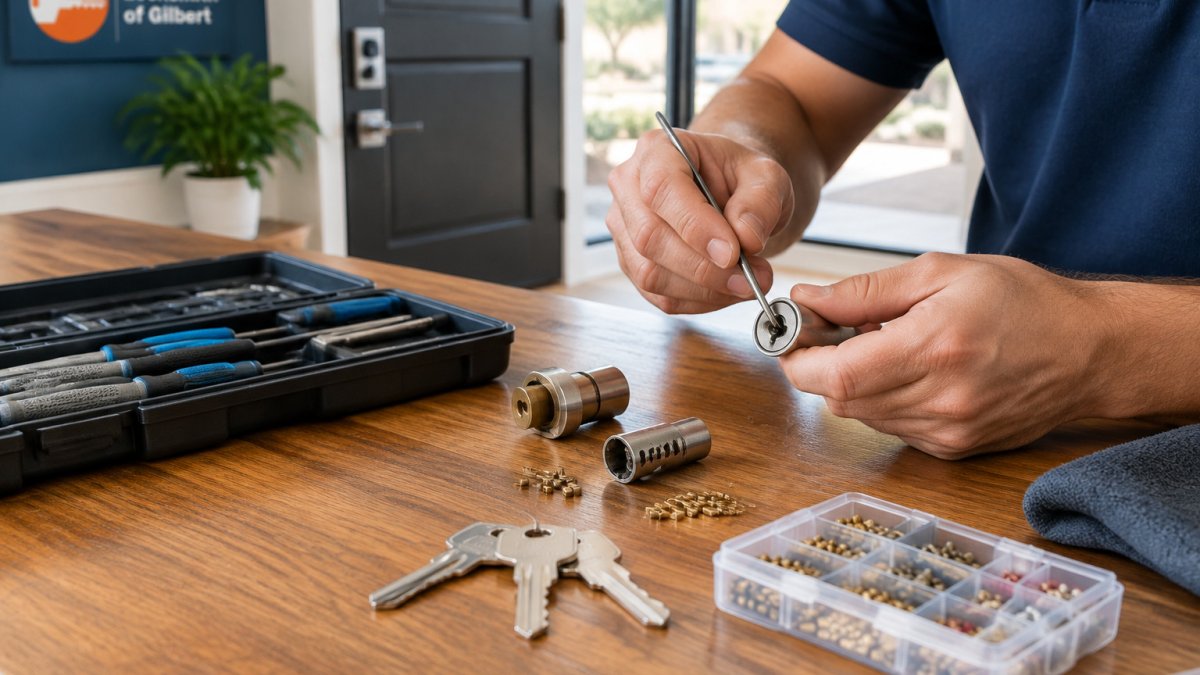
Rekeying a door lock takes a DIYer a varying amount of time per lock, depending on experience. Work on a table with a cloth down so small parts don't roll away.
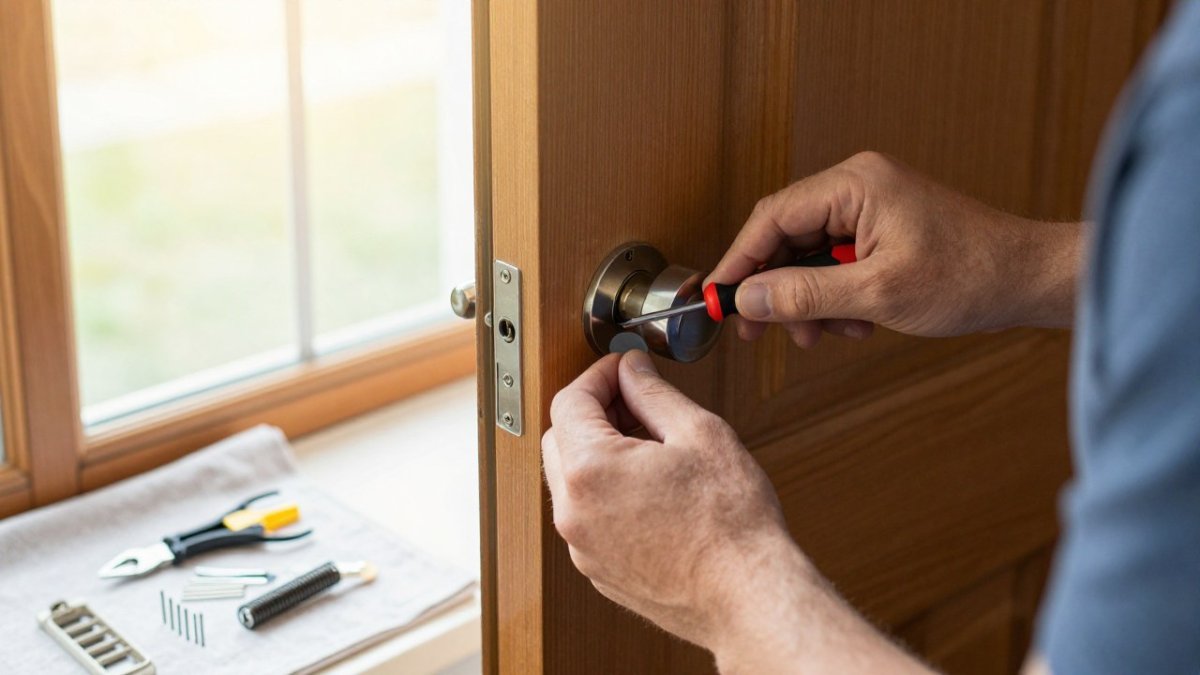
- Remove the lock from the door. Take off the handles and unscrew the cylinder or the whole lock assembly. Keep the screws in a cup, losing one is the most common reason a reassembled lock wobbles.
- Take out the cylinder. Slide it free and set the screws aside. On a deadbolt, the cylinder usually comes out from the exterior side after removing the thumb turn on the interior.
- Open the cylinder. Use the follower tool to hold the plug in place while you remove the retaining clip. The follower keeps the springs from launching when the plug slides out.
- Pull the plug. Slide the plug out slowly so the pins and springs don't scatter. Work over the cloth and keep the plug horizontal.
- Swap the pins. Remove the old pins and insert the new ones that match your new key. Line up each pin with the cut on the new key, when the correct key is inserted, the pins should sit flush with the plug (the shear line).
- Reassemble. Slide the plug back in, replace the clip, and refit the cylinder. Turn the plug by hand before reinstalling to confirm it moves freely.
- Test the lock. Put the new key in, turn it both ways, and check the deadbolt throws cleanly. Test with the door open first, then closed.
Removing the Cylinder and Swapping the Pins
The cylinder is the round part the key goes into. Removing it is the step where most first-timers rush. Go slow. The springs are tiny and they launch.
When you swap pins, line up each pin with the cut on your new key. If you plan to key several locks to the same key, our step-by-step guide to rekeying multiple locks covers compatibility and testing.
Watch out: if the plug does not slide out easily, stop, forcing it can bend the follower or damage the cylinder housing.
Lock-Specific Notes for Common Residential Types
- Kwikset (standard pin tumbler): The cylinder often has a retaining clip on the interior side. Kits are widely available and include a new key and pins. Smart-key cylinders (Kwikset SmartKey) require a dedicated kit and a different procedure, do not force standard pins into a smart-key plug.
- Schlage (standard pin tumbler): Many Schlage deadbolts use a cylinder that can be removed after taking off the interior thumb turn. Pin kits are brand-specific; a Kwikset kit will not fit.
- Privacy locks (bedroom/bathroom): These often use a different mechanism (a turn button or push-button) and may not be rekeyable with a standard kit. Check the brand and model before buying.
If you have no working key at all, the walkthrough changes. See the next section for the decision path.
Can You Rekey a Lock Without the Original Key?
Yes, you can rekey a lock without the original key, but it changes the job. If you have no working key at all, you can't just swap pins to match a new one. You first need to pick or bypass the lock to get the plug out, or drill the cylinder as a last resort.
Here's the decision path:
- You have one working key: rekey normally and cut new keys to match
- You have no working key but the lock turns freely: a locksmith can impression or pick it open, then rekey
- The lock is seized or damaged: replacement is usually the faster route
If you just moved in and want the full picture, our guide to rekeying house locks after moving covers your options.
DIY vs. Professional Rekeying: Costs, Pros, and Cons
The real question is not whether DIY is possible. It's whether DIY is worth your afternoon. A rekeying kit is a one-time purchase that can cover several locks. Professional rekeying is handled by the service provider, who can take on the tricky cases.
| Factor | DIY Rekeying | Professional Rekeying |
|---|---|---|
| Upfront cost | One kit, reusable | Per-lock or per-house fee |
| Time | 10-20 min per lock | Same day, done in one visit |
| Skill needed | Moderate, fussy | None from you |
| Missing key cases | Hard to solve | Handled on site |
| Warranty | None | Work backed by the pro |
| Best for | Standard locks, patient owners | Multiple locks, no keys, odd hardware |
DIY pros: you learn your locks, the kit pays for itself over several doors, and you control the timeline. DIY cons: lost springs, mismatched kits, and no recourse if a lock jams. Pro pros: you get a working result without the fiddling, and a professional can handle lock types that are harder to work with yourself. Pro cons: you pay for the convenience.
For current pricing, check the Locksmith Of Gilbert website or request a quote.
Common DIY Rekeying Mistakes and How to Avoid Them
The biggest mistake is buying a kit before checking the brand. The second is losing a spring and not noticing until the lock jams. The third is forcing a key that binds instead of stopping to check the pin heights.
Watch out: if a key feels tight, stop. Forcing it bends the key and can crack the plug.
Troubleshooting a Lock That Fails Testing
- Key won't insert fully: A pin is sitting too high (often the wrong pin length for that chamber). Remove the plug and recheck each pin against the key cut.
- Key turns but the bolt doesn't throw: The plug may be installed 180 degrees off, or the tailpiece is not engaged. Reassemble and test with the door open.
- Key binds or feels gritty: A spring may be misaligned or a pin is upside down. Springs should sit behind the pins, not in front.
- Lock jams after a few days: A lost spring or a pin that was not seated can shift. Disassemble and inspect all chambers.
Other traps:
- Mixing pins from two different kits (pin lengths are not universal across brands)
- Reassembling without the follower tool and letting the plug shift
- Skipping the test step and finding the problem at the front door at night
If you hit a snag, our locksmith FAQ and answers covers rekeying, lockouts, and key programming questions.
When to Book a Professional Rekey Instead of DIY
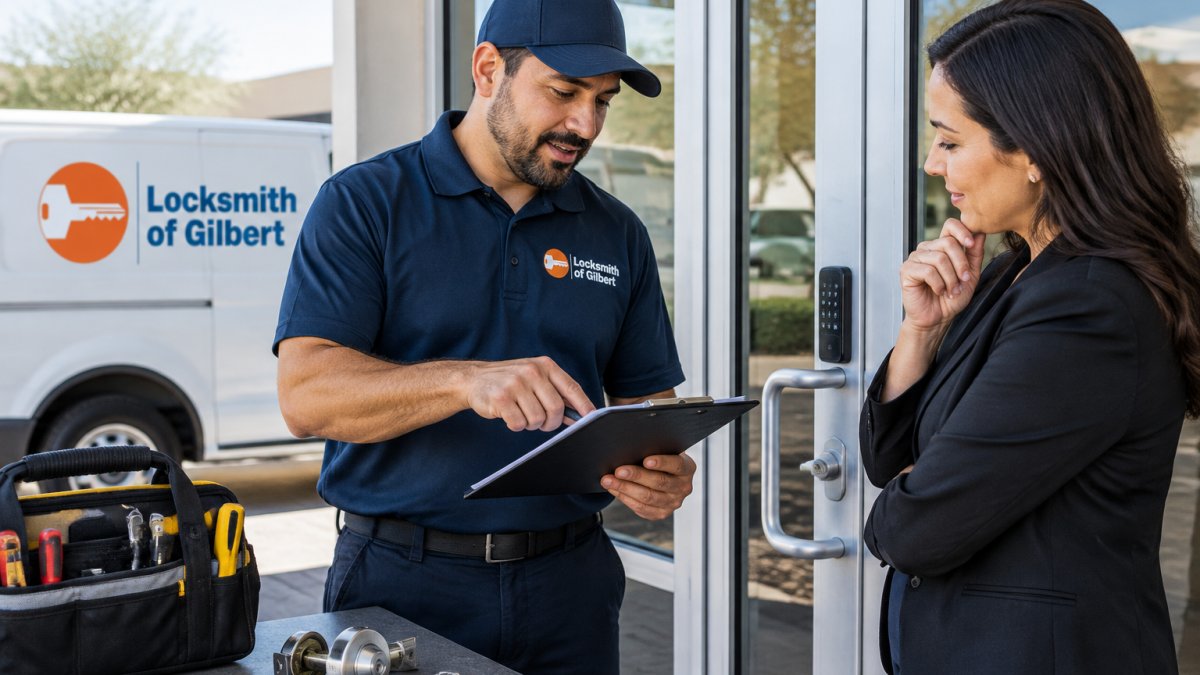
At Locksmith Of Gilbert, we handle residential rekeying across the eastern valley. We're available 24/7 and accept a wide range of payment methods, including digital wallets.
If you've decided to hand it off, our professional residential locksmith services page is where to start.
Rekeying your own locks is doable, but the margin for error is small and the cost of a mistake is a lock you can't open.
Frequently Asked Questions
Is it cheaper to rekey or replace a lock?
Rekeying is usually the cheaper route because you keep the existing hardware and only change the pins inside the cylinder. Replacing means buying new locks on top of any installation work. Professional rekeying pricing depends on the number of locks and the lock type, while new hardware adds its own cost on top. If your locks are old, damaged, or you want a different finish or a smart lock, replacement makes more sense than rekeying.
What tools do I need to rekey a house lock myself?
You need a rekeying kit made for your specific lock brand, which typically includes a follower, plug removal tool, new pins, springs, and a new key. Add a screwdriver that fits your door hardware, a cloth to catch small parts, and the new key you want to use. Kits are brand-specific, so check the model stamped on your lock or keyway before buying. Without the correct kit, pins will not line up and the lock will not turn.
Can I rekey a lock without the original key?
Yes, in most cases. A locksmith can pick or bypass the cylinder to remove it, then rekey it to a brand-new key. Doing it yourself is harder because you need to get the plug out first, and that usually requires the lock to be open or the cylinder removed. If the original key is missing and the door is locked, a professional rekey is the safer and faster choice than forcing the hardware.
When should you call a locksmith to rekey a house?
Call a professional when the original key is missing, when you have high-security or smart locks, when several units need matching keys quickly, or when a DIY attempt leaves the lock jammed. A locksmith also makes sense for rental turnover, where you need every unit rekeyed on a schedule and documented. If you are unsure your lock is compatible with a kit, a quick professional rekey avoids buying the wrong parts.