 how-to
Automotive Locksmith for Motorcycle Keys: Complete Guide
Table of Contents
- When You Need an Automotive Locksmith for Motorcycle Keys
- Motorcycle Key Replacement: What to Expect
- Motorcycle Key Duplication for Spare Keys
- Lost Motorcycle Key Replacement: Your Options
- Motorcycle Transponder Key Programming
- Locksmith vs. Dealership: Key Differences
- What Information to Have Ready
- Frequently Asked Questions
Last Updated: October 11, 2026
When You Need an Automotive Locksmith for Motorcycle Keys
Losing your motorcycle key or facing an ignition issue puts you in a difficult position. An automotive locksmith for motorcycle keys offers a faster, more practical alternative than dealership solutions. At Locksmith Of Gilbert, we specialize in motorcycle locks and ignition systems.
Motorcycles use different key mechanisms than cars, some mechanical, others transponder keys requiring programming. Your ignition cylinder, lock design, and key blank are all specific to your bike's make and model. Specialized automotive locksmith services ensure the right fit.
Whether you've lost your only key, need a spare, or your ignition is damaged, understanding your options helps you make the right call quickly.
Motorcycle Key Replacement: What to Expect
The motorcycle key replacement process follows four steps: verification, identification, cutting, and programming.
Step 1: Ownership Verification
Before any locksmith begins work, they request proof of ownership to prevent unauthorized key creation. Have your motorcycle title, registration card, bill of sale, or insurance card ready. The locksmith verifies your name matches the ownership document and cross-references the Vehicle Identification Number (VIN). A clear photo of your registration or insurance card often suffices if you don't have the original.
Step 2: Key Code Identification
Once ownership is confirmed, the locksmith identifies your key code, the specific cut pattern unique to your motorcycle's locks.
If you have the original key: The locksmith examines it under magnification to read the cut depths and spacing, then confirms the correct blank matches your motorcycle's make, model, and year.
If you don't have the original key: The locksmith looks up the key code in manufacturer databases using your VIN and registration.
Step 3: Key Cutting
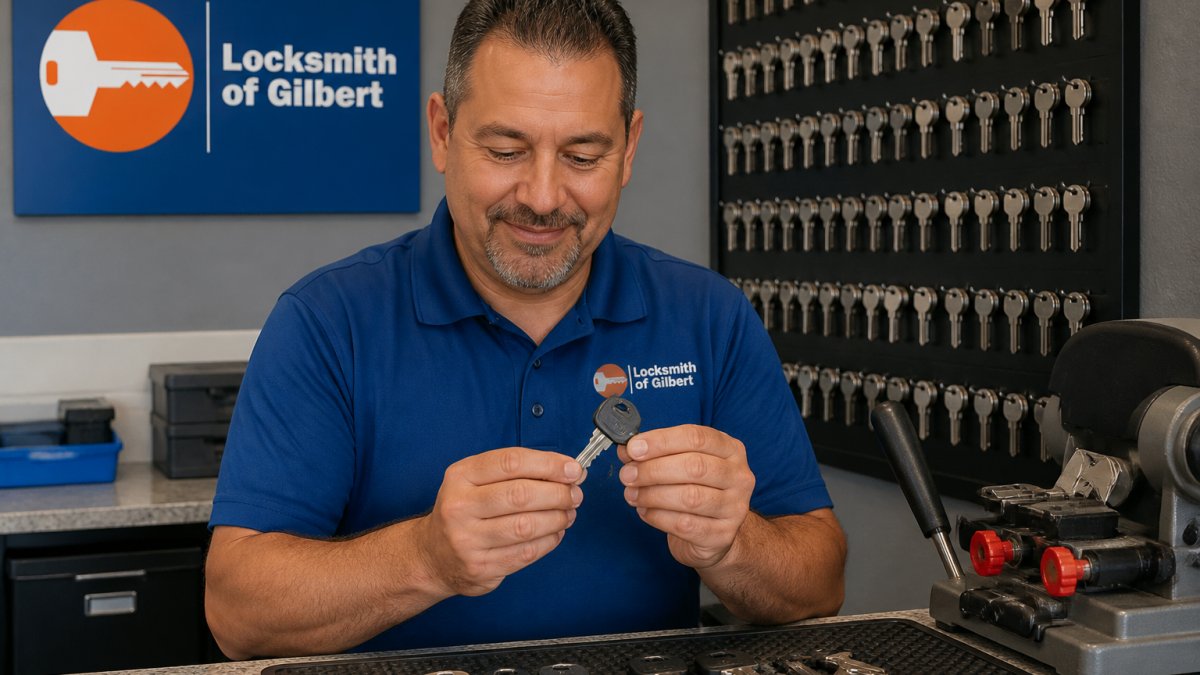
With the key code confirmed, the locksmith uses a key-cutting machine to cut your new blank to exact specifications. For mechanical keys, cutting is the final step. The new key is tested in your motorcycle's lock to confirm it turns smoothly.
Step 4: Transponder Programming (If Applicable)
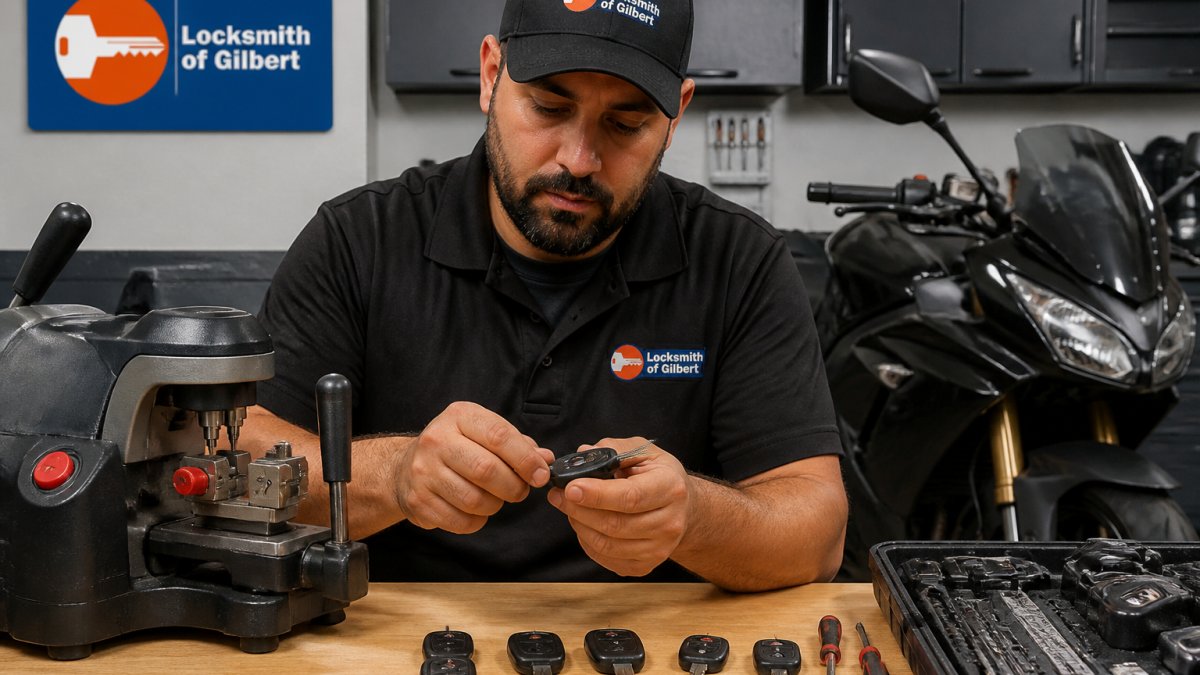
If your motorcycle uses a transponder key, an electronic chip that communicates with your bike's immobilizer, programming is required. The locksmith connects your motorcycle to programming equipment, enters your key code, and syncs the new key's chip to your bike's system. When you call, confirm the locksmith handles transponder keys for your specific motorcycle brand.
Timeline and Same-Day Service
Most automotive locksmiths offer 24/7 availability and can prioritize urgent lockouts.
What Happens If Something Goes Wrong
If a newly cut key doesn't work, common issues include binding in the lock (requiring micro-adjustments), transponder programming failures (requiring reprogramming or dealership diagnostics), or ignition cylinder damage (requiring repair or replacement).
Motorcycle Key Duplication for Spare Keys
Creating a spare key is simple compared to emergency replacement. If you have your original key, duplication takes minutes. For mechanical keys, you're done; for transponder keys, programming takes additional time. Store one spare at home and another in a secure location away from your bike to ensure you're never stranded.
Lost Motorcycle Key Replacement: Your Options
Losing your motorcycle key leaves you with two main paths: dealership or automotive locksmith. A dealership has access to manufacturer databases. An automotive locksmith offers speed and local service, Locksmith Of Gilbert serves the eastern valley and can often complete the job the same day. Both require proof of ownership. For emergencies, a locksmith is your practical choice.
Motorcycle Transponder Key Programming
Modern motorcycles often use transponder keys, keys with electronic chips that communicate with your bike's immobilizer system. If your ignition won't recognize your key, or if you've had a new key cut and it doesn't start the bike, transponder programming is likely needed.
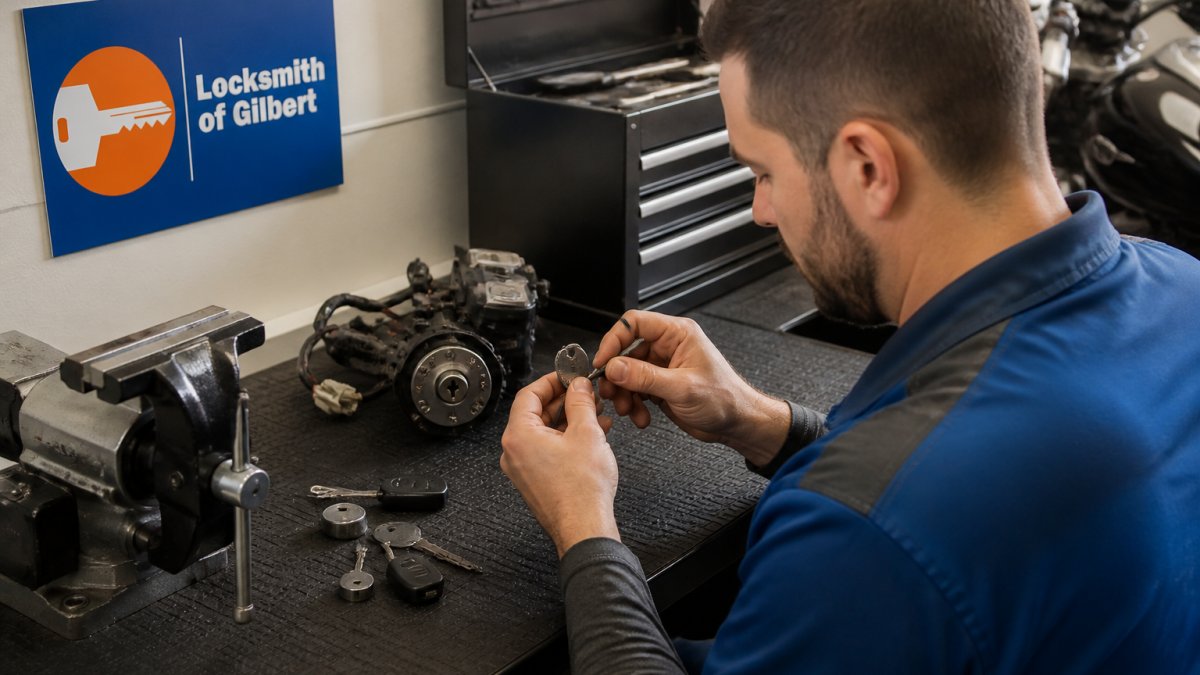
Transponder programming requires specialized equipment and knowledge of your motorcycle's immobilizer protocol. Not all locksmiths handle this work, it's more technical than cutting a mechanical key. An automotive locksmith experienced with motorcycles has the tools and training to program your key correctly.
The process involves connecting your motorcycle to programming equipment, entering your key code, and syncing the new key's chip to your bike's system. Once programmed, your key will start the ignition and disarm the immobilizer.
Programming is essential if you've lost both your keys and need a replacement. It's also necessary when you've had a spare key cut but it doesn't start your bike. A mechanical cut alone isn't enough, the chip must be programmed to match your motorcycle's security system.
Locksmith vs. Dealership: Key Differences
Understanding the trade-offs between a locksmith and a dealership helps you choose the right service for your situation.
| Factor | Automotive Locksmith | Dealership |
|---|---|---|
| Response Time | Same-day, often within hours | 3-7 days, may require ordering |
| Cost | Generally lower | Higher, especially for labor |
| Location | Local service in your area | Requires travel to dealership |
| Expertise | Specialized in locks and keys | Factory-trained but may not prioritize speed |
| Proof of Ownership | Required (title, registration) | Required (title, registration) |
| Emergency Availability | 24/7 service common | Limited to business hours |
A locksmith prioritizes speed and convenience. You call, we arrive, and your key is ready. This works well for lost keys, spare key creation, and urgent situations. Locksmith Of Gilbert offers 24/7 availability across the eastern valley, so help is available when you need it.
A dealership guarantees factory-correct keys and programming. If your motorcycle has unique security features or complex immobilizer systems, a dealership may be more appropriate.
For most riders, an automotive locksmith is the practical choice. We handle a wide range of motorcycle key situations. Dealerships are a backup option if your bike has unusual security requirements or if a locksmith can't resolve your issue.
What Information to Have Ready
Having the right information before you call an automotive locksmith accelerates the process and ensures the locksmith can give you an accurate quote and timeline. Gather these details:
Essential Information
- Motorcycle make, model, and year - This identifies your key code and lock design. Be as precise as possible. If you're unsure of the exact year, check your registration or VIN.
- Vehicle Identification Number (VIN) - Located on the frame (usually near the steering head or on the frame rail). The VIN is the fastest way for a locksmith to look up your key code in manufacturer databases.
- Proof of ownership - Your title, registration card, or bill of sale. The locksmith will verify ownership before creating a new key. Have a photo ready if the original document isn't immediately available.
- Your location - Where you are now and where your motorcycle is parked. If they differ, let the locksmith know. Mobile locksmiths can come to your bike's location, saving you a tow.
- Contact information - A working phone number and email. The locksmith may need to reach you with updates or clarifications.
If You Don't Have Your Title or Registration
Don't delay calling a locksmith because you can't find your title. Acceptable alternatives include:
- A clear photo of your registration card (front and back)
- Your insurance card showing your name and the motorcycle's VIN
- A bill of sale from your purchase
- Your driver's license plus a photo of the motorcycle's VIN plate
The locksmith's goal is confirming you own the bike.
Describe Your Situation Clearly
When you call, briefly explain what happened:
- Lost key: You had one key and it's gone. You need a replacement and possibly a spare.
- Need a spare: You have your original key and want a duplicate for backup.
- Ignition won't turn: Your key goes in but doesn't turn the ignition. This may indicate a worn lock or ignition cylinder.
- Key doesn't start the bike: The key turns the ignition but the engine won't crank. This often signals a transponder programming issue.
- Lockout: You're locked out and can't access your bike at all.
This description helps the locksmith prepare the right equipment and give you a realistic timeline.
What to Do While Waiting for Service
If you're locked out or waiting for a replacement key, take these steps to protect your motorcycle and avoid damage:
Secure the bike:
- Park in a well-lit, visible location if possible.
- Use a heavy chain or cable lock through the frame and around a fixed object (fence, pole, post).
- If you have a steering lock, engage it.
- Remove any loose items (phone, wallet, helmet) from the bike.
Avoid damage to the ignition:
- Do not force the key in or out of the ignition.
- Do not try to pick or drill the lock yourself.
- Do not attempt hot-wiring.
If your bike is in an unsafe location:
- Ask a trusted friend or family member to watch it.
- Contact your insurance company to ask about towing coverage.
- Request mobile service from the locksmith so they come to you. This minimizes the time your bike is unattended.
Communicate with the locksmith:
- Let them know if you're in an unsafe area or if your bike is exposed to weather. They may prioritize your call.
- Provide your exact location (address, cross streets, landmarks) so they can find you quickly.
- Confirm the locksmith's estimated arrival time and stay in contact.
Commercial and Fleet Motorcycle Keys
If you operate a commercial fleet, delivery motorcycles, security patrol bikes, or rental motorcycles, inform the locksmith upfront. Commercial jobs often involve:
- Multiple keys for the same motorcycle - Creating several spares for different operators.
- Master key systems - Setting up a system where one key opens multiple bikes, useful for fleet management.
- Documentation and records - Keeping a log of which keys were issued to which operators, useful for accountability and security.
Mention your fleet size and needs when calling so the locksmith can allocate time and resources appropriately.
Frequently Asked Questions
Can an automotive locksmith make a motorcycle key without the original?
Yes. An automotive locksmith can create a motorcycle key without the original by using your vehicle identification number (VIN) to look up the key code. They'll then cut a new key blank to match that code. This process is faster and often more affordable than going to a dealership, though it does require proof of ownership to verify you have the right to request a replacement key.
Can a locksmith program a motorcycle transponder key?
Many automotive locksmiths can program motorcycle transponder keys, though not all have the specialized equipment. Transponder programming requires specific tools and knowledge of your motorcycle's immobilizer system. Before calling, confirm the locksmith has experience with your specific make and model, as compatibility varies. Some motorcycles may still require dealership programming.
How much does motorcycle key replacement cost?
Pricing depends on the type of key, whether you have the original, and the complexity of your motorcycle's locking system. Contact your local automotive locksmith for a quote tailored to your specific situation and motorcycle model.
What information should I have ready when calling an automotive locksmith for motorcycle keys?
Have your motorcycle's year, make, and model ready. If possible, provide your VIN (found on your registration or the frame). Let the locksmith know whether you have the original key, what type of key system you have (mechanical, transponder, or electronic fob), and describe any issues with your ignition or locks. This information helps the locksmith prepare and give you an accurate quote.