 ultimate-guide
Automotive Transponder Key Replacement Cost Guide
Table of Contents
- What Drives Automotive Transponder Key Replacement Cost
- Transponder Key Programming Cost Explained
- Automotive Locksmith vs Dealership Cost Comparison
- Mobile Car Key Replacement Service: What to Expect
- How Vehicle Make and Model Impact Replacement Cost
- Aftermarket vs OEM Keys: Quality and Cost Trade-offs
- Insurance Coverage and Money-Saving Strategies
- Conclusion
- Frequently Asked Questions
Last Updated: September 20, 2026
What Drives Automotive Transponder Key Replacement Cost
Automotive transponder key replacement cost is determined by four variables: the type of key, the programming requirement, who performs the work, and the vehicle's make and model. Two drivers with the same car can pay wildly different amounts depending on which of those levers they pull.
The Immobilizer Chip and Why It Matters
The immobilizer chip is a small transponder that broadcasts a unique signal when you insert or bring the key near the ignition. The vehicle's computer reads that signal and compares it against stored security codes. Match, and the fuel and ignition systems unlock. No match, and the engine stays dead.
Key Types: From Mechanical Key to Smart Key
Not all keys cost the same to replace, and the gap between categories is large. Knowing which one you have tells you most of what you need to know before you call anyone.
- Mechanical key: Metal only, no chip. Found on older vehicles. Cheapest to cut and duplicate.
- Transponder key: Metal blade with an embedded immobilizer chip. Requires programming after cutting.
- Remote head key: Transponder key with built-in lock/unlock buttons. Requires both chip programming and remote pairing.
- Smart key / fobik: Push-button start, no blade inserted. Uses a proximity sensor and keyless entry. Most expensive to replace and program.
- Laser-cut key: Sidewinder-style blade, common on newer imports. Requires a specialty cutting machine.
Transponder Key Programming Cost Explained
Transponder key programming cost is usually billed as a separate line item from the key itself, and it is often the larger of the two. Programming is the process of writing your vehicle's security code onto the new chip so the immobilizer recognizes it.
What Happens During Chip Synchronization
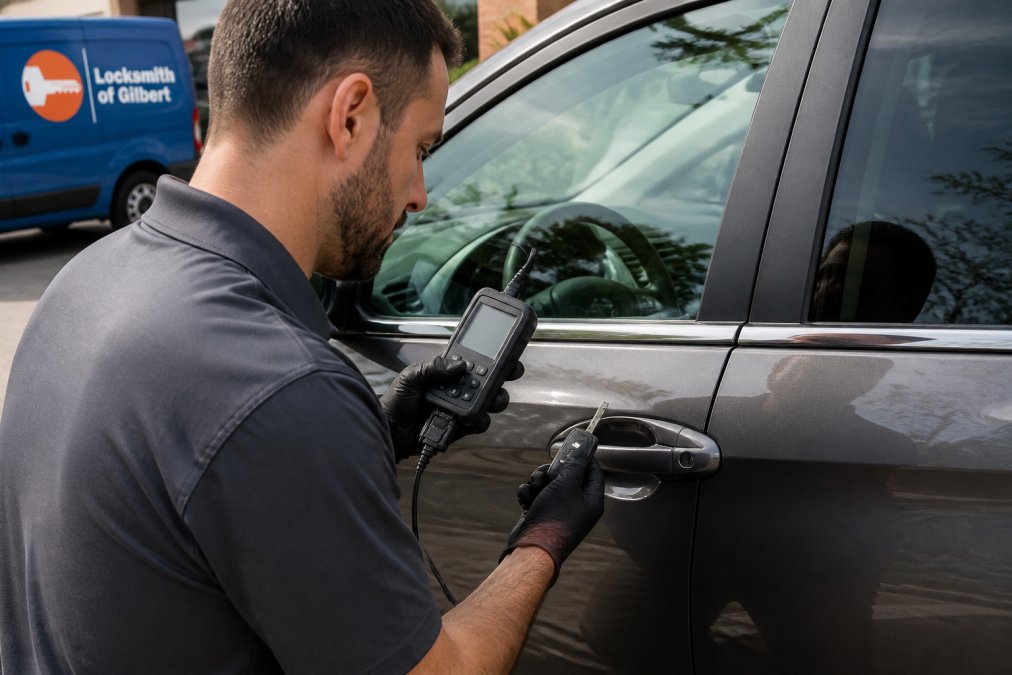
Chip synchronization is the step where the new key's transponder signal is written into the vehicle's immobilizer memory. The technician connects a diagnostic tool, authenticates against the vehicle's security protocol, and registers the new key as an authorized device.
Automotive Locksmith vs Dealership Cost Comparison
The automotive locksmith vs dealership cost gap is real, but it isn't universal. Dealerships have manufacturer-backed access to security codes and factory programming tools. Independent automotive locksmiths typically charge less for labor and come to you, but they need the right equipment subscriptions to match that access.
| Factor | Dealership Service Department | Mobile Automotive Locksmith |
|---|---|---|
| Convenience | Must tow or drive the vehicle in | Comes to your location |
| Scheduling | Business hours, appointment queues | Often same-day, including nights |
| Labor rate | Typically higher | Typically lower |
| Security code access | Direct from manufacturer | Via third-party database subscriptions |
| Key stock | OEM keys on hand for your model | Aftermarket or OEM, varies by provider |
| Best for | Newer vehicles, warranty-sensitive work | Most everyday replacements, emergencies |
When the Dealership Service Department Makes Sense
The dealership service department is the right call when your vehicle is under warranty and you want zero ambiguity about parts, when the model uses a security protocol your local locksmith can't access, or when the key is tied to a manufacturer subscription service.
Mobile Car Key Replacement Service: What to Expect
A mobile car key replacement service brings the cutting and programming equipment to your driveway, office, or roadside location. The technician arrives with key blanks, a cutting machine, and a diagnostic tool, then cuts and programs the key on site.
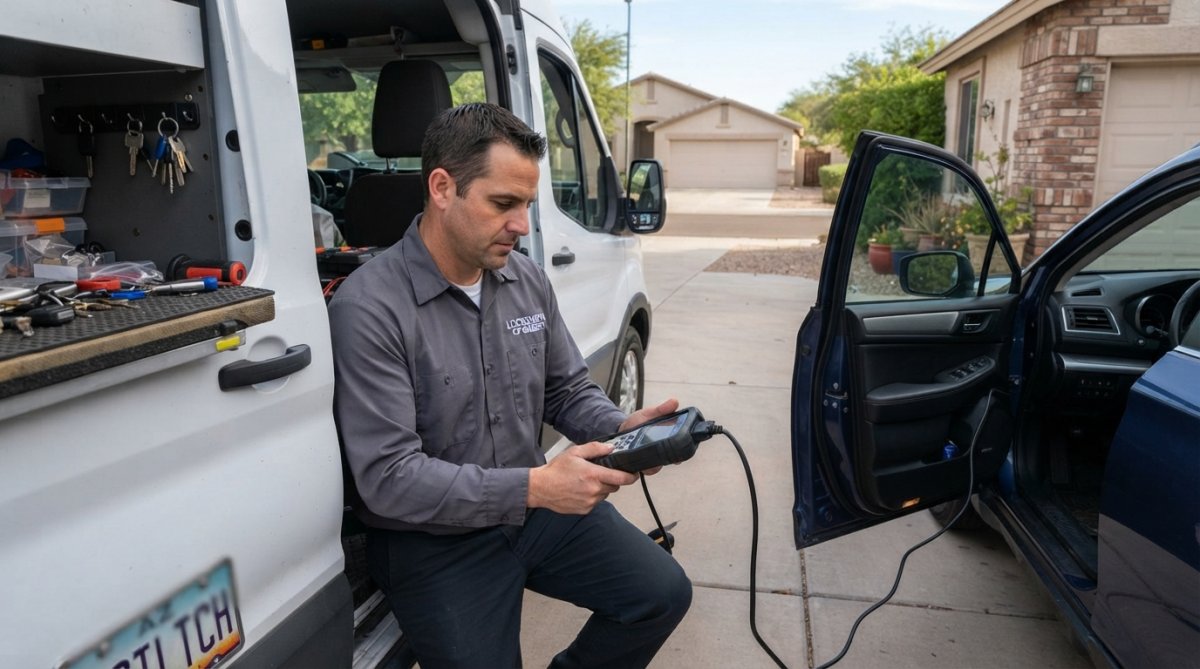
The typical visit runs through a predictable sequence:
- Verify ownership. You'll be asked for proof of ownership: registration, title, or insurance documents matching your ID. This is a legal safeguard, not a stalling tactic.
- Identify the key type. The technician confirms whether you need a transponder key, remote head key, or smart key.
- Cut the key. Using the key code or an on-site reading of the existing key or lock.
- Program the chip. Connecting the diagnostic tool and synchronizing the new key to the immobilizer.
- Test everything. Ignition, lock, unlock, and remote functions, including the key fob battery in a new fob.
How Vehicle Make and Model Impact Replacement Cost
Vehicle make and model impact replacement cost more than any other single factor. A basic transponder key on a domestic sedan and a smart key on a late-model European import are not the same job, and no honest provider will quote them the same.
Three vehicle-specific variables drive the difference:
- Security protocol complexity. Newer vehicles use rolling codes and encrypted handshakes that require current equipment and subscriptions.
- Key blank availability. Common models have widely stocked aftermarket blanks. Rare or newer models may only have OEM keys available.
- Programming method. Some vehicles allow on-board programming; others demand a diagnostic tool and a security code.
VIN-Based Key Cutting and Security Codes
VIN-based key cutting uses your vehicle identification number to retrieve the factory key code, which tells a cutting machine the exact tooth pattern for your locks. This matters because worn keys don't always copy cleanly, and cutting from the VIN produces a key that matches the original specification.
Aftermarket vs OEM Keys: Quality and Cost Trade-offs
Aftermarket keys cost less than OEM keys and, for many vehicles, work just as well. The trade-off is consistency: aftermarket quality varies by manufacturer, and some vehicles are fussy about which blanks they'll accept.
| Key Option | Cost Level | Best For | Watch Out For |
|---|---|---|---|
| OEM key | Higher | Newer vehicles, warranty-sensitive owners | Longer lead time on rare models |
| Quality aftermarket | Lower | Common models, older vehicles | Variable quality between suppliers |
| Budget aftermarket | Lowest | Spare keys, low-security vehicles | Higher failure and re-programming risk |
Insurance Coverage and Money-Saving Strategies
Insurance coverage for lost keys depends entirely on your policy, and most drivers never check until they need it. Some auto policies include key replacement as an add-on or as part of comprehensive coverage. Many roadside assistance programs also cover lockout service and, in some cases, key replacement.
- Get a spare made before you need one. Programming a second key while you still have a working original is cheaper and simpler than an all-keys-lost job.
- Keep your key code or VIN record handy. It speeds up cutting and reduces the chance of a misfit.
- Ask about aftermarket options for older vehicles where OEM adds cost without adding benefit.
- Call a mobile provider before towing. Towing to a dealership adds a cost that a driveway visit avoids entirely.
Conclusion
The cost of replacing a transponder key comes down to choices you can influence: which key type you need, who does the programming, and whether you act before you're down to your last key. Understanding the immobilizer chip, the programming step, and the difference between dealership and mobile service puts you in a position to ask the right questions and avoid overpaying.
Frequently Asked Questions
How much does it cost to replace a transponder key?
The cost depends on several factors: your vehicle's make and model, whether you need a laser-cut key or smart key, and whether you choose a mobile locksmith or dealership. Programming fees, key blank quality, and service labor all contribute. A mobile car key replacement service can offer a convenient alternative to dealerships. Contact a local automotive locksmith for a specific quote based on your vehicle identification number.
Can you replace a transponder key without the original?
Yes, but it requires proof of ownership and a VIN-based key cutting process. An automotive locksmith uses your vehicle identification number to retrieve the correct key blank specifications and security code. You'll need your registration, title, or insurance card showing you own the vehicle. Without the original key, the process takes longer because the locksmith must program a new key from scratch rather than duplicating an existing transponder signal.
Why are transponder keys so expensive to replace?
Transponder keys contain an immobilizer chip that communicates with your vehicle's ignition system. Replacement involves more than key cutting: the new key must be programmed and synchronized with your car's security protocol. This requires a diagnostic tool and technical knowledge. Dealership service departments may have different labor rates, while mobile locksmiths can provide chip synchronization.
Does AutoZone or Home Depot cut transponder keys?
AutoZone and Home Depot can duplicate basic mechanical keys, but they do not program transponder keys or smart keys. These retailers lack the diagnostic tools needed for chip synchronization and key fob programming. For any key with an immobilizer chip or proximity sensor, you need an automotive locksmith or dealership service department. Attempting to use a non-programmed key will prevent your vehicle from starting.
Does insurance cover lost transponder key replacement?
Some auto insurance policies include key replacement coverage, often as an add-on to comprehensive coverage. Emergency roadside assistance programs may also cover lockout service or key replacement. Check your policy details or call your insurance provider. If covered, you'll typically need to file a claim and may have a deductible. Many drivers find that paying out of pocket through a mobile locksmith can be a straightforward option.
What should I do if my transponder key stops working?
First, try your spare key. If it works, the issue is likely the key itself, not the ignition system. Check the key fob battery if you have a remote head key or smart key. If the key fob battery is fine but the car won't start, the immobilizer chip may have failed or lost synchronization. A mobile car key replacement service can diagnose the issue on-site and reprogram or replace the key as needed.
How long does transponder key programming take?
Programming typically takes 15 to 30 minutes once the locksmith has the correct key blank and your vehicle's security code. The process involves connecting a diagnostic tool to your car's onboard computer and synchronizing the new key's chip with the immobilizer system. Some vehicles with complex security protocols may take longer. A mobile locksmith saves you the trip to a dealership.