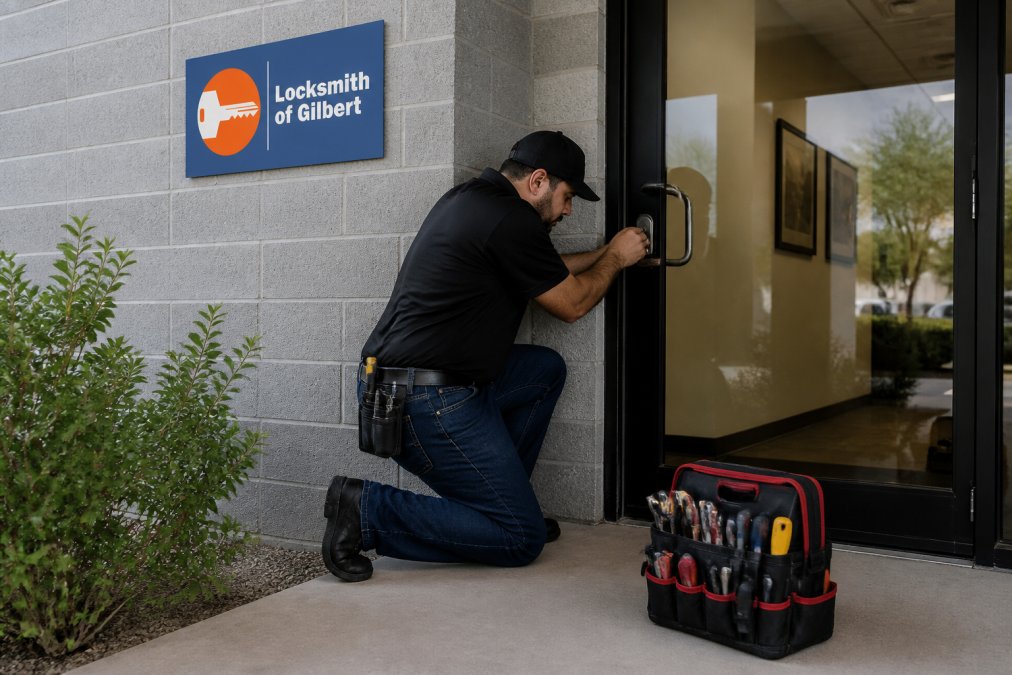
 ultimate-guide
Emergency Locksmith Response Time: What to Expect
Table of Contents
- What an Emergency Locksmith Response Time Guarantee Actually Covers
- Average Locksmith Arrival Time: Realistic Numbers for Urgent Calls
- Emergency Lockout Service Expectations: What a Professional Dispatch Looks Like
- How to Spot a Fake Locksmith Before They Arrive
- Cost Transparency: What Drives the Bill on an Emergency Call
- DIY vs. Professional Assessment: When to Call an Emergency Locksmith
- Frequently Asked Questions
Last Updated: September 25, 2026
What an Emergency Locksmith Response Time Guarantee Actually Covers
An emergency locksmith response time guarantee is a commitment to a specific arrival window, not a vague promise of "fast service." At Locksmith Of Gilbert, we build every dispatch around that distinction, because the gap between a guarantee and an estimate is where most customer frustration begins. This guide explains what a real guarantee covers, how arrival times are calculated, and how to verify you're dealing with a legitimate operation before anyone reaches your door.
Guarantees vs. Estimates: The Difference That Matters
A guarantee carries a defined window and a remedy if the technician misses it. An estimate is a guess dressed up as a commitment.
Many businesses find that the language matters more than the number. If a dispatcher says "usually within 30 minutes," that's an estimate. If they say "we commit to 45 minutes or the service fee is waived," that's a guarantee with teeth.
Ask two questions on the phone: What is my guaranteed window, and what happens if you miss it?
Average Locksmith Arrival Time: Realistic Numbers for Urgent Calls
The average locksmith arrival time for an urgent call depends heavily on traffic, distance, and time of day. In practice, most urban and suburban markets see arrival windows between 20 and 60 minutes, with after-hours calls skewing toward the longer end. Those numbers are only useful if you understand what drives them, and what a dispatcher can actually control.
Factors That Influence Arrival Time
Several variables determine how fast a technician actually reaches you:
- Distance and dispatch location. A mobile locksmith already positioned nearby beats one routed across a metro area. The best operations stage vehicles in zones rather than sending every call from a central shop.
- Time of day. Rush hour and late-night calls both stretch arrival windows. A 7:45 a.m. call during a school run behaves very differently from the same call at 10 a.m.
- Call volume. Storm damage or a regional event can flood a dispatch queue. When ten calls land in the same hour, someone is waiting.
- Service type. Automotive lockouts and key replacement often take longer than a standard residential door because the technician may need to program a transponder or cut a key on site.
- Access conditions. Gated communities, parking structures, and secured buildings add minutes. A guard who has to call a resident, or a garage with a low clearance that blocks the van, can add ten minutes on its own.
- Commercial scope. A single residential door is a quick job. A commercial storefront with a panic bar, a master key system, or an alarm interface takes longer to assess before any work begins.
How Real-Time Dispatch Actually Works
Most guides stop at the factor list. The bigger story is the dispatch layer behind the ETA.
- Will I get a tracking link or a text update when the van is en route?
- Will the dispatcher call me if the ETA changes by more than a few minutes?
Emergency Lockout Service Expectations: What a Professional Dispatch Looks Like
Emergency lockout service expectations should include a confirmation call, a technician name, and a live arrival estimate. A professional dispatch gives you information before the van arrives, not after.
Real-Time Dispatch and Tracking Technology
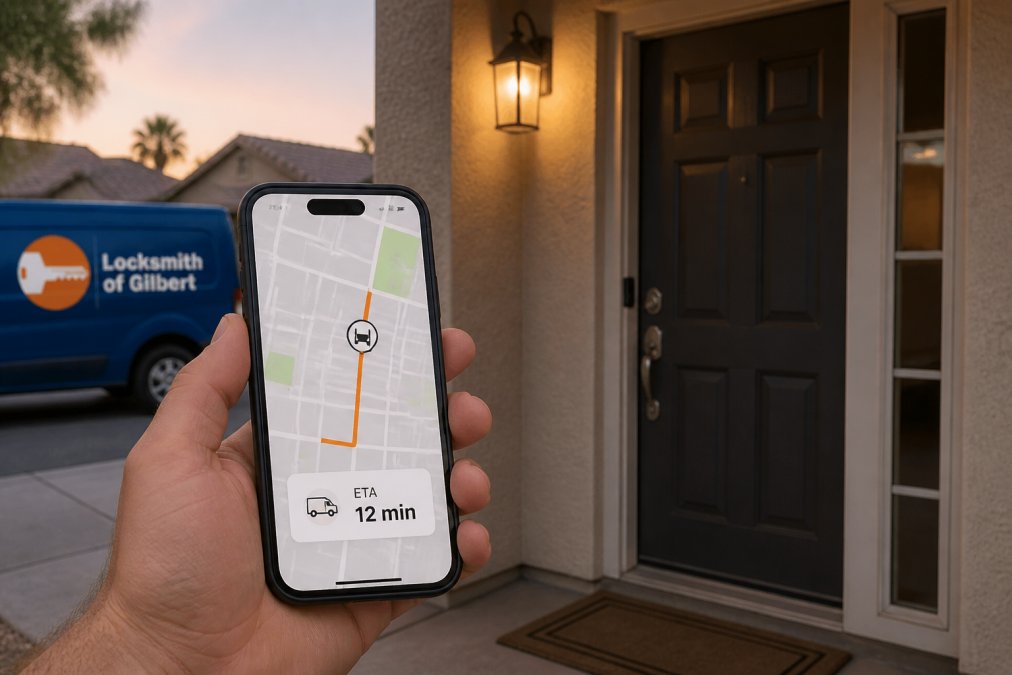
Real-time dispatch is the biggest gap most guides ignore. Modern operations use GPS-tracked vans and dispatch software that pushes an estimated time of arrival to your phone.
How to Spot a Fake Locksmith Before They Arrive
Spotting a fake locksmith comes down to verification, and the phone call is where you do it. Unlicensed operators rely on urgency to skip your questions.
Safety Verification Protocols to Ask About on the Phone
Run through this checklist before you agree to anything:
- Ask for the technician's name and license or registration number
- Confirm the business has a local physical address, not just a call center
- Request a written or texted quote before work begins
- Ask whether the technician carries photo identification
- Confirm the company accepts traceable payment, not cash only
Cost Transparency: What Drives the Bill on an Emergency Call
Cost transparency starts with understanding the components of an emergency bill. Most competitors mention "pricing" and move on. The useful version breaks the invoice into its parts so you can compare quotes apples to apples.
The Three Lines on a Typical Emergency Invoice
Most emergency invoices break down into three components:
- Service call fee (also called a trip or dispatch fee). This covers the technician getting to you. It is usually a flat charge and is the same whether the job takes ten minutes or an hour. After-hours, weekend, and holiday calls typically carry a higher call fee than standard business hours.
- Labor charge. This covers the time on site. Some companies bill in flat-rate blocks by job type (for example, a standard residential lockout versus a commercial panic-bar repair), while others bill by the hour in increments. Ask which model the company uses before you agree.
- Parts and hardware. If a lock cylinder, key blank, or panic bar has to be replaced, that is a separate line. A rekey uses existing hardware and costs less than a full replacement.
The distinction between the call fee and the labor charge is where most disputes start. A low advertised call fee can hide a high labor rate, and vice versa. The only fair comparison is the total quoted for your specific job.
Why Commercial Jobs Price Differently
A commercial lockout is not a bigger version of a residential one. It usually involves different hardware and different stakes:
- Hardware type. Storefront doors, panic bars, exit devices, and master key systems require parts and tools that a standard residential kit does not carry.
- Access control. If the door ties into an alarm panel or an electronic access system, the technician has to work around it without triggering a false alarm or leaving the building unsecured.
- Downtime cost. A restaurant or retail store locked out during business hours is losing sales every minute. Many commercial accounts pay a premium for priority dispatch precisely because the math favors it.
- Documentation. Commercial clients often need an invoice that itemizes parts and labor for their records, insurance, or property management file. Ask for that format upfront.
How to Get a Quote You Can Actually Compare
Because pricing varies by job and location, the right move is to request a quote specific to your situation rather than relying on a generic number. When you call, give the dispatcher four pieces of information:
- Property type (residential, commercial, automotive)
- Lock or hardware type, if you know it
- Whether the door is currently secured or standing open
- Your address and any access restrictions
DIY vs. Professional Assessment: When to Call an Emergency Locksmith
DIY versus professional assessment is a judgment call, but the line is clearer than most people think. A stuck interior door or a loose handle is often a homeowner fix. A lockout with a dead battery, a broken key in the cylinder, or a commercial security system is not.
Call a professional when:
- The lock is damaged or the key has snapped inside the cylinder
- You're locked out of a vehicle with a transponder key
- The property is commercial and the lock is part of a master key system
- You've already tried and failed to open the lock without damage
Frequently Asked Questions
What is a reasonable response time for an emergency locksmith?
A reasonable response time for an emergency locksmith is typically 20 to 45 minutes in urban and suburban areas, depending on traffic, weather, and your distance from the nearest available technician. Rural locations can stretch to an hour or more. When you call, ask for a specific estimated time of arrival and confirm whether the dispatcher is quoting a guarantee or just a rough estimate. Reputable companies will give you a window and update you if conditions change.
How can I verify if a locksmith is legitimate before they arrive?
Ask for the technician's name, license number, and company address before they arrive. A legitimate locksmith will provide these without hesitation and will have a local business address, not just a call center. Be wary if the dispatcher avoids giving a company name, quotes an unusually low rate, or pressures you to pay upfront before any work begins.
What factors influence how fast a locksmith can arrive?
Several factors affect arrival time: your distance from the nearest available technician, time of day, traffic conditions, weather, and how many other emergency calls are already in the dispatch queue. Service area coverage matters too. A company with technicians stationed across the eastern valley can reach you faster than one dispatching from a single central location. When you call, ask how many on-call technicians are currently available in your area.
Do all 24/7 locksmiths offer a time guarantee?
No. Many companies advertise 24/7 availability but do not offer a formal response time guarantee. A true guarantee means the company commits to a specific arrival window and has a policy in place if they miss it. Ask directly whether the guarantee is written, what the window is, and what happens if the technician arrives late. If the answer is vague, treat it as an estimate rather than a guarantee.