 comparison
Ignition Repair vs Replacement Cost: 2026 Comparison
Table of Contents
- Ignition Repair vs Replacement Cost: Quick Comparison
- Signs of a Bad Ignition Switch
- Labor vs Parts Cost Breakdown
- How Long Does Ignition Replacement Take?
- Mobile Ignition Repair Services vs Dealership Pricing
- When to Repair vs Replace Your Ignition
- Frequently Asked Questions
Last Updated: October 2, 2026
Ignition Repair vs Replacement Cost: Quick Comparison
The cost of automotive ignition repair vs replacement usually comes down to one question: is the problem mechanical or electrical? A worn lock cylinder or a failed switch can often be repaired, while a faulty immobilizer system or damaged wiring harness typically pushes the job toward replacement. At Locksmith Of Gilbert, we handle ignition lockouts and cylinder work across the eastern valley, and the pattern is consistent: diagnosis first, then the fix that actually solves the problem.
Here's the short version before the details:
| Situation | Typical Approach | Main Cost Driver |
|---|---|---|
| Key won't turn, cylinder worn | Repair or replace cylinder | Parts availability |
| Key turns but engine won't start | Diagnose switch and starter circuit | Electrical diagnosis time |
| Key stuck in ignition | Cylinder or tumbler repair | Labor access to steering column |
| Transponder key not recognized | Reprogram or replace key | Key fob programming |
| Multiple electrical faults | Replace ignition assembly | OEM vs aftermarket parts |
A failing ignition switch is the most common culprit behind a no-start condition that isn't the battery. The NHTSA vehicle safety and defect information is a useful starting point if you suspect a manufacturer defect rather than normal wear.
Signs of a Bad Ignition Switch
Spotting the signs of a bad ignition switch early is what keeps a small repair from becoming a full assembly replacement. The most common symptoms drivers report are:
- The engine cranks but won't fire, or nothing happens at all
- The key feels loose, gritty, or needs jiggling to turn
- Dashboard lights flicker or cut out while driving
- Accessories stay powered after you remove the key
- The key gets stuck in the ignition
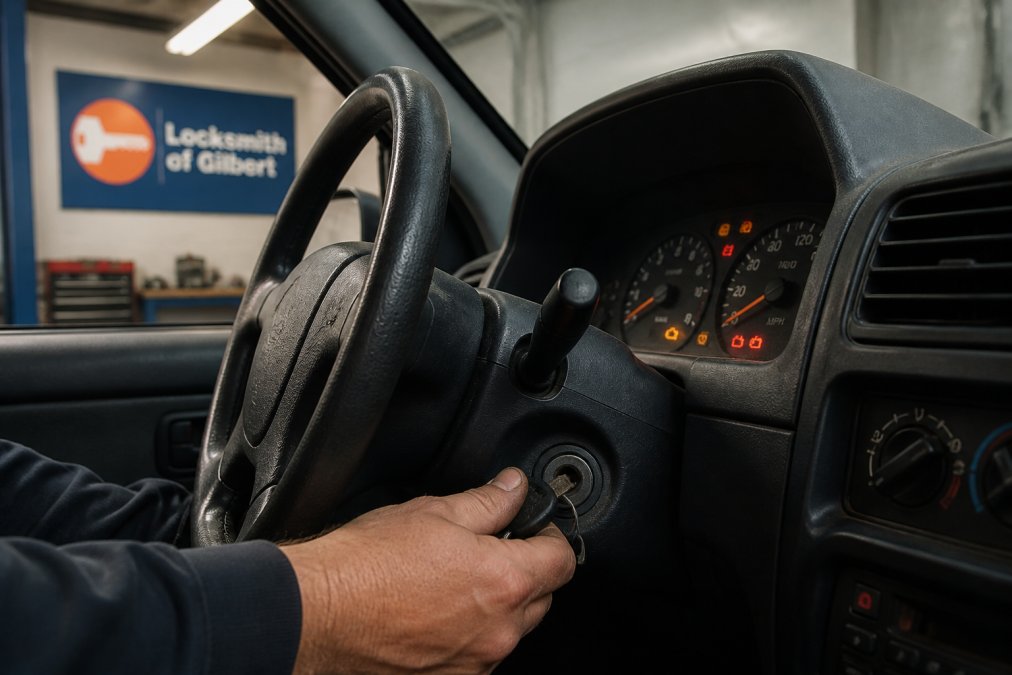
Mechanical wear and electrical failure produce different symptoms. A gritty, hard-to-turn key points to tumbler pins and the lock cylinder. Flickering dash lights and a starter motor that clicks without engaging point to the electrical side.
Labor vs Parts Cost Breakdown
Every ignition quote splits into four buckets, not two.
- Labor, column trim removal, airbag clock spring handling, cylinder or switch extraction, and reassembly. This is the line item that swings most on make and model, because dash and column layouts vary wildly.
- Parts, the ignition lock cylinder, ignition switch, ignition housing, or full ignition assembly, plus the key blank itself if a new key is cut.
- Diagnostic, billed when the shop has to trace an electrical fault through the starter circuit, immobilizer, or wiring harness before it can quote the repair.
- Key programming, the hidden line item. If your vehicle uses a transponder chip or a smart key fob, the new key has to be coded to the immobilizer before the car will start. This is separate from the mechanical work and is often billed as its own service.
The programming charge can vary. A mobile locksmith who carries the right coding equipment can program most transponder keys on site. A dealership typically has to pull the vehicle into the service bay and use factory software, which adds time. Either way, the programming step is not optional on any vehicle built with an immobilizer, and that covers essentially every car sold in the last two decades.
A few factors move the numbers:
- Vehicle make and model determines how buried the ignition components are and which immobilizer system is in play
- OEM vs aftermarket parts changes both the part cost and how smoothly the new key codes to the system
- Key type, a basic transponder chip, a remote-head key, and a push-to-start smart fob each require different programming time
- Wiring harness damage adds labor hours fast and can push a repair into replacement territory
Because we don't publish flat rates, the honest answer is that pricing depends on your specific vehicle, the part required, and whether programming is involved. Get a written estimate that separates labor, parts, diagnostic, and programming before you approve anything. For general guidance on fair repair pricing, RepairPal's auto repair cost estimator breaks down common jobs by vehicle.
| Cost Component | What It Covers | Varies By |
|---|---|---|
| Labor | Column access, removal, install | Make, model, dash layout |
| Parts | Cylinder, switch, housing, assembly, key blank | OEM vs aftermarket |
| Diagnostic | Fault tracing on electrical issues | Complexity of fault |
| Key programming | Transponder and fob coding to immobilizer | Key type, immobilizer system |
How Long Does Ignition Replacement Take?
Most ignition replacement jobs take between one and three hours of shop time, depending on how accessible the ignition housing is. A straightforward lock cylinder swap on a common model can wrap up in about an hour. A full ignition assembly replacement with transponder key programming often runs two to three hours.
Here's what stretches the timeline:
- Airbag and steering column trim that must be removed carefully
- Immobilizer system relearning after the new part goes in
- Key fob programming, which adds time on top of the mechanical work
- Parts availability, especially on older vehicles
That last point matters more than most guides admit. If your vehicle is older and the OEM ignition housing is discontinued, you may wait on a special order or accept an aftermarket part. Ask about parts availability before you book the appointment.
Mobile Ignition Repair Services vs Dealership Pricing
Mobile ignition repair services bring the technician to your driveway, which changes the math on a non-starting vehicle. A dealership requires a tow if the car won't start, and that tow is a cost the mobile route avoids entirely.
The trade-off is capability.
When to Repair vs Replace Your Ignition
Repair the ignition when the fault is mechanical and isolated: a worn lock cylinder, a sticky tumbler, or a single failed switch. Replace it when the damage is electrical, widespread, or when the ignition housing itself is cracked or compromised.
Use this decision framework:
- Key won't turn, everything else fine → repair or replace the cylinder
- Key turns, no start, single fault → diagnose and replace the switch
- Key stuck in ignition → repair the cylinder or tumbler pins
- Multiple electrical faults, immobilizer errors → replace the ignition assembly
- Vehicle over 15 years old, OEM part discontinued → compare aftermarket replacement against repair, and confirm the shop will install aftermarket before you commit
- Push-to-start vehicle with a failed steering lock module → replacement is usually the only path, since the module is not serviceable
Frequently Asked Questions
How much does a full ignition replacement cost?
A full ignition replacement typically involves parts and labor that vary by vehicle make, model, and whether the ignition uses a transponder key or immobilizer system. Mobile services can be a convenient option by eliminating towing fees. Request a comprehensive estimate from a qualified locksmith or mechanic for your specific vehicle.
What are the common signs that an ignition switch needs to be replaced?
Key indicators include the engine not starting even with a charged battery, the key getting stuck in the ignition, dashboard lights flickering or failing, and the steering column feeling loose or unresponsive. Electrical accessories like radio and headlights may cut out intermittently. If the key turns but nothing happens, the ignition switch or lock cylinder is likely worn. A locksmith can distinguish between mechanical wear and electrical failure during a diagnostic check.
How long does it typically take for a professional to replace an ignition system?
Most ignition switch or lock cylinder replacements take between one and three hours for a skilled technician. Vehicles with steering column-mounted ignition assemblies or complex anti-theft systems may require additional time for disassembly and reprogramming. Mobile ignition repair services can complete the job on-site, saving you the time of dropping off and picking up your vehicle. Dealerships may take longer due to appointment scheduling and higher service volume.
Can an ignition switch be repaired, or is replacement always necessary?
In some cases, a locksmith can repair a worn ignition lock cylinder by replacing tumbler pins or cleaning internal contacts, which costs less than a full replacement. However, if the ignition housing is cracked, the wiring harness is damaged, or the immobilizer system has failed, replacement is the safer and more reliable option. A professional diagnostic will determine whether repair or replacement makes sense for your vehicle's age and condition.
Does a faulty ignition switch affect the vehicle's electrical system?
Yes. The ignition switch controls power flow to the starter motor, fuel pump, and many electrical components. A failing switch can cause the engine to crank but not start, prevent accessories from working, or drain the battery. In some cases, it can trigger security system lockouts. If you notice multiple electrical issues alongside starting problems, have the ignition system tested before other components are replaced.