 listicle
Emergency Lockout Pricing: What You'll Actually Pay
Table of Contents
- How Emergency Lockout Pricing Works
- Residential vs. Automotive vs. Commercial Lockout Costs
- Factors That Drive Emergency Lockout Pricing
- What to Ask a Locksmith Before They Arrive
- How to Avoid Locksmith Scams and Hidden Fees
- Mobile Locksmith Response Time and What It Means for Your Cost
- Payment Options and Transparency
- Frequently Asked Questions
Last Updated: September 27, 2026
How Emergency Lockout Pricing Works
Understanding how emergency lockout pricing works helps you avoid sticker shock. Emergency lockout pricing typically combines a service call fee, labor costs, and surcharges based on lock type or time of day.
Service Call Fees vs. Labor Costs
The service call fee covers dispatch, travel time, and initial lock assessment. Labor costs are separate and reflect actual time spent working on your lock.
The service call fee gets the professional to your door; labor is what they charge while working.
Time of Day and Emergency Surcharges
After-hours work (outside 8 AM to 6 PM weekdays) triggers surcharges. Weekend and holiday surcharges are common because locksmiths maintain 24/7 availability with premium staffing costs.
Surcharges reflect the cost of 24/7 availability and premium staff wages.
| Timing | Typical Surcharge | Why It Applies |
|---|---|---|
| Standard hours (8 AM-6 PM, weekdays) | None | Regular business operations |
| Evening/early morning (6 PM-8 AM) | 25-50% | Off-hours staffing costs |
| Weekends | 50-100% | Holiday/weekend premium |
| Holidays | 75-100%+ | Limited availability, premium pay |
Residential vs. Automotive vs. Commercial Lockout Costs
Lockout type directly determines cost. Residential, automotive, and commercial lockouts involve different mechanisms, access challenges, and time commitments.
Residential Lockouts
Residential lockouts typically involve standard deadbolts or keyed entry knobs.
Access difficulty drives cost: ground-floor doors are quick work, while upper-floor locks or sliding glass doors add complexity and time.
Non-destructive entry takes longer but preserves the lock; drilling is faster but requires lock replacement.
Automotive Lockouts
Automotive lockouts involve transponder keys, electronic locks, and ignition systems far more complex than residential deadbolts.
Pricing depends on vehicle year, make, and model. Older mechanical locks are cheaper; newer electronic locks with immobilizers require specialized equipment and on-site key programming.
Transponder key programming is a major cost driver, requiring diagnostic equipment and expertise to match your car's security system.
Commercial Lockouts and Multi-Unit Properties
Commercial lockouts are the most expensive category due to higher-security locks, master key systems, and the need to minimize business disruption.
Multi-unit properties (apartments, office buildings, storage facilities) add another layer of complexity. If you're locked out of a commercial space, the locksmith may need to coordinate with building management, verify your identity and authorization, and document the service for security and liability purposes. This administrative overhead increases the cost.
Commercial locks are also typically higher-grade hardware, Grade 1 or Grade 2 rated locks that resist forced entry. These take longer to manipulate or pick. If drilling is necessary, commercial-grade locks require more time and specialized tools.
Factors That Drive Emergency Lockout Pricing
Beyond the basic categories, several specific factors influence what you'll actually pay when you call a locksmith for an emergency lockout.
Lock Type and Complexity
The lock on your door or vehicle directly determines how long the job takes and what tools are needed. A standard pin-tumbler deadbolt (the most common residential lock) is relatively quick to manipulate. A high-security lock with anti-pick features, security pins, or a sidebar mechanism takes significantly longer and may require specialized tools.
Smart locks and electronic locks add another dimension. If you're locked out of a smart lock, the locksmith may need to bypass the electronic components or reset the system entirely. This is more involved than traditional lock manipulation and costs accordingly.
Vehicle locks vary dramatically by manufacturer. A simple mechanical car lock is faster to access than a modern electronic lock with an immobilizer. Some luxury vehicles and newer models have proprietary security systems that require manufacturer-specific knowledge or equipment.
Access Difficulty and Damage Risk
How easy is it for the locksmith to reach the lock? If your front door is easily accessible and the locksmith can work directly on the lock, the job is straightforward. If the lock is in an awkward location, high on a door, recessed in a frame, or surrounded by obstacles, it takes longer.
Damage risk also affects pricing. Some locks can be manipulated without any damage. Others require drilling or destructive entry. If you're willing to accept lock damage to regain entry quickly, you'll need to replace the lock afterward. If you want non-destructive entry, the locksmith takes more time to preserve the lock.
Distance and Response Time
How far is the locksmith from your location? If you're within their primary service area, response time is faster. If you're at the edge of their service area or in a remote location, travel time increases.
Emergency response time also factors in. If you call during peak hours (evening rush, weekend evenings), the locksmith may already be on another call. Your wait time increases, and some locksmiths charge a premium for expedited response or guarantee faster arrival.
What to Ask a Locksmith Before They Arrive
Before a locksmith shows up at your door, ask these questions to avoid surprises and verify you're working with a legitimate professional.
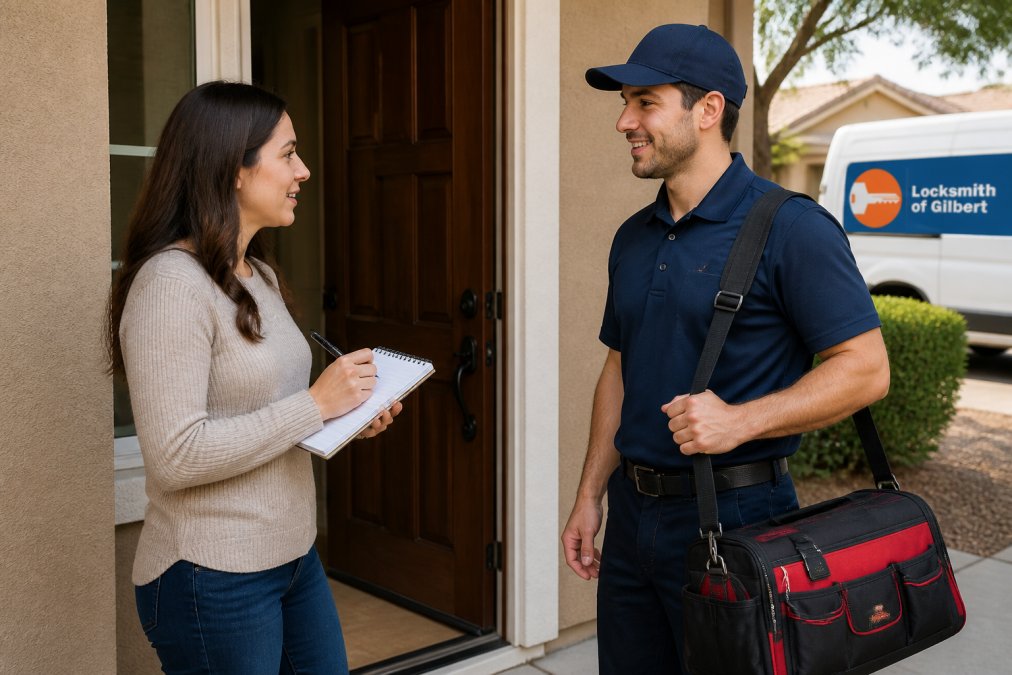
What is your service call fee, and what does it include? Get a specific number, not a range. Ask whether the service call fee covers the first 15 minutes of work or just the arrival. This prevents confusion later.
What are your hourly rates for labor beyond the service call fee? If the job takes longer than expected, you need to know the per-hour cost. Ask about minimum labor charges too, some locksmiths charge a minimum of one hour even if the job takes 20 minutes.
Are there additional charges for after-hours work, weekends, or holidays? Get the surcharge percentage or dollar amount. If you're calling at 11 PM on a Saturday, you deserve to know the premium upfront.
Will you provide an estimate before starting work? A reputable locksmith will assess the lock and give you a ballpark estimate before beginning. If they refuse, that's a red flag.
What's your policy on lock damage? If the locksmith needs to drill the lock to gain entry, will they replace it? What's the cost? Will they attempt non-destructive entry first?
Do you accept my preferred payment method? Locksmith Of Gilbert accepts many payment options including digital wallets, but not all locksmiths do. Confirm payment methods before the work begins to avoid disputes.
Can you provide references or proof of licensing? Ask for their business license number and check it with your state or local licensing board. References from recent customers are also valuable.
How to Avoid Locksmith Scams and Hidden Fees
The locksmith industry has a reputation for predatory pricing and hidden fees. Knowing what to watch for protects you from being overcharged.
Bait-and-switch pricing is the most common scam. A locksmith quotes a low price over the phone, say, $50 for a residential lockout, then arrives and claims the lock is more complex than expected, the surcharge is higher, or additional work is needed. Suddenly the bill is $300. Always get a detailed estimate in writing before work begins.
Unnecessary services are another trap. A dishonest locksmith might recommend lock replacement, rekeying, or security upgrades you don't need. They'll claim your lock is "worn out" or "damaged" to justify the upsell. Ask for a second opinion if you're skeptical.
Inflated after-hours surcharges are harder to police because you're desperate when you call. Some locksmiths charge 200% or more for late-night calls. While after-hours premiums are legitimate, excessive markups are a sign of a predatory operator. Call during business hours when possible, or ask about the surcharge upfront.
Unlicensed locksmiths are a major risk. An unlicensed locksmith has no accountability, no insurance, and no recourse if they damage your property or do shoddy work. Always verify licensing before hiring. Many states require locksmiths to be licensed and bonded.
Failure to honor estimates is common with unscrupulous operators. They quote $150, then present a bill for $400 and claim "unforeseen complications." Reputable locksmiths honor their estimates or explain changes before finishing the work.
Mobile Locksmith Response Time and What It Means for Your Cost
Response time directly correlates with your lockout cost. The faster you want service, the more you'll pay.
A mobile locksmith operating within their primary service area can typically arrive within 30 minutes during business hours.
Payment Options and Transparency
Transparent payment practices separate legitimate locksmiths from scammers. Before you hire, understand how you'll be charged and what methods are accepted.
Frequently Asked Questions
What's the typical price range for emergency lockout services?
Emergency lockout pricing depends on the type of lockout and time of day. Residential lockouts may differ from automotive and commercial work. The final price depends on lock complexity, whether it's after-hours, and your location. For an accurate quote, contact a local professional who can assess your specific situation.
How can I avoid locksmith scams and verify pricing before they arrive?
Ask for an upfront estimate over the phone before the locksmith arrives. Verify they're licensed and insured by requesting credentials. Reputable locksmiths provide transparent pricing breakdowns showing service call fees and labor rates separately. Check online reviews from verified customers. Never agree to work without a quote first, and be wary of prices significantly lower than market rates or pressure to pay in cash only.
Why does mobile locksmith response time affect the overall cost?
Mobile locksmiths consider dispatch and travel time. A rapid response during standard business hours may differ from late-night or weekend emergency calls. Response time also reflects service quality. Always ask about dispatch fees and travel charges when requesting an estimate.
What's included in a locksmith's service call fee versus labor charges?
The service call fee covers the locksmith's arrival, assessment, and initial consultation. Labor charges apply to the actual work performed, such as lock picking, key extraction, or lock replacement. These are typically billed separately at an hourly rate. Some locksmiths bundle these into a flat rate for simple jobs. Always request a breakdown showing both components so you understand what you're paying for.